
The Math and Science of How Car Shipping Costs Are Really Calculated (And What Drives the Price Up)
The quote you get from a broker isn’t pulled from a fixed price list.
It’s a moving number shaped by distance, route demand, the type of trailer, and what other carriers in the area are charging that week.
Two people shipping the same SUV from the same city can pay different amounts depending on when they booked and how flexible their pickup window happens to be.
A high-traffic lane like California to Texas car shipping tends to land in a more predictable price range because carriers compete heavily for those loads, while quieter routes between smaller towns swing more dramatically based on driver availability.
Knowing which factors push your rate up and which ones keep it down makes the difference between overpaying and getting a fair quote.

Distance Doesn’t Work the Way You’d Expect
Distance does most of the heavy lifting on price, but not in the way most people assume.
Short hauls under 500 miles often cost more per mile than cross-country runs because carriers have fixed overhead they need to cover regardless of trip length.
A 300-mile move might run $1.50 to $2.00 per mile.
A 2,500-mile coast-to-coast haul drops closer to $0.50 to $0.75 per mile.
The cost curve flattens fast once you cross the 1,000-mile threshold.
Route Demand and Lane Popularity
Where you’re shipping matters as much as how far.
Popular lanes between major metros have a constant flow of trucks moving in both directions, which keeps prices competitive.
Routes like Los Angeles to Dallas or Miami to New York are some of the busiest in the country, so carriers compete for those loads, and quotes tend to stay in a predictable range.
Try moving a vehicle between two small towns off the main highways, and you’ll see the rate jump because a driver has to detour or wait for a return load.
Carriers price in that lost time, and you end up covering it.
Vehicle Size, Weight, and Condition
Vehicle size and condition shift the math, too.
A compact sedan takes up less deck space than a lifted Ford F-250 or full-size Chevy Tahoe.
The bigger the vehicle, the fewer cars the carrier can fit on the trailer, and the higher your portion of the trip cost.
Inoperable vehicles cost more because they need a winch to load, and not every carrier has the equipment.
Lifted trucks, oversized tires, and roof racks all reduce clearance options on the top rack of the trailer.
Open vs. Enclosed Transport
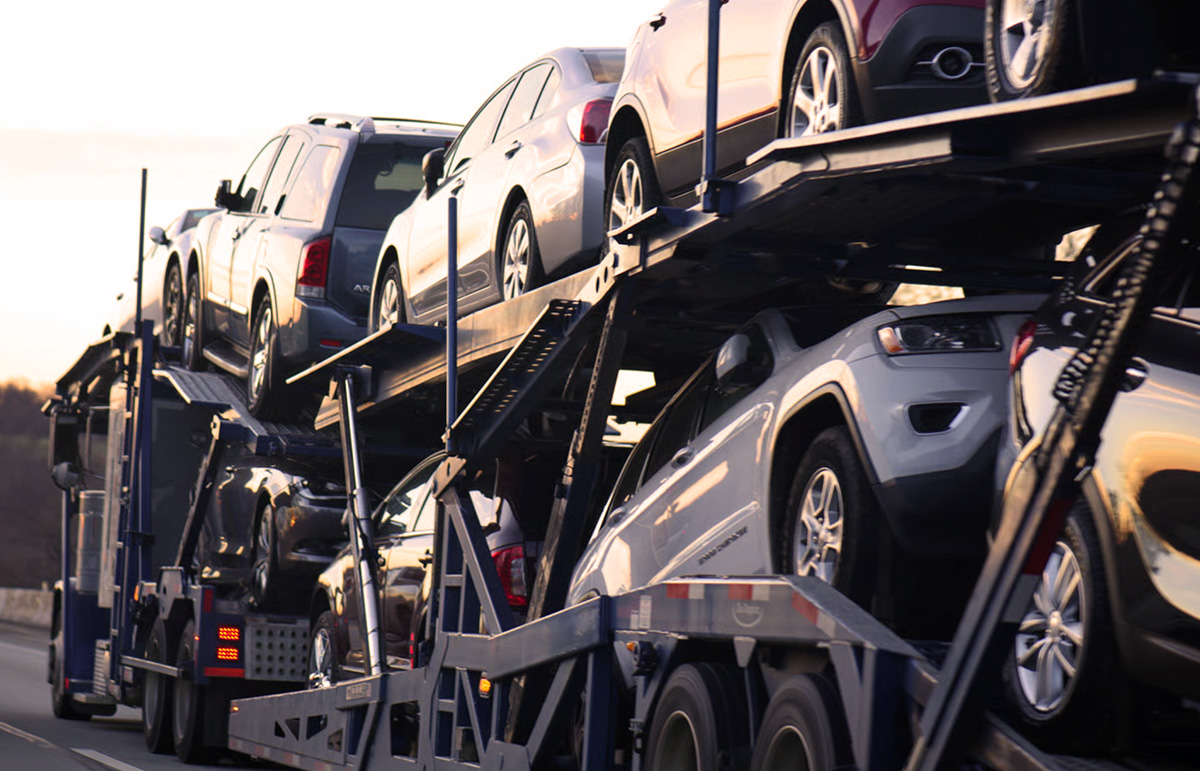
Open transport is the standard.
Around 90% of cars move this way, and it’s typically 30 to 40% cheaper than enclosed.
Enclosed transport makes sense for classics, exotics, or low-clearance sports cars that can’t sit exposed to weather and road debris.
For a daily driver, a Honda Civic or a Toyota Camry, paying extra for an enclosed is usually overkill.
If you’re moving a vehicle worth more than $80,000 or one with custom paint, the enclosed premium is worth it.
Timing Has a Bigger Effect Than You’d Think
Timing has a bigger effect on price than most people expect.
January through March sees a surge of snowbirds moving cars from the Northeast and Midwest down to Florida and Arizona, which spikes northbound prices on those return legs.
Hurricane evacuations, college move-in season around August, and military PCS cycles in summer all push rates up regionally.
Booking two to three weeks ahead almost always beats a same-week scramble.
Last-minute requests force brokers to bid higher to attract a driver, and that cost lands on you.
Fuel, Labor, and the Broader Freight Market
Diesel prices feed directly into quotes.
When pump prices climb, carriers adjust within days because fuel is one of their highest operating costs.
Driver shortages, equipment availability, and broader freight market conditions also ripple through to consumer pricing.
These aren’t things you can see when you punch numbers into an online estimator, but they’re baked into every quote you receive.
A soft freight market actually works in your favor because trucks running half-empty would rather take a discounted car than drive home with deck space to spare.
Pickup and Delivery Location
Where the truck has to go to get your car matters.
Major metros with interstate access, like Los Angeles, Houston, Atlanta, and Chicago, are cheap to service because carriers constantly pass through.
Rural pickup or delivery addresses often add $100 to $300 to the quote.
The broker might ask you to meet the driver at a nearby Walmart parking lot or truck stop to keep the price down.
That small inconvenience can save real money, so it’s worth considering if you live off the main freight corridors.
Choosing a Carrier and Comparing Quotes
Getting an accurate number comes down to giving the broker real details: exact zip codes, vehicle make and model, whether it runs, and a realistic pickup window.
The first quote isn’t always the best one.
Rates from different car shipping companies can vary by $200 to $500 on the same route, so it’s worth comparing two or three before booking.
Larger national carriers like Road Runner Auto Transport tend to have consistent pricing and broader route coverage, which makes them a useful benchmark when you’re trying to figure out whether a cheaper quote is realistic or too good to be true.
Watch out for lowball quotes that get revised upward once your car is already on the truck.
A reputable broker locks the price in writing before pickup, and that’s the only protection you really have against surprise charges.
The Bottom Line
Car shipping pricing isn’t random, but it isn’t fixed either.
Distance, route, vehicle type, trailer choice, season, and fuel all combine to produce the number you see in your inbox.
Understanding what’s driving the quote gives you leverage to negotiate or wait for a better rate.
Flexibility on your pickup window and delivery location is the single biggest lever you control, and using it well usually saves more than endlessly shopping for a cheaper broker.