How to Use Astrology as a Starting Point for Learning About Real Astronomy
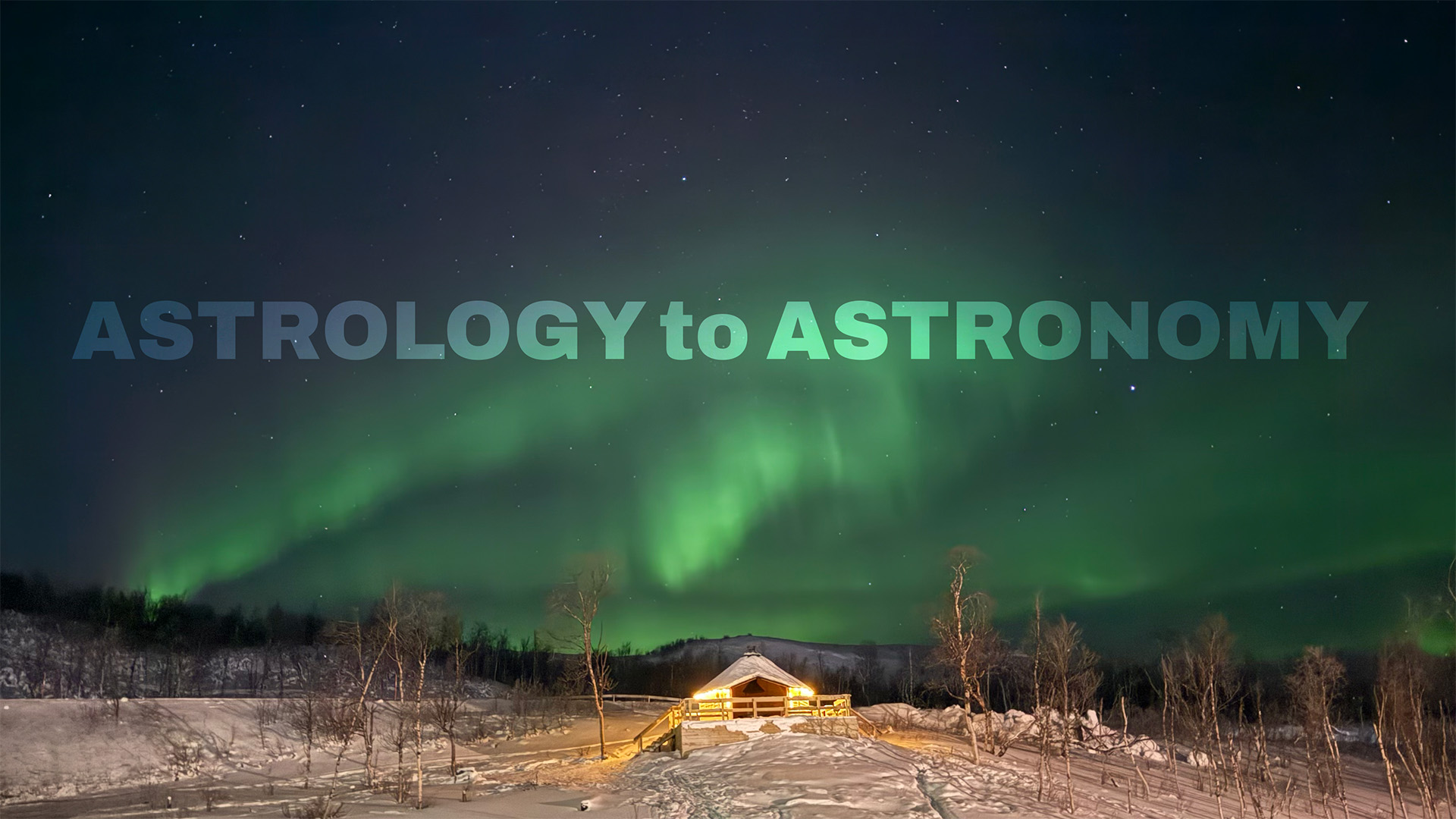
Astrology is often one of the first reasons people start paying attention to the night sky. And that curiosity can lead somewhere much more scientific.
Plenty of people pick up their first few constellations from scrolling through horoscope apps. The questions come later. What are these constellations? How far away are the stars? And why does a planet sometimes seem to move backward, in what astrology calls a retrograde?
From Astrology Terms to Astronomy Questions
The easiest way to learn something new is to begin with what is already familiar. If you’ve ever found yourself deep in a horoscope rabbit hole, you already know names like Mars, Venus, Jupiter, Saturn, the Moon, and twelve zodiac signs. That’s your secret backdoor into astronomy.
Sure, planetary science and orbital mechanics sound like something Sheldon Cooper would talk about at dinner. But you don’t need a degree to get curious:
- How far is Venus, and why’s it so bright?
- Why does Mars look red?
- Can you spot Saturn with your naked eye some nights (even though its rings need a telescope)?
- Why does a planet sometimes look like it’s moving backward, what astrology calls a retrograde?
- What makes the Moon change shape over the course of a month?
If the symbolic side is what pulls you in, astrology has real depth of its own, and the Nebula website is where you can dig into your own chart and placements.
Turn the Zodiac Into a Map of the Sky
Each zodiac sign is named after a group of stars, called a constellation. These constellations sit along a line called the ecliptic — the apparent path the Sun traces across the sky over a year. The Sun takes a full year to travel that road. From our perspective on Earth, the Sun looks like it drifts through these constellations over 12 months. That’s the zodiac: the ring of star patterns along that path.
The Moon and planets stay close to that same band too, because our solar system is shaped like a flat disk. When you read that the Sun has entered Leo, that’s a date on a calendar built from the seasons: twelve equal slices starting at the spring equinox. The star patterns behind the Sun have drifted since that system was written down, by about one whole sign over roughly two thousand years. So on a Leo birthday, the Sun is usually in front of the stars of Cancer.
Two systems, two different things are being measured. Western astrology follows the seasons (the tropical zodiac). Astronomy and Vedic astrology follow the stars themselves (the sidereal zodiac). The band is still real, and the planets really do travel along it. Only the labels have shifted.
To see where the planets were on your birth date, read more on Nebula. Then open a sky app and look for those same planets tonight. Same worlds, two ways of reading them. Watching them over weeks also answers that retrograde question: a planet only appears to loop backward because Earth, on its faster inner orbit, periodically overtakes it. It’s the same illusion as passing a slower car on the highway. Nothing actually reverses; our vantage point does.
A Closer Look at the Planets
Here are four planets you’ll meet most often in astrology (plus the Moon, which astrology also treats as a key body, covered just below):
| Planet | In Astronomy: What It Is | In Astrology: What It Rules |
| Venus | A rocky planet with a thick carbon dioxide atmosphere and a surface temperature of around 872°F (467°C); it’s the closest planet to us, and its sulfuric-acid clouds bounce back most of the sunlight that hits it. | Love, beauty, relationships, values |
| Mars | A cold, rocky planet that gets its red color from iron oxides in its surface material. | Action, drive, ambition, anger, and desire |
| Jupiter | The largest planet in the solar system is a gas giant known for its huge storms and 95 moons officially recognized by the International Astronomical Union (with more awaiting confirmation, so the count keeps rising). | Growth, opportunity, optimism, luck, and expansion |
| Saturn | Famous for its icy rings (the ring system extends up to 175,000 mi / 282,000 km but is only ~30 ft / 10 m thick in the main rings), it looks like a steady, yellowish star whenever it’s above the horizon. The rings need a small telescope. | Responsibility, discipline, limits, structure, and long-term lessons |
In astronomy, the Moon is Earth’s only natural satellite. It gives us tides, steadies our axial tilt, and may have played a part in how life began here.
Look Up and Find Planets for Yourself
Reading about the sky is one thing. Seeing it with your own eyes? That’s a different feeling entirely.
You don’t need a telescope. Your curiosity and your phone are enough. Here’s how to start:
- Pick one planet. Start with Venus or Jupiter. They’re usually the brightest in the night sky after the Moon.
- Check if it’s visible tonight. Open SkyView or Stellarium. Turn on location or GPS. Set the time to after sunset. Search the planet’s name to see whether it’s above the horizon.
- Point your phone at the sky. Open SkyView or Stellarium, point your camera at the sky, and the app labels what it recognizes. Tap any label to find out what the object is and how far away it is.
- Come back in a few nights. Watch how the planet shifts position against the background stars. That’s orbital motion, happening in real time.
For beginner-friendly guides and sky maps, NASA JPL’s Find Planets in the Sky walks you through how to locate celestial bodies using free software and a few nights of watching.
Curiosity Is a Good Place to Start
You do not have to choose between being curious about astrology and learning astronomy. One can just be the thing that gets you interested in the other.
Maybe you started with a birth chart and ended up wondering why Venus is so bright. Or maybe retrograde made you curious about how planets move.
Let that curiosity be your guide:
- See the sky on your birthday. A free app like Stellarium shows where the planets were the night you were born.
- Find out what stars are made of. Scientists split starlight into colors to read the elements inside. That method is called spectroscopy.
- Meet the planets as real worlds. In astrology, Mars stands for drive and action. In astronomy, it’s a rusty world of dust storms and dry riverbeds.
- Watch the Moon change. Track its phases and learn why eclipses happen with NASA Solar System Exploration.