What You Need to Know About South Florida’s Iguanas
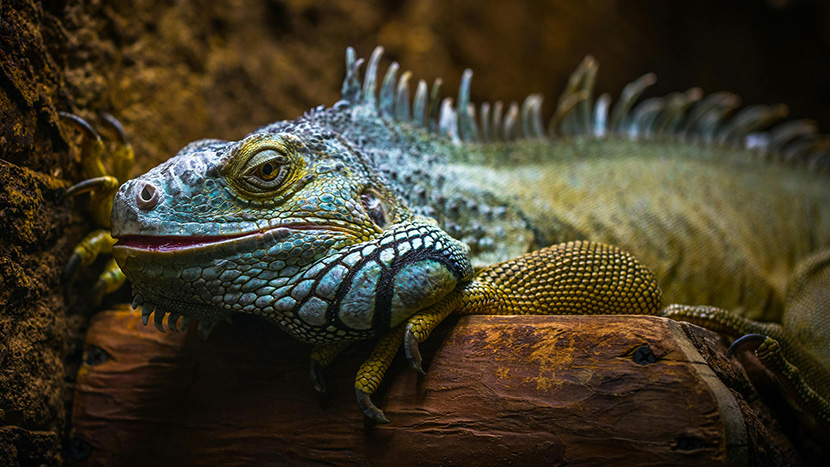
Green iguanas are large, arboreal lizards native to Central and South America, known for their striking appearance and impressive size. These reptiles are among the largest species of lizards commonly kept as pets, and they can grow to remarkable lengths, often reaching between 4 to 6 feet from head to tail. In some cases, especially in the wild where they have ample space and food, green iguanas can grow even larger, with some individuals exceeding 6 feet. A significant portion of their length is due to their long, powerful tails, which they use for balance and defense.
Adult green iguanas typically weigh between 8 to 17 pounds, though some can grow heavier depending on their diet and environment. Males tend to be larger and more robust than females and often develop pronounced physical features such as larger jowls and a prominent dewlap (a flap of skin under the chin used for communication and thermoregulation).
Green iguanas are primarily herbivores, meaning their diet consists mostly of plant material. In the wild, they feed on a variety of leaves, flowers, fruits, and shoots. Their diet is rich in fiber and low in protein, which is essential for their digestive health. They have specialized teeth and jaws adapted to tearing and chewing tough vegetation. Common foods include leaves from plants like hibiscus, dandelion greens, collard greens, and other leafy greens, as well as fruits such as mangoes, papayas, and berries. Occasionally, they may consume insects or small animals, but this is rare and not a significant part of their diet.
Green iguanas are diurnal, meaning they are active during the day. They are excellent climbers and spend much of their time in trees, where they bask in sunlight to regulate their body temperature. Their skin color (typically bright green) helps them blend into the leafy canopy, providing camouflage from predators. However, their coloration can vary, sometimes showing hints of blue, orange, or brown depending on their mood, health, or environmental conditions.
Why They Are Such a Problem in South Florida
Green iguanas have become a significant ecological and infrastructural problem in South Florida over the past few decades. These large lizards were introduced to Florida primarily through the pet trade. As pet owners released unwanted iguanas into the wild or as some escaped captivity, the species found the subtropical climate of South Florida ideal for survival and reproduction. Over time, their populations have exploded, leading to widespread concerns among residents, environmentalists, and local authorities.
One of the main reasons green iguanas have become so numerous in South Florida is the region’s warm, humid climate, which closely resembles their native habitat. The mild winters and abundant vegetation provide an ideal environment for iguanas to thrive year-round. Unlike in their native range, where predators and environmental factors help keep populations in check, Florida lacks many natural predators that would normally control green iguana numbers. This absence of significant predation allows iguanas to reproduce prolifically. Female green iguanas can lay large clutches of eggs — sometimes up to 70 eggs per season — and with favorable conditions, multiple clutches can be laid in a single year.
The rapid reproductive rate combined with few natural threats has resulted in a population boom. Iguanas have adapted well to urban and suburban environments, where they find plenty of food in ornamental plants, gardens, and fruit trees. Their herbivorous diet means they often feed on landscaping vegetation, causing damage to residential yards, parks, golf courses, and public green spaces. This feeding behavior has made them a nuisance for homeowners, as they can decimate plants, flowers, and young trees. Additionally, green iguanas are known to dig burrows for nesting, which can undermine sidewalks, seawalls, and other infrastructure, leading to costly repairs.
Controlling the green iguana population in South Florida has proven to be a difficult challenge for several reasons. First, their elusive and arboreal nature means they can easily escape human attempts to capture or remove them. They are fast climbers and swimmers, able to flee quickly when threatened. Second, their burrowing behavior complicates control efforts because destroying nests or burrows requires significant labor and care to avoid damaging the environment. Third, public attitudes toward iguanas are mixed; while some see them as pests, others view them as exotic wildlife and oppose lethal control methods. This can lead to restrictions on removal efforts and complicate coordinated population management.
It’s also worth noting that green iguanas have legal protections in some areas, and regulations around their capture and euthanasia vary, limiting the tools available to wildlife managers. Non-lethal control methods, such as habitat modification or exclusion techniques, are often labor-intensive and only partially effective. In some cases, hunting or trapping programs have been implemented, but these efforts require ongoing commitment and resources to have a meaningful impact.
Legal Methods to Control the Population in South Florida
Green iguanas are classified as a non-native invasive species in Florida, and the Florida Fish and Wildlife Conservation Commission (FWC) regulates their control. Unlike some protected native wildlife, green iguanas do not have special protections, which means they can be legally removed or euthanized under certain conditions. However, it is important for individuals and pest control professionals to follow established laws to ensure humane treatment and avoid penalties.
Permitted Control Methods
Lethal Control (Hunting and Euthanasia): The FWC allows private citizens and licensed professionals to lethally remove green iguanas from private property without a permit, as long as the animals are not relocated elsewhere. Euthanasia must be performed humanely, following guidelines set by the American Veterinary Medical Association (AVMA) or similar standards. Shooting green iguanas is permitted on private property, but discharging firearms must comply with local laws and ordinances. It is important to check with local municipalities because some areas have restrictions on firearm use or other lethal methods.
Trapping: Live trapping is another legal method to capture green iguanas. However, relocation of live iguanas is prohibited. Captured iguanas must be humanely euthanized or otherwise disposed of in accordance with state regulations. Trapping can be effective in localized areas but requires regular monitoring to prevent animal suffering.
Egg and Nest Management: Because green iguanas lay large clutches of eggs in burrows, destroying or removing nests is a legal and effective way to reduce future populations. Property owners can dig up nests and destroy eggs to prevent hatching. This method is non-lethal to adult iguanas and helps control population growth.
Habitat Modification and Exclusion: While not a direct removal method, modifying the environment to make it less attractive to iguanas is a legal and recommended approach. This includes removing preferred food sources, such as certain ornamental plants, and installing barriers or fencing to exclude iguanas from yards and gardens. These methods are non-lethal and can reduce damage over time.
Restrictions and Considerations
Relocation Prohibited: It is illegal to capture and relocate green iguanas to new areas. Relocation can spread the invasive population and cause further ecological harm.
Use of Pesticides or Poisons: The use of chemical poisons or pesticides to control green iguanas is not legal or recommended due to potential risks to other wildlife, pets, and humans.
Why Homeowners Should Turn to Professionals for Iguana Control
Dealing with invasive iguanas across South Florida has become an increasingly common challenge for homeowners. While it may be tempting to handle the problem independently, there are several important reasons why homeowners should turn to professionals for iguana control.
First and foremost, green iguanas can be surprisingly difficult to manage due to their size, speed, and climbing abilities. These are far from just little lizards! Not only are they often quite large, these reptiles are agile and can quickly escape when approached. This makes capture challenging for those without experience and skills. Professionals have specialized training and equipment designed specifically for safely and effectively capturing or removing iguanas. This expertise minimizes the risk of injury to both the homeowner and the animal, ensuring humane treatment in accordance with legal standards.

Another critical factor is the legal complexity surrounding iguana control in South Florida. Regulations prohibit relocating iguanas to new areas, and the use of certain removal methods is restricted. The last thing you want is to get in trouble with the government for trying to keep your yard and homestead free of invasive reptiles. Professionals are well-versed in current laws and guidelines, helping homeowners avoid potential fines or legal issues. They also understand the proper protocols for humane euthanasia when necessary, following state and federal regulations.
Additionally, green iguanas often cause damage that goes beyond what is immediately visible. They dig burrows that can undermine foundations, seawalls, and sidewalks, leading to costly structural problems. Professionals can assess the extent of damage and recommend comprehensive solutions, including habitat modification and exclusion techniques, to prevent future infestations.
Finally, dealing with invasive iguanas across South Florida requires ongoing management rather than a one-time effort. Professionals offer continued monitoring and maintenance plans to keep iguana populations under control, which is difficult for most homeowners to manage alone.