Filming the Unpredictable: How Science Storytellers Explain Randomness
Some of the hardest ideas to show on camera are the ones we use every day without thinking. Randomness is a perfect example. We shuffle playlists, flip coins and trust that a lottery draw is fair, yet very few people could explain what “random” really means. For science filmmakers, that gap is an opportunity: randomness sits at the heart of physics, biology and everyday technology, and it can be surprisingly visual.
A quantum machine that makes chance
One of the best recent stories comes from Colorado. As Popular Science reported, researchers at NIST and the University of Colorado Boulder built CURBy, the Colorado University Randomness Beacon. It sends entangled photons to labs at opposite ends of a hallway, measures their polarizations about 250,000 times per second and turns the results into 512 random bits that anyone can use online. In its first 40 days, it delivered randomness successfully 99.7% of the time.
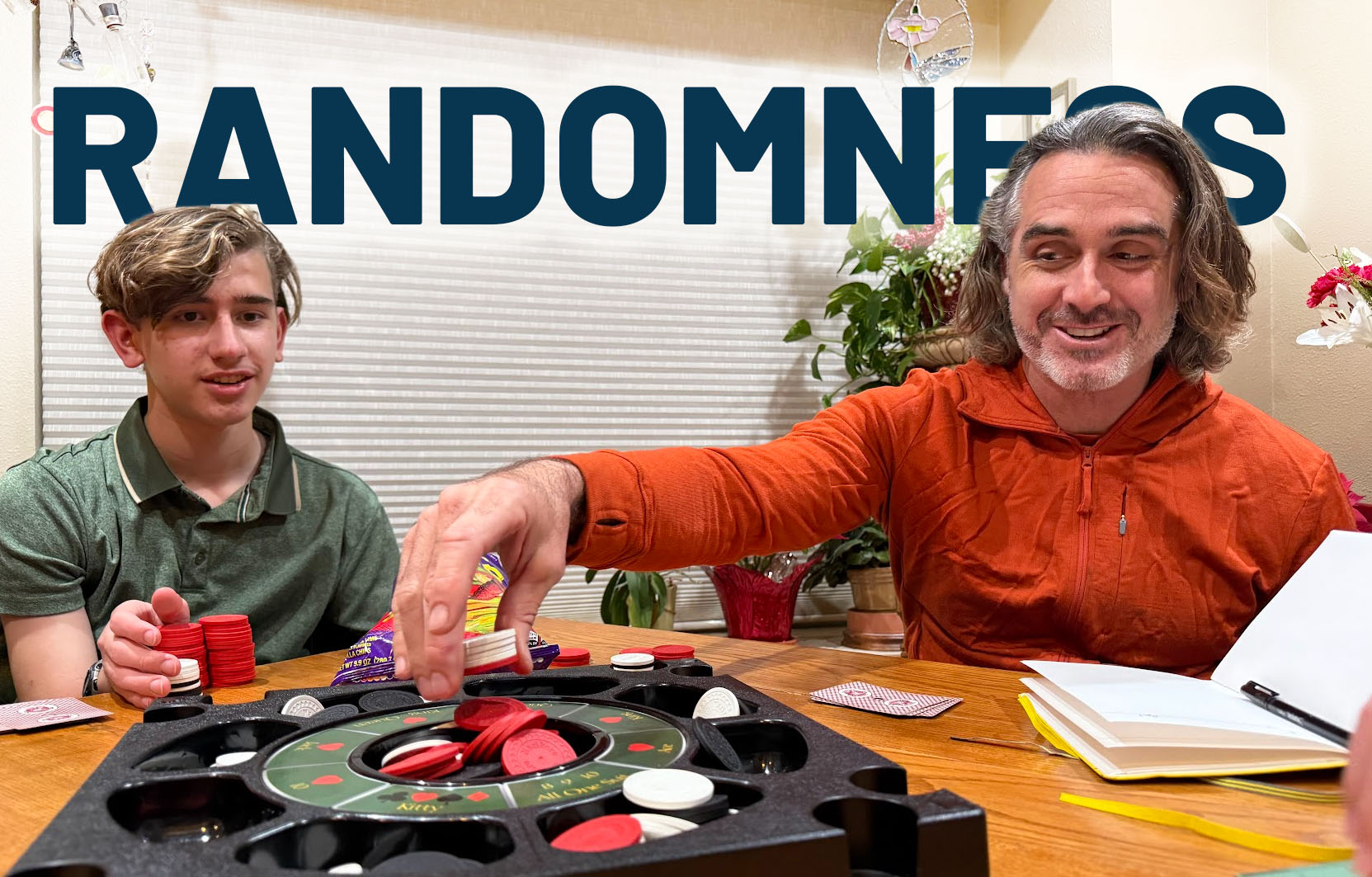
Randomness matters far beyond the lab, and Colorado is a good example of why. The state’s regulated games of chance, from the lottery to licensed sports-books and the historic casino towns of Black Hawk, Central City and Cripple Creek, all depend on fair, tested outcomes. For viewers curious about how the state keeps those outcomes honest, a guide to online casinos in Colorado and the state’s gaming rules shows that “random” is not just a scientific idea but a legal promise to the public.
That link between deep physics and everyday trust is exactly what makes the topic such good material for storytelling.
Why randomness is hard to explain
Humans are notoriously bad at recognizing randomness. We see patterns in clouds, assume a coin is “due” for heads after several tails, and believe streaks mean something. Psychologists call this the gambler’s fallacy, and it shows up everywhere from sports to investing.
For filmmakers, this creates a challenge and a hook. Showing audiences how their intuition fails is a powerful way to draw them in. A few approaches work particularly well:
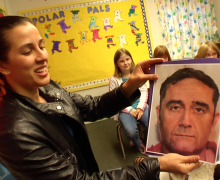
- Live experiments: ask people on the street to write down a “random” sequence of coin flips, then compare it with real flips.
- Visual simulations: animate thousands of dice rolls to show how averages emerge from chaos.
- Real-world stakes: explain how randomness protects passwords, elections and scientific trials.
- Expert voices: physicists and statisticians can make abstract ideas feel concrete.
True random versus pseudo-random
Most computers do not generate true randomness. They use algorithms called pseudo-random number generators, which produce sequences that look random but are completely determined by a starting value. For many uses, that is perfectly fine. For security and high-stakes applications, however, scientists want randomness that no one could predict, even in principle.
That is where quantum physics comes in. According to quantum mechanics, certain measurements are fundamentally unpredictable. Projects like CURBy use that property to create randomness that can be verified, giving users confidence that the numbers were not manipulated.
Tips for filming abstract science
Randomness is one of many invisible subjects science filmmakers tackle. Some lessons apply widely:
- Start with a question, not an explanation. “Can a computer flip a coin?” is more engaging than a definition.
- Use analogies carefully. They help, but they should not mislead.
- Show the lab. Real equipment, even if complex, gives credibility.
- Keep the human element. Scientists’ curiosity and frustrations make the story relatable.
- Test with non-experts. If friends understand the rough cut, the audience will too.
Randomness in nature
Chance is not only a human invention. Genetic mutations occur randomly, providing the raw material for evolution. Animal movements, such as foraging paths, often follow patterns that mathematicians model with random walks. Even the distribution of trees in a forest can reflect random processes shaped by wind and seed dispersal.
These examples give filmmakers a bridge between physics and biology, showing that randomness is woven into the living world as much as the laboratory.
Conclusion
Randomness is one of science’s most fascinating and misunderstood ideas. From entangled photons in Colorado to the mutations that drive evolution, it shapes our world in ways we rarely notice. For science storytellers, the challenge is to make the invisible visible – and few subjects reward that effort as richly as chance itself.