The Plant Chemistry Behind a Coffee Metabolite
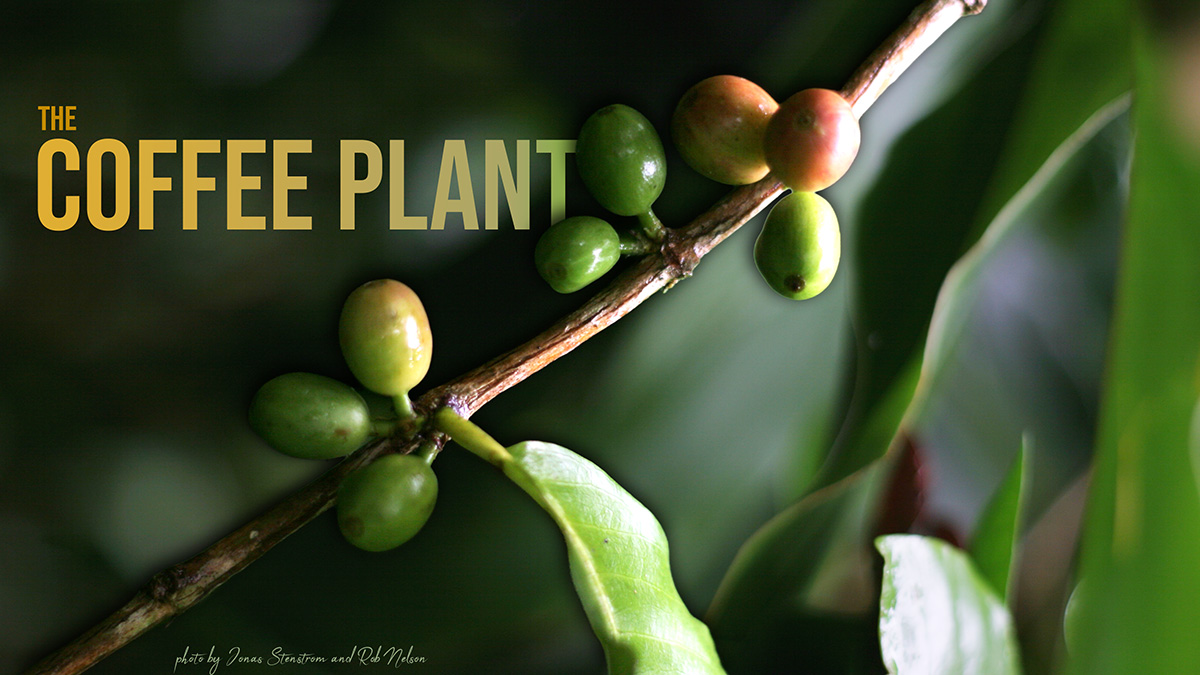
“Paraxanthine,” as this name implies, sounds artificial enough to be concocted by researchers, yet for years now, botanists have isolated it in everyday plant material. It is found in unprocessed green coffee beans, in the cotyledonary leaves of the emerging Coffea arabica seedlings, in the pulp of the Theobroma cacao fruit, and even in the flowers of various citrus species. Knowing the origins of its occurrence in nature can reveal a lot about why this chemical acts so differently in our bodies than regular caffeine.
Of special interest for a student and a botanist might be this cotyledonary leaves stage of the plant development. Cotyledon leaves are the first leaves a plant seedling grows and, as their name says, are made out of already existing material. And in Coffea arabica these early stages contain a certain quantity of methylxanthines even before producing a true leaf at all. There must be some reason for it: a seedling is fragile, weak, defenseless – precisely the point in which a chemical deterrent is needed the most.
These plants belong to the groups of organisms that make use of methylxanthines as a part of their chemical arsenal. An energy product known as parachew offers a caffeine-free paraxanthine gummy (at 200 mg per gummy) available in the Scottsdale, Arizona company. However interesting it is, the story behind this molecule, found within a coffee seedling or an orange flower, is more important.
Why Do Plants Bother Making Methylxanthines?
In essence, methylxanthine compounds produced by plants represent some sort of a defensive measure. The chemicals not only taste bad, but they are also known to interfere with the nervous system of any insect trying to feast on young foliage and unripened fruits – hence the highest levels of their presence in highly vulnerable plant parts.
The same chemical properties of the substance that deter an approaching bug can be utilized by the plant itself elsewhere. Studies have shown that methylxanthine compounds present in minute quantities in nectar can affect foraging bees’ habits in such a way that they come back for another helping; thus increasing their chances of pollinating a plant. Flowers of citrus trees, whose nectar will eventually get transformed into Sicilian orange flower honey, are no exception: here, the defensive compound of leaf cells becomes a subtle signal in a flower cell.
Indeed, it becomes particularly easy to establish the connection in Sicilian citrus orchards: bees that are busy at work collecting the nectar from orange blossoms will bring the plant substance back into the hive and into the honey. In effect, one gets an edible proof that one chemical can have two completely different biological uses, depending on where it occurs in the plant.
Where Does Paraxanthine Specifically Turn Up?
Paraxanthine turns up in several distinct plant sources rather than one single place. It has been identified in:
- Green, unroasted coffee beans
- The cotyledonary leaves of young Coffea arabica plants
- Roasted coffee beans
- Theobroma cacao fruit
- Citrus flowers
- Sicilian orange flower honey (likely carried over from citrus nectar)
This spread matters botanically because it shows paraxanthine is not a byproduct unique to coffee processing. It exists natively in plant tissue well before any bean is roasted or brewed, and it persists in small amounts through to the finished honey jar on a kitchen shelf. Tracing the compound across these species is really following one biosynthetic story that runs from leaf tissue to the human liver. Commercial producers work backward along that same path: parachew.com sells the isolated molecule on its own, skipping both the plant and the liver conversion that would normally produce it.
How Does a Plant Compound Turn Into a Human Metabolite?
The vast majority of paraxanthine in a human organism is not a result of direct consumption of cacao pulp or minuscule amounts in honey. Instead, paraxanthine results from caffeine consumption and its metabolization. When caffeine makes its way to the liver, it undergoes a demethylation reaction catalyzed by CYP1A2. One reaction makes up about 70–72 percent of consumed caffeine, according to the 2023 review titled “Paraxanthine safety and comparison to caffeine,” published in the National Library of Medicine’s PMC collection.
The enzyme’s activity level is inconsistent, and this explains why two individuals experience different sensations after drinking the same cup of coffee. High CYP1A2 activity leads to rapid conversion of caffeine into paraxanthine, whereas low levels leave the individual to experience unmetabolized caffeine for a more extended period of time.
After being formed, paraxanthine acts quite differently from the substance from which it originated. The 2023 PMC review provides information about half-life being shorter in the case of paraxanthine at about 3.1 hours compared to 4.1 hours in caffeine, as well as about a higher rate of plasma clearance. Additionally, paraxanthine functions as a potent adenosine receptor antagonist and binds $A_1$ and $A_{2a}$ receptor subtypes more effectively than caffeine.
| Trait | C8H10N4O2Caffeine1,3,7-trimethylxanthine | C7H8N4O2Paraxanthine1,7-dimethylxanthine |
|---|---|---|
| Chemical role | Parent compound | Primary human metabolite |
| Half life | 4.1 hours | 3.1 hours |
| Plasma clearance | Lower | Greater |
| Adenosine receptor binding | Baseline potency | Higher potency at A1 and A2A |
| Natural plant sources | Coffee beans, tea leaves, cacao | Green coffee beans, Coffea arabica cotyledons, cacao fruit, citrus flowers |
Half life values are population averages and vary widely with genetics, smoking, pregnancy, and medication.
A 2022 rodent study published in the PMC archive, titled “Paraxanthine Supplementation Increases Muscle Mass, Strength, and Endurance in Mice,” is one of the sources researchers point to when discussing paraxanthine’s effects beyond simple stimulation. The Conversation also ran an explainer describing how paraxanthine has started appearing in coffee and energy drink formulations as interest in caffeine’s metabolites has grown.
Why Does the Distinction Between Caffeine and Its Metabolite Matter?
The difference is important, because while one substance is derived from the other, the two interact differently when they interact with the body. “Jittery” sensations, or the anxiety people experience when drinking coffee or feel after drinking it, are caused by the consumption of caffeine, rather than paraxanthine. Due to the fact that paraxanthine is excreted from the body much quicker than caffeine and targets only adenosine receptors, it can provide the body with the signal of wakefulness in a cleaner manner.
Of course, there would be no use for isolation of paraxanthine as an individual substance were there any doubts regarding its impact on the person’s physiology. However, that exact advantage attracted the attention of commercial interests and resulted in the development of this compound as an active ingredient. “We spent months working with several labs before one of them finally cracked the bitterness problem in a way that didn’t compromise the dose,” said Noah McCashland, founder of McAb Nutraceuticals. From a trace element that was present in the fruit blossom to a precise 200 milligrams – all that change was a result of proper formulation.
From the biological point of view, no invention had to be done to achieve the goal in question. In reality, paraxanthine had always been found naturally in the flowers of citric plant, coffee beans and seeds of cocoa pod long before it was isolated. Moreover, the liver of human beings creates this substance naturally every time they finish drinking a cup of coffee. What has changed recently is just the level of interest in this process of metabolism.