How animals see the world

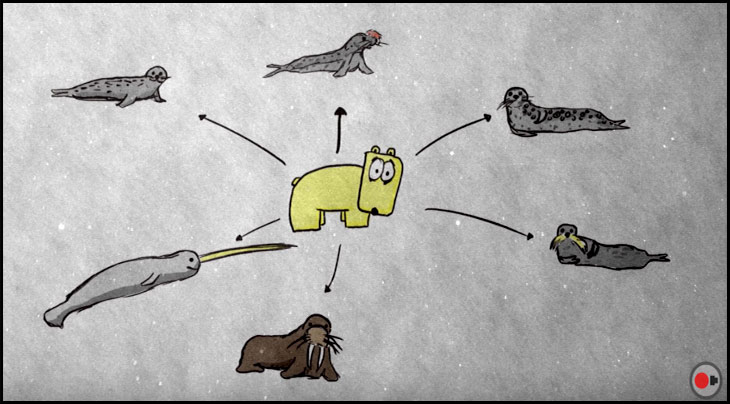
Our eyes are pretty amazing but we so often forget that animals see the world differently. What we see isn’t always the full picture and animals often see things in their own special way. Dogs have worse eyesight than humans but they can still see plenty of color. Some people believe that they can only see in black and white but this is not true. They can detect browns, blues, and yellows but have fewer color detecting cells than we do. They have better peripheral vision at 250 degrees compared to our field of vision of 180 degrees.

Cats generally have slightly worse vision than dogs but it is still pretty decent and they again have better peripheral vision than we do.

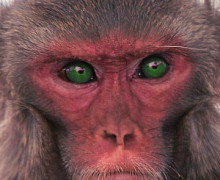
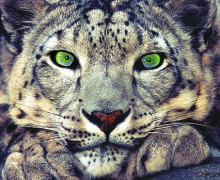
Then we come to birds, many of whom can see light that we cannot called ultraviolet light(UV). Birds have four colour cones compared to our three, one of which is extremely sensitive to UV wavelengths. Check out the infographic now for more information on how a variety of animals see the world.

An infographic by the team at GAP NSW

Article by Tom Clarke

Tom Clarke is Marketing Manager at a not for profit organisation called Greyhounds As Pets, which focuses on the adoption and fostering of retired greyhounds into loving homes. He is an animal lover and loves to create content about all animals but writes about greyhounds most often.

Real Superhuman Powers and the Science Behind Them

from PXhere

We would all love to have superpowers that let us fly to work rather than take the bus, see into the future to pick the winning lottery numbers and read minds so that we can understand what our partners are thinking, but the truth is some things are just beyond human capability. Though we can’t fly like Superman or shoot webs out of our hands like Spider-Man (like we would want to), we do have pretty amazing powers locked inside of us, no doubt. Human beings are pretty special.

To start off with, we actually possess a crazy amount of physical strength. Technically, we have the muscle structure to be able to punch through walls, but it is our brain that stops us from demonstrating our incredible strength at any given moment. Instead, we reserve our full capabilities for when we need them the most.

Take Angela Cavallo, a lady with more strength than she could ever imagine. Her son was performing mechanic work on his vehicle when the jack fell, and he became trapped under it. Angela shouted her neighbor to help but decided to act on her own to save her son. She lifted up the vehicle, weighing approximately 3,500 pounds, high enough and long enough time for her son to wiggle free.

Angela is not an exceptional human; though she acted with exceptional courage. Adrenaline clearly kicked in, giving her a boost of strength, but during this heightened state, bodily functions like the immune and digestive systems also shut down to free up energy. Thus, we can’t use our super-strength all the time because it would damage our tendons and tissues, as well as shut down our functions, but we can draw on this superpower when we need it the most.

It’s not just physical strength that humans can harness. We also have incredible mental strength. Our brains are extremely fast processors with nearly unlimited storage space. The only reason we can’t remember everything is because our memory works by creating links, contextual and emotional. If these links are not strengthened or nothing triggers them, they become “lost” and the memory is forgotten.

Forgetting is how we prioritize, and so it is just as important as remembering, but in some remarkable cases, humans have been able to remember obscene amounts of information, either as the result of obsessiveness or refreshing. Or because their brains are wired up slightly differently. Take Daniel Tammet, who’s a high-functioning, autistic savant syndrome allowed him to recall Pi to 22,414 decimal places without making a mistake. Pretty much anyone can improve their memory using techniques, and most of us with practice.

If all that remembering is giving you a headache, then you’ll be glad to know that humans are also capable of demonstrating pain immunity. We actually have built-in natural painkillers known as “endorphins”, which are released when we exercise (hence, why athletes can break through their pain threshold during performance), when we are excited or are experiencing extreme pleasure, and when we experience an event that would otherwise cause us a level of pain that we couldn’t handle. Endorphins are a superpower that we cannot control; mostly because we need to feel the pain to survive. It also guides us away from harm and damage.

Another mechanism that guides us away from harm is our ability to manipulate time. Yes, we are like Neo from the “Matrix”; all of us. When we sit in our dentist’s waiting room feeling bored, time slows down until it almost stands still. We watch the seconds ticking down, slowly. When we are doing what we love or are highly occupied, time goes in a blink. And most amazingly of all, when we are in a situation of immediate danger, time slows down so that we can react. We flip over from our rational thinking into a more instinctual mode known as “experiential thinking”. We make rash decisions, but we make them fast, and because our mind is moving fast the outside world seems to move slower. Nice!

The “powers” mentioned so far can be explained by science. They are normal bodily functions heightened during extraordinary circumstances. But there are still anomalies in humans. There are superpowers that are more difficult to explain and come across more like something out of a film or computer game. For example, in the new poker/eSports game Power Up, the X-ray power allows you to view opponents’ cards, but did you know that remote viewing was actually used by the CIA in attempts to gather information? Yes, intelligence agencies experimented in this area and found results suggesting that it is possible for humans to view events and objects without being physically present.

Take also Wim Hof, also known as “Iceman”, who submerged himself in ice without losing any body heat. He is said to have controlled his body temperature using meditation and other techniques and has since climbed Everest in his shorts, ran a marathon in the desert with no water and proven in lab conditions that he can influence his own immune and nervous systems. Try to explain that one.


How to Avoid Venomous Snakes While Touring the U.S.

There’s one characteristic that most of us share with Indiana Jones, and no, it’s not being a renowned archaeologist who travels the world and just so happens to be as handsome as Harrison Ford. It’s having that pit-in-your-stomach, adrenaline-fueled-desire-to-run-away-screaming-at-the-top-of-your-lungs fear of venomous snakes. And while having that innate fear is certainly justified, it’s not going to help you to avoid being one of the 8000 reported snake bite victims in North America each year.

With medical treatment having the potential to be prohibitively expensive, and temporary paralysis or even death being a distinct possibility, it’s preferable to prevent snakebites from occurring over having to deal with actually being bitten.

Learn to identify venomous snakes.

As you probably already know, not every snake is created equal. Some are completely harmless (other than the pain of an actual bite!), while a bite from venomous snakes species might equal a swift helicopter ride to the nearest hospital. In North America, there are four different types of venomous snakes, each with distinct features and behavior patterns.

Coral Snakes

The brightest venomous snake in the U.S. can be identified by the famous rhyme: “red and black, friend of Jack; red and yellow, kill a fellow.” The visual difference is relatively small, but knowing it is essential.

Some snake species look remarkably similar to the coral; for example, the harmless Florida scarlet snake also has red, black, and yellow bands. However, the red and yellow never touch, signifying that you have nothing to worry about.

You’ll find coral snakes throughout the southern coastal plain, anywhere from Louisiana to North Carolina. They’re most common in Florida and are known as a shy snakes as they often are hiding in forested areas.

Cottonmouth Snakes

The trouble with the cottonmouths is that they’re quite difficult to identify. Adults of this venomous snake species don’t have many distinctive features or markings. Nevertheless, there is one characteristic that sets the cottonmouth apart: it has a bulky head that is generally wider than its neck.

A cottonmouth has light shading between its crossbands, and the body is commonly quite dark. A younger cottonmouth will have crossbands that are widest near the top of its body, a characteristic not found in copycat snakes.

This snake is the only venomous snake in North America that’s known as semi-aquatic, meaning that it resides near water. If you’re visiting Virginia, Florida, or southern Texas, ensure you’re on your toes near swamps, rivers, and lakes.

Rattlesnakes

The rattlesnake is perhaps the most famous snake around; its rattle is its most recognizable feature, meaning you’ll usually hear them first. Visually, rattlesnakes have a diamond-shaped head and a noticeably thick body.

Keep in mind that while baby rattlesnakes won’t have a developed rattle they are just as venomous. Even more confusing: adult snakes sometimes lose their rattle, which means identification can be even more difficult.

Rattlesnakes are found in a variety of habitats, from dense forests to sparse grasslands and deserts. You’ll find them in Florida, Mississippi, North Carolina, Louisiana, Arkansas, New Mexico, Minnesota, and California.

Copperhead Snakes

Yet another snake that we often misidentify, copperheads share many characteristics with other snake species. Most have brown hourglass bands, with the colors being similar to chocolate milk. The bands are also much more precise, compared to the average cottonmouth for example.

Copperheads are nocturnal, so you’re unlikely to find them during the day unless it’s unusually cold. What makes this snake a potential danger is its tendency to freeze in place; this makes it tough for the average passerby to notice the copperhead. This snake is known to act defensively and will strike when it feels threatened.

Copperheads are versatile creatures that adapt to a wide variety of environments. You’ll find them anywhere from Texas to New England. Not only are do they call forested areas home, but they’re also common in the suburbs.

Prevention

When it comes to snakes, it’s all about prevention. All it takes is a couple of simple steps, and you’ll save yourself a whole lot of trouble.

Don’t prod snakes or act aggressively!

Most of us make the mistake of thinking that snakes will attack humans by default, causing people to attack snakes with rocks, sticks, or other objects. Don’t be one of those people.

Snakes will often keep a defensive stance; they won’t attack unless provoked. If you spot a snake, move away slowly and calmly. And don’t underestimate a snake’s reach, either.

Research your area.

Planning a holiday to somewhere you’ve never been before? Plan ahead: look into whether venomous snakes are common in the area, and look at photos so that you know what to expect. If you do get bitten, it’s important to give medical professionals as much information as possible.

Stick to the paths.

Snakes usually avoid being out in the open and are often hiding underneath bushes or stacks of leaves. If you’re out for a walk or around a river or swamp, avoid walking through areas where a snake may be lurking. Stick to walking paths or trails as much as you can.

Wear appropriate gear.

While snakebites can’t always be avoided with gear, some products can potentially help if you know you will be in a snake-prone area. For example, snake chaps and boots are made from materials that prevent fangs from piercing through to the skin.

However, be careful when looking into these products. They can get a little pricey, which means people often look to cut corners. The result? Cheap snake chaps that don’t do what the packaging promises.

Bitten by a venomous snake? Here’s what to do.

Even with the necessary precautions, there’s always the possibility that you’ll still fall victim to a nasty bite. Fortunately, most venomous bites in North America are not life-threatening. Keep to the following pointers, and you’ll most likely be just fine:

  • Call emergency services as soon as possible. The biggest error you can make is waiting for symptoms to appear; do this, and it may be too late! Many deadly bites come as a result of individuals refusing to seek medical services.
  • Minimize your movement and loosen your clothing, removing any constricting jewelry.
  • Avoid taking painkillers or any stimulants.
  • Do not use snakebite kits, suction devices, or similar.
  • Keep the wound at heart level until further advised by a medical professional.
  • You should only put pressure on the wound if bitten by a coral snake.
  • Only take a photo of the snake if you are at a safe distance.

What is the most dangerous dog breed in the world?

Everyone and their mother has a story about being bitten, scratched, or even attacked by a dangerous dog.

It can become such a problem that some areas have even enacted breed-specific legislation (BSL), outlawing breeds of dogs that we think of as dangerous, like pit bulls, Doberman pinschers, and German shepherds.

But, which breed of dog is actually the most dangerous one? Let’s try looking at actual data rather than coming up with emotional judgements about Petey from The Little Rascals.

Which dog breeds are the most aggressive?

Luckily, we don’t have to rely on anecdotal evidence like your Uncle Bob’s stories to get to the heart of the matter (No, Uncle Bob, the fish was not five feet long!).

A 2008 study actually did a survey about breed differences in canine aggression. There are some flaws; because this study relied on survey data, there’s no way to verify the dogs in question really were the breed their owners thought they were, or acted how their owners were interpreting things. It’s also just one small slice of data from a very big world, but it can give us an idea about what’s really going on.

What the researchers found was surprising. There was huge variation in dog aggression within each breed. Still, some breeds really were statistically more aggressive towards some targets when you looked at the group as a whole.

For example, beagles and cocker spaniels were more aggressive than most dogs towards their owners. Akitas, Australian cattle dogs, Australian shepherds, German shepherds, Jack Russell terriers, and pit bulls were more aggressive towards other dogs than most. Australian cattle dogs, Australian shepherds, Doberman pinschers, and German shepherds (but not pit bulls) were rated as more aggressive towards strangers.

And what about tiny dogs, you may ask? Dogs like dachshunds and chihuahuas were rated as the most aggressive dog breeds towards almost everything.

But, this might occur for several reasons: it’s easier to let small dogs get away with being aggressive, because the consequences of a nippy chihuahua are not the same as with a nippy mastiff. As a society we typically don’t focus on training these little guys very much, and life really is tough as a small dog in a big world, according to Dr. Jessica Hekman, a dog researcher.

Which dog breeds are most dangerous?

Of course, aggression is only part of the issue. A tiny ankle-biter may be more aggressive, but it isn’t likely to kill you.

In general, big dogs are more dangerous. But, is the legislation against certain big dog breeds warranted?

Why are pit bulls often targeted with breed-specific legislation?

It’s time to separate fact from feelings. According to a 2000 study, more than half of dog-related deaths between 1979-1998 were reportedly caused by pit bulls or Rottweilers. However, more than 25 different breeds of dogs were implicated in dog-caused fatalities as well.

Most dogs that actually cause deaths have certain physical characteristics. They’re large, very muscular, have a low center of gravity, and extremely powerful jaw muscles. Many of these dogs were even bred to attack and protect other animals and people.

It sounds pretty bad when you look at it on the surface like that. So, let’s dig in deeper.

First, it’s pretty hard to identify pit bulls in the first place. Don’t believe me? Check out this site. It’s sort of a generic term to begin with, and doesn’t really apply to any one breed of dog except the American Pit Bull Terrier. In fact, one 2013 study showed that it was actually pretty common for media and official accounts of dog breed to vary in cases where people had been killed by dogs.

Second, there are millions of pit bulls in the U.S. right now. Most are loving family members. So, what causes a good pit bull to go bad? The same study pointed out a host of factors that led to people being killed by dogs.

Most dogs who kill people share common backgrounds: they’re usually left chained up outside, away from the family where they would develop normal social behaviors towards people (it really is tough to master human social interactions; just ask any introvert like myself). Many are also abused by their owners. Most people who are killed by dogs tend to be small kids who wander onto the dog’s property, and the dog, who’s never seen anyone else and is suddenly trapped, freaks out.

According to Dr. Hekman, some people also get pit bulls precisely because they have a reputation as a “vicious dog.” They then house them in these exact conditions, and boom! Before you know it, you have a perfect storm headed on a collision course for eventual disaster.

Of course, some dogs do attack outside of these circumstances. For the most part, though, dog deaths boil down to a simple factor: mismanagement and unfortunate circumstances. The good news? We can guard against this as a society—but maybe not how you’d think.

Does breed-specific legislation really work?

In a word, no.

Some places, like Manitoba, actually have seen successes with breed-specific legislation. In many other places, though, they’ve failed. Why? It turns out that there are several reasons.

The major reason why breed-specific legislation doesn’t work is that it doesn’t treat the cause of the problem. The cause is not pit bulls themselves, the cause is mismanagement by owners—many of whom happen to be attracted to “scary” dogs like pit bulls and put them in high-risk environments.

By focusing on the thing that isn’t causing the problem, local governments are actually shifting resources away from more effective preventions, like finding and fixing bad-owner situations.

Furthermore, breed-specific legislation trains people to view the entire breed as bad, when that’s simply not the case.

Finally, banning one breed won’t solve the bad-owner problem because if you outlaw one breed, they’ll just find another one. For example, if you outlaw the American Pit Bull Terrier, then someone may just get a Presa Canario or a Cane Corso instead—two other dog breeds with “vicious” reputations.

So, what is the most dangerous dog breed in the world?

Here’s the surprising answer: none.

“Dangerous” breeds like pit bulls are not actually more aggressive towards people than any other dog breed on their own, as we saw in the dog aggression study. The fact that they do cause most deaths does point to a larger problem: dog owners.

It’s actually a complex interplay between genetics that give dogs the tools to be dangerous, and people who actively nurture those qualities where they might not otherwise have developed.

What the real question should be is, “How can we train people to be better dog owners?”

Deadly Australian Wildlife

Inside: Down Under may seem notorious for deadly Australian wildlife, but there is more to the story.

Australia is home to more than just Crocodile Dundee and the Hemsworth brothers. There are all kinds of critters there, and not all of them play nicely. Australia is full of plenty of things that can bite, sting, or poison—and some of them can even kill you.

That doesn’t mean you should avoid Australia, though. If anything, it’s an explorer’s paradise due to all the awesome biodiversity. Just be sure to keep your distance from the wildlife unless you’re absolutely sure it’s safe! Here is a compilation of just some of the things that can kill the unsuspecting.

Australian Bugs

If there’s one thing Australia is home to, it’s a lot of bugs. Spiders in particular have a fearsome reputation, but only a few can actually kill you, such as the Redback spider (Latrodectus hasselti) or the Syndney Funnel-web (Atrax robustus).

The robustus part of the Sydney Funnel-web’s scientific name should give you a clue to what they look like: big, large-fanged, and with a habit of rearing up on its hind legs to show off its fangs when threatened.

Luckily, spiders are one of the least likely things to kill you. Only one spider death has been recorded in the last 40 years, thanks to spiders’ slow-acting venom and the invention of anti-venom in the 80s.

Aside from spiders, there are many bugs that can sting but won’t cause death—unless you are allergic and suffer anaphylactic shock. This is unfortunately common with a few types of bugs. The Jack Jumper ant (Myrmecia pilosula) and various Bull ants (Myrmecia spp.) have been responsible for at least six deaths between 1980 and 1999. The common honeybee and paper wasps are also responsible for at least a few deaths each year.

Microorganisms

Sometimes you can’t even see the dangers coming. Australia is home to infectious diseases just like anywhere else, but it also has a few special ones of its own.

The Hendra virus affects fruit bats, which don’t normally interact with people. The problem comes when horses eat underneath bat roost trees, incidentally eating their droppings as well—and spreading the deadly disease to people. At least four people have died of this disease.

Melioidosis is another disease caused by Burkholderia pseudomallei bacteria. It lives in muddy areas and was responsible for killing 77 people from 1989 to 2009.

Australian Snakes

You’ll also find that Australia has a lot of snake species—around 172, to be precise. What’s more, just over half of them can actually kill you! Luckily, all snakes try to avoid biting you if possible (why waste the venom?), so if you see a snake, just leave it be. Only a few species have been recorded as the culprit when the cause of death is a snakebite.

The Eastern Brown Snake (Pseudonaja textilis) is a nondescript 4’-6’ snake that’s responsible for more than half of snakebite deaths. It’s no wonder: they’re cranky, they’re the second-most venomous land snake in the world, and they love the same types of coastal areas where most people are concentrated in Australia.

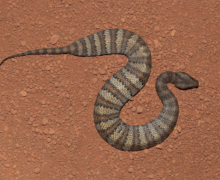
Tiger snakes (Notechis scutatis), the Coastal Taipan (Oxyuranus scutellatus), Mulga snakes (Pseudechis australis), and Common Death Adders (Acanthophis antarcticus) are also responsible for a few snakebite deaths every so often.

Sharks and Rays

Unlike many deadly species in Australia, sharks are one of the few things that may actually seek you to try and kill you. Even so, most shark attacks are just mistakes on the shark’s part; they either mistake people for regular prey items like seals, or they might be curious and just “tasting” us rather than being driven by all-out bloodlust.

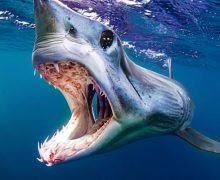
Most shark attacks in Australia come from three species of sharks: the fearsome Great White (Carcharadon carcharias), the aggressive Bull shark (Carcharhinus leucas), and the garbage-can-like Tiger shark (Galeocerdo cuvier).

While not technically a shark (although it does have a cartilaginous skeleton like sharks), the stingray is now a notorious (if extremely rare) killer. Steve Irwin, the famous Crocodile Hunter, was killed by a stingray whose venomous tail spine pierced his chest and poisoned him while filming. Rest assured, though, it was a unique event, and Steve was one of the few people in the world to be killed by these beautiful critters.

Even though sharks are one of the few animals that can develop a taste for humans, we’re causing them far more harm than they are to us. Shark populations are declining, and it’s up to us to help these guys so we can keep these guys around for a long time. If we can all learn good ways to prevent bad shark encounters, then all the better for sharks and for us.

Sea Invertebrates

Sea invertebrates are unlikely to come after you, so it’s up to you to avoid them. Australia has at least two deadly species of jellyfish. Its most famous is the box jellyfish, the most venomous marine animal in the world. Box jellyfish stings can be so painful that people can actually die from the shock of them.

On the other hand, the sting of the Irukandji jellyfish isn’t necessarily that painful at first. Half an hour later, though, victims go into full-blown Irukandji syndrome, where they’ll have excruciating lower back pain, hypertension, muscle cramps, anxiety, and a host of other unpleasant symptoms. Oh, and watch out—the Irukandji jellyfish is only about a half-inch long.

If you see any small octopuses with blue rings, keep away! The blue-ringed octopus (Hapalochlaena spp.) looks link a tiny trinket, but when it’s blue rings are flashing, it’s a warning: stay back, I’m deadly! And because there is no antivenom for this little guy, you definitely don’t want to get stung.

If you love looking for cool shells, steer clear of Cone Snails. They have beautifully-patterned shells, but they’re hiding a secret: a harpoon full of venom which they use to hunt small fish. These snails produce a huge array of different venoms, each of which have different effects. Many scientists are interested in cone snails for this reason, and some are even being explored for medicinal purposes!

IndoPacific Fish

You thought fish were just a tasty dinner, didn’t you? Think again: some fish are deadly. Stonefish resemble, well, stones—and they can pack a deadly punch of poison if you step on them accidentally or pick them up. Venomous lion-fish are popular aquarium fishes, but they can also be found in the wild in Australia. Smooth toadfish (also known as pufferfish) are also deadly if eaten. You may know them as fugu, the dangerous Japanese delicacy.

Saltwater Crocodiles

Just like sharks, crocodiles are one of the only animals in Australia that can actually identify humans as prey. Crocodiles can live in saltwater and freshwater, and while they can go on land, they’re not very fast runners. As long as you heed good safety practices in crocodile country, you and crocodiles both will stay safe.


Decoding the Driftless

In the middle of what feels like endless cornfields is a hidden jewel – the Driftless Area. For reasons yet unknown to us, the glaciers of past ice ages missed a small section of Wisconsin, Minnesota, Iowa and Illinois. The crushing effect of miles of ice saved the land from turning into a plowed up mess. And while there’s nothing wrong with a plowed up mess (corn grows great in that), it saved the caves and billion year old rocks from getting reworked.

driftless-cave

Where is the Driftless Area?

The driftless area or driftless zone as some call it, is a large section of land between Madison, WI and Minneapolis, MN. If you’re looking at a topographic map it’s easy to find – essentially the hilly regions of the upper midwest. If there are hills, bluffs, steep canyon walls and waterfalls, you’re probably in the driftless area.

driftless-area-map

Why is it special!

Because the glaciers missed the area, there exists a unique geology. There are landforms and animals that are non-existent in other parts of the midwest. Most people don’t know they exist though, which is why we’re doing the educational outreach that we are. In particular, we’re concentrating on these:

  1. Effigy mounds – The native Americans built large burial mounds, often in the shape of animals. They scatter the landscape.
  2. Cave Art – In the caves of the area, the Native American art is preserved. The story it tells is both interesting and shocking.
  3. Caves, Sinkholes – There are limestone caves all throughout the area, all of which hold hidden passageways.
  4. River Ecosystems – Some of the oldest rivers in the world are here!
  5. Rare Ecosystems – Algific Talus Slopes, Goat Prairies, Dry Prairies, are but a few of the unique landscapes in the area.
  6. Springs – cold water resources in the driftless are home to some of the world’s best trout fishing.
  7. Glaciation – glacial geology shaped the area, but exactly why it missed this area is still a bit of a mystery.
  8. Rare Species –Peregrines, monkshood, ice-age snails, timber rattlesnakes and other rare species call this area home.

The Feature Length Documentary

To help us tell the story of the driftless, we wanted to use the power of media. Here is the trailer to our indiegogo campaign where we’re trying to raise funds for the filmmaking process. Click here for more info on how you can help.

How Can You Help?

First and foremost, now that you know it’s here, you can visit the region. Stay in a Bed and Breakfast (like Nature Nooks or Justin Trails) and support local business. Eco-tourism helps spread the word that this area is worth protecting.

Secondly, learn as much as you can about the region before you come. We’ve found that the information that’s available today is few and far between. Even the locals often don’t know what an amazing place they are in. That’s why we’re putting our energy into a feature length doc and educational resources. If you do feel passionate about spreading the knowledge, I encourage you to donate a few dollars to our campaign. Every contribution goes a long way towards protecting this area through education! Thanks again.

hot girl in tunnel entrance

Depression

Depression in independent scientists, filmmakers and artists is a very real thing. I know. I’ve experienced all of those careers and seen it first hand.

I’ve always thought that being depressed was a weakness to your character. I know my father explained it that way to me once. I don’t think that anymore. In fact, I think it may be more a symptom of the difficult career path – one full of uncertainty and one of comparison with others. Once I had the courage to explain what I was going through, I finally had everyone come out of the woodwork to explain they go through it too. That helped a lot.

I made a video this week about depression, to bring up the struggles I go through as an artist, filmmaker, guy, and dad. In some ways it’s for me – in others I just want to make sure anyone who is also feeling down or depressed, knows they aren’t alone. Link is in my description. 🙂 Sometimes #downdays sometimes #updays – #keepitinperspective

Over the last 5 years, I’ve had two 6-month periods where I was very down – I was depressed. I never went to see a doctor so I wasn’t diagnosed, but I realize that this action of not taking action was part of a bigger problem we all have in this filmmaking world. The more I started to tell people the more I realized it was everyone’s secret.

I was tired, unmotivated, stressed, anxious, couldn’t sleep and feeling worthless. I couldn’t get it to leave. Was it related to being a filmmaker and YouTuber in this modern world? I think so. I’d be willing to say that depression is higher in our field and I think we need to talk about it.

Here are my favorite videos that I’ve seen on the topic of depression all wrapped up into a nice little playlist. If you have others feel free to add them in the links below.

Also, do leave me your comments. Look, it’s important to let anyone that is going through it know they’re not alone. And, realize that it doesn’t mean you’re weak if you’re going through depression – anymore than having a broken leg means your weak. I might even see it as part of the struggle that anyone in our field will likely go through to get to where they want to be.

Thanks for watching and letting me share.

depression - scuba diver in cold water

The Important Role Played by Viruses in Human Evolution

Scientists have long pointed to the relationship between pathogens and evolution, but until very recently, they have been unable to pinpoint specific patterns which occur across different species. In a fascinating new study carried out by the Genetic Society of America, they have discovered (using big-data analysis) that viruses are responsible for an impressive 30 per cent of all protein adaptations since the human divergence with chimpanzees.

The study, published in the journal eLife and presented on 14th July at The Allied Genetics Conference, showed that the adaptive patterns caused by viruses are strong and very clear. Never before have viruses been shown to have such a powerful effect on how human beings have adapted. The researchers found that adaptations occurred three times as frequently in proteins which interacted with viruses, as in other proteins.

Thanks to the study, scientists can now identify which parts of the cell have successfully defeated viruses in the past. The differences in protein shape and composition in response to these threats, could help scientists find new ways to battle the most powerful viral threats currently faced by human beings. Previous research had focused only on individual proteins which are directly involved in the immune response.

When the body is faced with a virus, proteins throughout the whole body react; not only those involved with immunity. The researchers discovered that as much adaptation takes place outside the immune system, as within it. Viruses have affected us in every respect, affecting all parts of our cells. Proteins make a host of important cellular functions possible, so an analysis of tweaks and differences can give scientists vital clues as to how to face future threats. When pandemics and epidemics occur, populations must either adapt or risk becoming extinct and it is hoped that the observable changes in protein will help scientists new ways to help the body adapt.

The study helps scientists answer important questions, such as why species which are very similar have evolved different ways of fulfilling the same cellular function, such as cell membrane creation or DNA duplication. Scientists previously had no clue as to what evolutionary forces had provoked these similarities, and their results indicate that viruses hold vital secrets regarding the way different species have evolved.

The findings will have a great impact on the way researchers approach viral epidemics. Devastating viruses similar to HIV, for instance, have affected human beings and animals at many points in their long history. Seeing how cells have reacted to viruses of this type could help scientists glean a better understanding of how viruses work, and possibly lead to the discovery of how we can beat disease causing viruses for good, thus leading to greater health and a longer lifespan for humanity and other species.

Currently, viruses are taking countless lives, some of the most dangerous being the Marburg virus (which, like ebola, has a very high fatality rate), ebola (there are, thus far, five identified strains of the Ebola virus, which, like Marburg, has a fatality rate of 90 per cent), the Hantavirus (which actually comprises several types of virus and which can lead to lung disease, kidney failure and fever), some strains of bird flu, the Lass virus (whcich is transmitted by rodents), the Junin virus (which causes tissue inflammation), the Crima-Congo fever virus (transmitted by ticks and similar in its effects to Ebola and Margburg), the Machupo virus (which causes high fever and bleeding), the Kyasunur Forest Virus (which causes high fever, muscle pain and bleeding) and Dengue fever (passed on by a mosquito and boasting a very high fatality rate; Dengue is common in popular tourist destinations such as Thailand, India and the Philippines, affecting between 50 and 100 million people a year).

Thus far, viruses are treated by addressing specific symptoms and complications. For instance, with Ebola, the key is to provide fluids and keep electrolyte levels stable, to maintain oxygen levels and blood pressure, and to treat any infections that arise. For other viruses, researchers are working to discover vaccines which will keep them at bay. What would give scientists the upper hand by mimicking protein adaptations, however, is the ability to actually manipulate cell function, instead of merely responding to symptoms.

Article by Gemma Hunt

Liquid Nitrogen Experiments

Liquid nitrogen is really great for getting kids excited about chemistry. Not only will everyone love you at the next birthday party, but you can use it to teach some basic chemistry in a cool way. Recently we did a video with GoPro where we showed three basic liquid nitrogen experiments. This article explains in a bit more detail how you can pull them off. But first, you should watch the video; if this doesn’t get you inspired to try it yourself, I don’t know what will.

Liquid Nitrogen Science

As the name implies, liquid nitrogen is nitrogen in liquid form. Nitrogen (in the form of N2) makes up most of the air we breath. It dissolves into our tissues; it is absorbed by plants; and is an essential element in the building blocks of our DNA. Most of the time it exists as N2. Ammonia and Ammonium are other common forms. Nitrogen as a gas can actually become a liquid under the right conditions—namely cold temperatures. We’re talking very cold. The boiling point for liquid Nitrogen is -196 degrees Celsius. To help us explain the basics better, we made this video:

3 Basic Liquid Nitrogen Experiments

Freezing and Smashing a Flower

One of the first things people use to demonstrate the extreme cold of liquid nitrogen is freezing a flower. Not all flowers are the same, though. You want a flower with very thin petals. Roses work particularly well. However, you might notice that even in our experiment in the GoPro video, the inside petals still didn’t smash apart. They were insulated by the outside petals and thus didn’t break fully.

nitrogen flower smash

Exploding a Bottle

Warning: Be very careful with this! Make sure you have an adult around to perform all experiments and wear protective clothing and goggles. We’re not dealing with flammables, but the bottles are exploding, which can be very dangerous.

The Process: Fill about 10 percent of a small plastic bottle with liquid nitrogen. Put the cap on and then step back to a safe distance to watch it explode.

liquid Nitrogen 4

The Science: Because the boiling point of liquid nitrogen is -196 degrees Celsius, at room temperature the liquid instantly starts to change phase into a gas. The gas fills up more volume than the liquid and starts to increase the pressure inside the container. In fact the expansion rate is 1 to 696. That means one liter of liquid nitrogen will expand to fill 696 liters. Eventually the pressure is more than the plastic can handle, and the bottle explodes. Note that some plastic will explode earlier. We recommend the more rigid plastic containers as it gives you a bit more time to get to safety.

liquid nitrogen explodes bottle

For added fun in demonstrations you can put the plastic bottle inside a garbage can and fill it with ping pong balls, leaves, or other material that will fly into the air during the explosion. This makes for a spectacle.

liquid nitrogen experiments

Bottle Rocket

You can also use liquid nitrogen to create a very powerful bottle rocket. To do that you need to fill up a plastic bottle a third of the way with water. Then, pour in another 10 percent of liquid nitrogen. With a glove on, put your thumb lightly over the top and tip it upside down. This prevents all the water from pouring out. As you do this, the liquid nitrogen will quickly expand, creating an intense bottle rocket.

Bottle Rocket liquid nitrogen experiment

Where do you get liquid nitrogen?

For the longest time, we had no idea where to get liquid nitrogen. The truth is that it’s really easy to get. Just about every gas dealer in town has it, and it’s really cheap – about 5 bucks a liter. The real trick is that you’re going to have to get a container that will hold the liquid nitrogen. They won’t just pour it into any container. This is where it can get somewhat expensive. We found one here on Amazon for 230 bucks. It’s the only major investment you’ll have to make. After that, you’re good to go. Grant Thompson gave a nice overview of it in this short video.

The Science of Breadmaking

People have been making bread for approximately 30,000 years—almost since we were still cavemen! Even though we might not have understood what was happening when we first started making bread, there’s actually a ton of science behind how it works.

In this home experiment, we’ll bake a very simple (but crazy delicious!) loaf of bread using just four ingredients: water, flour, yeast, and salt. Breadmaking involves a lot of irreversible chemistry, so make sure you read through the recipe first to get an idea of what you’ll be doing at each step. Then, at the end, we’ll talk about the science of what happened along the way.

Materials

  • Plastic wrap
  • Thermometer
  • Metric scale
  • Cooking spray
  • Large spoon (the stiffer, the better)
  • Large bowl
  • A clean counter top
  • 1-2 cookie sheets
  • Shallow metal baking pan (at least 1″ deep)
  • 1-2 pieces of parchment, one per cookie sheet
  • Olive oil
  • 567 g bread flour
  • 11 g salt
  • 3.5 g instant yeast
  • 385 g water (room temperature), plus an extra cup or so of hot water.

Procedure

  1. Add all the dry ingredients (flour, salt, and yeast) in the large bowl and stir to combine.
  2. Pour 385 g of room-temperature water in and mix until everything is well-combined. The dough will be a bit sticky. If it’s too dry, add in a small amount of room-temperature water; if it’s too wet, add in some more flour.
  3. Pour a couple tablespoons of olive oil directly on the clean counter top and spread it around with your hands. It’ll keep the wet dough from sticking to your fingers and the countertop. Dump the dough out onto the oiled counter, and spoon out any remaining dough from the bowl.
  4. Take a small piece of dough between your fingers and try to stretch it out. What do you notice about the dough? Is it stretchy, or is it chunky and easily pulled apart?
  5. Place the dough bit back with the main dough pile. Loosely grab the side closest to you, pull and stretch it towards you, and fold it back onto itself—kind of like folding a towel in half. Repeat with the opposite side. Do this about 10-15 times. To see a video of how the stretch-and-fold method works, click here.
  6. Spray the large bowl liberally with cooking spray, and place it upside-down over the dough pile. This will keep the dough from drying out. Let the dough sit for 20 minutes.
  7. Do three more rounds of stretch-and-folds, waiting 20 minutes in between each round.
  8. After the last stretch-and-fold, place the dough back in the bowl and cover with a sheet of plastic wrap sprayed with cooking spray. Let the dough sit until it’s doubled in size. This should take around an hour to 90 minutes, depending on how warm it is in your home.
  9. Take another small piece of dough between your fingers and stretch it out again. What do you notice this time? Is it still chunky, or is it stretchier this time?
  10. Shape the loaves: dust a clean section of countertop with flour this time, and divide the dough into two or three even pieces. Gently shape each piece into a rough rectangle shape (it doesn’t have to be perfect), and fold the edges into the middle, just as if you’re about to make a paper airplane. Gently tamp down the edges in the middle of the dough with your fingers. Fold the dough in half again, and tamp down the edges. To see how a video of how the shaping works, click here.
  11. Pan the loaves: place the dough seam-side down on a sheet of parchment paper sprayed with cooking oil. It should resemble a log shape. Repeat with the remaining pieces of dough and place on the parchment sheet. Give each loaf plenty of room to rise—don’t put more than two loaves on one parchment sheet.
  12. Let the loaves rise: cover each loaf with another sheet of plastic wrap sprayed with cooking spray. Let the loaves rise until one and a half times their size. It should take around an hour, again depending on how warm your home is. Watch them carefully–you don’t want them to get too big or they will deflate in the oven!
  13. When the loaves have almost reached their final size, put the empty metal baking pan in your oven and preheat it to 500 degrees Fahrenheit. Let the pan heat up with the oven.
  14. Score the loaves: take your sharpest knife, and gently slice two diagonal shallow lines across the top of the loaf.
  15. Place the loaves – parchment paper and all – on cookie sheets (don’t worry – the parchment won’t burn). Get a cup or so of hot water ready.
  16. Open the oven door. Very carefully, pour the hot water into the empty metal baking pan. This will create a lot of sizzling and steam; don’t be alarmed—that’s why you’re doing it. Slide in the cookie sheet with the loaves of bread, and close the door. If you have two cookie sheets with bread on them, you may have to bake one at a time depending on how many racks are in your oven.
  17. After five minutes, reduce the temperature of the oven to 450 degrees Fahrenheit.
  18. After ten minutes, rotate the loaves around so they bake evenly.
  19. After twenty minutes, check the loaves again. Remove from oven when they’ve reached a deep golden brown color.
  20. If you have any more loaves to bake, turn the heat back up to 500 degrees Fahrenheit and repeat the baking process from step 16 for these loaves as well. Remember to add in fresh water to the metal baking pan; you can pour it on top of any remaining water if there is still some left.
  21. Let loaves sit for ten minutes to cool down before you slice them.
  22. Enjoy!

What happens when you mix the ingredients together?

Although there are only four ingredients that you use in the mix, there are actually a ton of unseen chemicals that you’re working with. Flour is more than just a white powder: it contains many proteins, mainly in the form of glutenin and gliadin. It also contains a lot of carbohydrates, in the form of simple sugars like glucose, or in the form of longer chains of sugars, called starches.

Normally, the chemicals stay in a non-reactive form as long as they’re dry. But when you add water, something changes: suddenly, they start combining and reacting to form thousands of entirely new chemicals as well! The water reactivates the yeast so they start chewing away at starches like little Pac-men and spitting out other sugars, carbon dioxide, and alcohols. Water also allows the glutenin and gliadin to combine to form a network of stretchy super-protein: gluten (here’s a cool video actually showing how gluten is formed).

How does the bread rise?

When you did the stretch-and-folds, you were actually organizing the gluten molecules so that they created a sort of molecular net. Then, when they yeast started producing carbon dioxide, it actually inflated the “net.” It works the exact same way as when you blow up a pool toy or inflate a hot-air balloon!

What does baking do?

Baking serves multiple purposes. The first stages of baking allow the bread to rise even further in the oven—something that bakers call “oven spring.” What’s actually happening is that the yeast is heating up, metabolizing faster, and increasing their production of carbon dioxide, so the loaf rises higher. By the time the loaf has reached 140 degrees Fahrenheit, though, the yeast cells are all dead, but the loaf continues to rise: this time, from simple heat expansion of carbon dioxide gases, plus water vapor and evaporating alcohols left over from the yeast’s glory days.

Finally, when the loaf reaches about 200 degrees Fahrenheit, enough water is drawn out of the loaf and the final poofed-up structure of the bread hardens into its final shape. If the bread is heated much beyond this point, it begins to burn.

Why do we bake with steam?

When you made the oven steamy, it actually allowed for even more physical changes to happen. The steam kept the crust of the bread soft and pliable, so that it could rise even further and create an airier bread. Otherwise, the crust would have dried out too soon, and it would have stopped rising.

Additionally, the steam allowed for more chemical changes to happen. Water transmits heat better than air alone, and so it allowed the bread to bake more evenly. Because of the better heat transfer, it also allowed a unique phenomenon in cooking to occur: Maillard reactions. These are special bonds that form between proteins and sugars, and they create hundreds of super-flavorful new molecules. It’s the same thing that gives a seared steak its great flavor and the bread crust its nice golden-brown color.

There you have it! Even though there are a lot of complex scientific processes going on, the end result is one thing: a delicious piece of chemistry we call bread. If you’re interested in learning even more about some of the processes going on behind the scenes of breadmaking, check out Serious Eat’s Breadmaking 101 guide. Bon appetit!