8 Interesting Facts About New Zealand Wildlife

New Zealand is a Pacific island nation that is known for its stunning natural beauty, as well as its unique flora and fauna. One of New Zealand’s most famous and well-known native animal is the kiwi. However, there are many other curious critters to learn about. Here are a few examples of why New Zealand’s wildlife is unlike that of anywhere else in the world.

Image source: Pixabay

There Are Hardly Any Native Land Mammals

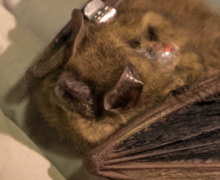
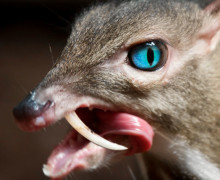
Two endangered species of bat, the long-tailed bat and the lesser short-tailed bat, are the only living land mammals native to New Zealand. Long-tailed bats are known to only produce one offspring per year and are located in various regions throughout New Zealand. Comparatively, lesser short-tailed bats are found in very few locations and hunt prey along the forest floor. This is rare to very few bat species, as most hunt prey while flying.

Wondrous Marine Mammals

Aside from bats, marine mammals are the only other native mammals. The New Zealand sea lion or whakahao is the rarest species of sea lion in the world, with a low population of approximately 12,000. They can largely be found along the shores of the Subantarctic Islands.

Image source: Unsplash

Pests Out!

Since the settlement of New Zealand by humans, non-native mammals like rats, possums and mustelids have been introduced. These invasive predators threaten New Zealand’s delicate ecosystem. They have been linked to the extinction of dozens of native species. The country has announced an ambitious plan to rid itself of all invasive pests by 2050.
Time Flies, Unlike These Birds

New Zealand doesn’t just lack native mammals — it is devoid of native land predators in general. With other birds their only predators, prehistoric birds found safety on the ground. And with tiresome flying no longer a priority, they gradually evolved to be flightless. As a result, New Zealand has 16 species of flightless birds: more than any other country. This includes, among others, three species of penguin and five species of kiwi. Flightless birds are particularly threatened by invasive species. This has led to the loss of their natural habitats, emphasizing the importance of conservation efforts.


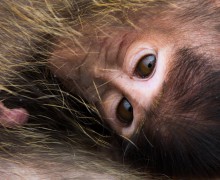
Avian Giants

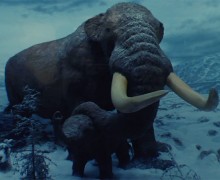
Another odd feature of island evolution is the phenomenon of island gigantism. This evolutionary quirk occurs when animals develop on islands lacking predators and/or competition. This means they are free to evolve rapidly to unprecedented sizes. In New Zealand, this gave rise to the moa and its only predator, the Haast’s eagle. The moa is an emu-like bird of 12 feet in height. It was extinct by 1445, having been hunted by Māori for food. The Haast’s eagle, with a wingspan of up to 10 feet, soon went the same way.

Back From The Dead

The takahē is a flightless bird and the largest living member of the rail family. Discovered by Europeans in 1847 but hunted by Māori for centuries, it was considered extinct by 1898. Then, to everyone’s surprise, living takahē were rediscovered in Fiordland in 1948. The striking swamp-hens are now a protected species. With efforts to ensure the growth and continued survival of their populations underway.

Image source: Pxhere

Living Dinosaurs

The curious reptile known as the tuatara is the only surviving member of the order Rhynchocephalia. With the rest of whom went extinct 60 million years ago. Tuatara share a common dinosaur ancestor with lizards and snakes. They can live to over 100 years old. Ancient Creepy Crawlies

With over 100 species throughout the country, the wētā is New Zealand’s star invertebrate. The giant wētā has been around for 190 million years, and is the world’s heaviest known insect, weighing a hefty 70 grams.

Monogamous Kiwis

The endearing kiwi is a rare example of a monogamous species. The birds often mate for life, and kiwi relationships have been known to last for over 20 years. Romantically, kiwi couples sing duets with each other at night, synchronizing their calls with complementary frequencies.

science projects should be more diverse

As we know, science is the most reliable source of knowledge and the involvement and use of diverse methods and practices can prove useful for this phenomenon.

When someone mentions a science program, you are bound to think of a group of scientists cohesively working in a laboratory. But what if science wasn’t only limited to the scientists alone, but also the general public or the ‘non-scientific’ people as well? With the best iptv service usa you will be able to get more done easily.

The result of such collaborative projects is what is now termed ‘Citizen Science’.

What is Citizen Science?

Citizen Science is the product of the collaborative efforts undertaken by professional as well as amateur scientists in several scientific projects. Several such endeavors are recognized in the form of Higgs Hunters, Gravity Spy, and Steelpan Vibrations to name a few.

What does Citizen Science do?

Citizen Science efforts allow individuals, or the participants, to learn from the scientific practices besides advanced scientific understanding. Although, as determined by Rajul Pandya and his 12-member committee at Thriving Earth Exchange, the institutes offering such diverse citizen science projects must be well equipped and educated.

Features of Citizen Science

  1. The first and the most important aspect of this approach is that anyone (literally) can participate in the scientific program.
  2. All the data that is available to the general ‘scientists’ is what the real scientists also refer to, which means that the combined data can be of premium quality.
  3. This data then helps the scientists to come to real conclusions for the project.
  4. Scientists and large communities volunteer data which can be accessed by all the citizen scientists along with the actual scientists related to the project.

Benefits of Citizen Science

  •        Availability of fresh knowledge

With the additional help, scientific projects include research done from different views and aspects, scientific as well as general. This leads to better results overall.

  •        Scientific Awareness among masses

Most of the time, the general public is not included in the programs that are conducted which formidably leads to very little scientific awareness. But with Citizen Science projects, the general public is included throughout the process allowing them to learn and understand the phenomenon of science better.

How else can a Science Project be Diverse?

Besides Citizen Science, there are several assorted areas which result in extensive scientific discoveries. Researches say that it takes a team of scientists with both the genders to come up with the most successful endeavors.

The best example of this is since the women are part of medical research teams, more attention is now being paid to the female health problems like breast cancer.

Is it Effective?

Scientific teams which are more diverse in nature, gender, and practice generate better outcomes than traditional scientific projects. This is due to the presence of mix perspectives under a single roof, which allows them to think beyond the natural horizon.

Scientific research becomes borderless with the recruitment of diverse researchers to the group, every individual brings something new to the table which makes the project even more progressive.

Black hole theory

Scientists have a way of messing with our heads every once in a while. That’s one of those
moments, I have read that stuff that is sucked into black holes don’t stay there forever.
It felt like one of those times we have the ruckus about Pluto. Scientists upset a lot of people
when they said Pluto was not a planet. There was an outcry before the scientists said it was a
sort-of planet, blaming the error on a dodgy calculator or something.

When I was a kid, things sucked into a black hole were never seen again. As I grew older, I
learned that black holes are when time and space wrap causing powerful gravity that even
light is sucked into it. Einstein’s theory of general relativity states that the mass of many stars
is crushed into the zero-size volume at the center of the holes. Below are some new black
hole theories that will have you re-think what you’ve learnt about the phenomena.

Cosmic Recycling Plants?

Papers published in the Physical Review D journals and the Physical Review letters challenge
the accepted theory about the inner workings and lives of black holes. The research is based
the new theory of gravity which the authors argue is necessary when dealing with small sizes.
Abhay Ashtekar, Parampreet Singh and Javier OLmedo, took the loop quantum gravity
theory and applied it to black hole-scenario. According to their theoretical findings, Einstein
was wrong as there isn’t singularity at the centre.

Instead, the strong space-time curve means it continues into the future, and here it becomes a
white hole, where what got sucked in including light is shot out. If their maths is right black
holes will one day vomit everything they ever swallowed.

Possibly Explaining the Unexplained

This new theory may explain other unexplained phenomena. High amounts of radio energy,
Known as radio bursts have been observed by scientists over a short period. Also observed
are, high-energy cosmic rays that collide with the earth’s atmosphere.

None of the phenomena are fully understood. However, if the research papers are correct, it
could be evidence of a black hole turning into a white hole. Could it be possible that the
matter that will shoot out of the white holes are seeds of a new solar system? Could scientists
be witnessing the universe recycling itself?

A Closer Look

The main reason why scientists are unconvinced that is a singularity exists in the middle of
black holes is the infinite theoretic density of objects that have mass but no size. Newton’s
law of gravity applies to objects far from earth, where an object closer to earth weighs more.
We can only understand those changes in behavior by using equations more complex than
Newton’s.

Smaller objects get more different gravity behaviours, which is why quantum gravity theory
was developed. If that expanded to loop quantum gravity, space-time needs to be understood
as evolving latticed spin networks which are mathematical ways of describing the
relationship between things.

Butterfly Identification at the Kaleidoscope Butterfly Garden | NC Zoo

Recently I was given the task of making a video about the Kaleidoscope Butterfly Garden at the North Carolina Zoo. It’s a fantastic little display in the the middle of the zoo that contains thousands of individual butterflies of dozens of species, all hatched from chrysalises’ brought in for visitors. Here is a glimpse at what you’ll likely see.

Butterfly Species in the House

The butterfly house at the NC Zoo has over 35 species from around the world. They’re brought in via their chrysalis and they hatch into the exhibit, all of which is on display. Here are a few of the more common butterflies that you can look forward to seeing on exhibit.

Monarch

The Monarch is one of North America’s most recognizable butterflies. It’s striking orange, black and white wings can be seen moving through the country from milkweed plant to milkweed plant. These spectacular butterflies will migrate every year north from their wintering grounds in the mountains of Mexico. If you love monarchs, consider planting some native milkweed plants in your yard so they can feed and lay their eggs for the next generation to continue their journey.

King Swallowtail

Swallowtails may take the trophy for the most majestic butterfly in the Americas. Although, that’s a tough trophy to take home given how spectacular the butterflies are in general. Swallowtails are large though. They’re often distinguished by their black and yellow wings that have small “tails” on the wings.

Pipe-vine Swallowtail

The pipevine swallowtail is a much less color than the other swallowtails. Pictured below is the female. Males will have striking blue mixed into their hind wings.

Zebra Longwing

Zebra longwings are typical of the tropical forests. It’s range starts in South America and extends into the southern US. Florida has this as their state butterfly.

Blue-banded Purplewing

These small, yet brilliantly colored blue butterflies are found in central and South America.

Blue Morpho Butterfly

Nothing says the rainforest more than the flitter of blue morphos. With wings open you’ll see the brilliant blue. With wings closed they’re almost entirely camouflage minus a few striking “eyes” on their wings.

Owl Butterfly

The “eyes” of the owl butterfly are even more distinct than those of the morphos. In fact, the owl butterflies are distinguished from morpho butterflies in that they have only this one spot on each side.

Paper Kite Butterfly

The paper kite is a large black and white butterfly of SE Asia.

Indian Leafwing Butterfly

Open this butterfly sports a brilliant blue and gold patter. Closed however, the wings look just like a dead leaf. It’s a striking example of camouflage.

Glasswinged butterfly

Glasswings are one of most delicate butterflies in the exhibit. Their wings are completely translucent minus a few orange and black patterns that shape the wing.

Julia Butterfly

The Julia butterfly (aka. Julia heliconian or flambeau) is a bright orange butterfly found from south Texas and Florida, south to Brazil.

Malachite

This is a beautiful green and black spotted butterfly.

Now Go See Them

Go check out the NC Zoo and see what you can find. More information here.

Eco-Rebellion

As a biologist and now science filmmaker, I’ve had the chance to study some pretty diverse places around the world. I started my graduate studies in marine biology studying the interaction of species with their environment. In particular, I looked at how the presence of sharks change the behavior of small fish on sand flats. I was also a tour guide for the 5 years I was in Hawaii helping tourists spot rare local species (99% of what was there wasn’t native so the native species were really special). I followed countless grad-student friends as they’d study and try to save the last individuals of birds, snails, and plants on the islands. Much of that was all about habitat loss and restoration.

Later I worked as an aquatic plant biologist where we’d replant native freshwater species to counteract invasive plants. I then spent time in Panama in a pristine rainforest and documented the slow dissapearance of frogs from an introduced fungus. I also spent time there with tapir and jaguar researchers who were documenting the slow demise of those species there. It seems nothing was immune to the threats. That’s about when I started to feel the pressure to do something. I had so much knowledge of the problems happening to our native habitats, but what was I doing about it? I felt like the wealth of information out there was high, but it needed more people to pass the information to the public. The non-biologists I talked to thought we were all doing just fine. Did they really have no idea or where they just happy to live in their little bubble and not really care about the global trends.

What would help? The key, as I saw it, was entirely based in education. If everyone knew their local environment just a bit, they could help stop the spread of invasive plants. They could plant native ones. They could champion for healthy habitats and more wild-places! But, if nobody even cared about learning about these places, we’d be doomed. So, I decided I wanted to at least make learning about them engaging. That’s why I’m doing the education I am now. But, we need a tribe. We need fellow ecogeeks to share with this fight to save what’s here. That’s part of why I’m making Eco-Rebel.

Why Rebels?

The want to keep places natural shouldn’t be a rebel cause. It should be the norm, but it’s not. I feel like a minority. Thus, we need to be rebels with this cause. In particular, the cause is habitat loss. As an eco rebel, we’re here to take a stand to learn as much as we can about what’s around us. To go native as much as we can. To spend time outside. And, to teach others.

2000 Mosquitos Bites!

Apparently this isn’t one of the things on most people’s bucket list, but it was for me. I’m a science communicator and so many of my colleagues have done it that at some point I felt like I was probably missing something. I had so many questions. How would it feel? Would I be able to handle it? Would I react to them? Could I talk coherently while I did it? All of these questions were answered from my experience in the video above.

Things I learned about Mosquitoes

There are a few things I learned by doing all this. First, I learned that mosquitoes are extremely diverse. There are over 3000 mosquitoes worldwide and most of them don’t feed on human blood. Even with those that feed on humans, it’s still only the females that feed. They need a blood meal to complete their life cycle and lay another round of eggs.

How Mosquitos Pass on Disease

Simply, mosquitos can pass diseases around as they take multiple blood meals. They’re vectors of pathogens – agents that cause disease. To understand the complexities of this, however, I’d suggest watching this short (which contains a few small duplicate scenes from the above video).

Can we Prevent Mosquitos?

YES!

We can absolutely do something about mosquitoes if we’re aware of their biology. Let me start by showing you what mosquito control is doing to help prevent them. Then, we’ll diving into what you can and should do on your own property.

One of the big takeaways for me was that mosquito control isn’t actually just spraying randomly. They’re basing all of their spraying off of actual field assessments. They’re also spraying at times when it’s only really targeting mosquitoes so as to minimize impacts. Plus, spraying happens at such low levels that it’s not affecting us adversely. Clearly, I would be foolish to have already thought this was completely safe. They are after all spraying stuff that kills living organisms. I guess I’m just happy that after diving into the science and seeing who is directing mosquito control programs here in the US, I can say that we’re in good hands. Let’s hope we continue learning new things to make sure we’re both protected from disease.

Of course, we can all play an important role on our own property to make sure mosquitoes are not a problem. It starts with this:

Thanks again for watching these videos. Make sure to check out more of what I’m doing on Youtube by subscribing to our content. If you want to help support it financially, you can contribute through our Patreon account.

Sincerely –  Rob

The Environmental Impact of Forest Fires

How Does a Wildfire Start?

Three elements are crucial for the creation of a wildfire: fuel, oxygen, and heat. Firefighters often refer to this combination of elements as the fire triangle. On a hot day, drought conditions peak and something as small as a spark has the potential to create a large wildfire with devastating consequences. Although fire can occur naturally from the sun or a lightning strike, most wildfires are started by human carelessness. Unextinguished campfires, lit cigarette butts, improperly burned debris, and arson are responsible for 84% of wildfires started. Man-made wildfires have tripled the fire season from 46 days to 154 days with a staggering cost of $2 billion. Once considered a natural phenomenon sparked by lighting, wildfires are now being recognized as the result of human error.

Harmful Effects of Wildfires

Wildfires can have  immediate and long term effects on the quality of rivers, lakes, and streams. The most noticeable impact of wildfires is stormwater runoff. After the loss of vegetation, the ground’s soil becomes hydrophobic and prevents the absorption of water. This inability to absorb water promotes the transportation of debris and sediment into larger  bodies of water, further polluting valuable and essential resources. Post-fire flash floods become a threat and allow the introduction of heavy metals from ash and soil to infiltrate waterways. Filtering these water sources can be costly as well as time consuming.

Depending on the temperature and time of year a wildfire occurs, vegetation can be significantly impacted. Plants on the forest floor or smaller trees are often destroyed by wildfires, while larger trees are able to survive as long as the fire does not spread into the tree canopy. The flames from these fires destroy the food source and homes of many animals, threatening their survival. For plants and trees that can survive the flames, they are susceptible to disease, fungus, and insects due to their decreased resistance following burn injuries.

Wildfires have both immediate and long-term impacts on air quality. As a forest burns, large amounts of smoke are released into the atmosphere. These smoke particles are typically small and made up of gases and water vapor. Air pollution from fires have the potential to travel great distances and oftentimes may pose a threat to human health. These small particles can become lodged deep within our lungs, making it difficult to breath as well as placing additional stress on our hearts. Additionally, wildfires produce an increased amount of carbon monoxide, which too can lead to  a variety of health implications

Buildings and homes that lie within the path of a wildfire are destroyed, exposing hazardous materials that pose a threat on human health for first responders and during the clean up process. Older homes built before the 1970’s often contain a mineral called asbestos. Once asbestos is disturbed, the fibers become airborne and when inhaled can lead to the development of pleural mesothelioma in the lining of the lungs. During the cleanup process, many materials are often improperly disposed of and create a threat for destruction in the future. It’s important that these clean up processes are handled safely and completed with the proper equipment and done by a professional

The Ecological Benefits of Wildfires

Although wildfires leave an immense  amount of destruction in their path, they do leave behind some beneficial qualities too. Many plants require regular burns in order to spread seeds and survive. Fires can also kill diseases and insects that may be affecting the livelihood of plants, remove excessive debris from the forest floor, and allow more access to the nutrients provided by exposed sunlight. Low intensity fires clear underbrush and prevent the damage of future fires from spreading.

After a wildfire, new grasslands are created and allow grazing animals to benefit from the change. This increase in the natural order of species allows a change in ecology that promotes growth and the continual cycle of life. Vegetation like the fireweed, requires the disturbance of fire to bloom and permit the regrowth of plants that have perished due to the fire. As plants and vegetation die away, new life begins to heal and spring forth.

What Can You Do

We’ve all heard the expression, “Only you can prevent forest fires.” Through taking preventative measures, we can assist in successfully eliminating, or decreasing the risk and number of wildfire outbreaks.

The first step in preventing a wildfire is never leaving a fire unattended. Completely extinguish a fire before sleeping or leaving the surrounding area. Be mindful of where you discard cigarettes, flammable liquids, and smoking materials and make sure they are never tossed on the ground. If you are hosting a fire, keep a shovel, water, and fire retardent nearby to prevent any possible chance of an untamed fire or outbreak.

If you do see an unattended or out-of-control fire, contact your local fire department and authorities as soon as possible. At the risk of a wildfire in your area, know your evacuation route ahead of time and keep a kit of emergency supplies ready. Before leaving your house, close all windows, vents,  and doors to prevent a draft, remove all combustibles from your yard, and turn off any fuel oil supplies. Be sure to wear heat protective clothes to protect from sparks and ashes as well as a mask to shield your lungs from breathing in harmful fumes. For more information and preventative advice, visit the International Association of Wildland Fire here.

Unlike many natural disasters, most wildfires can be prevented. The environmental and economical costs of wildfires have an impact that lasts for many years. Through using caution, taking preventative measures, and monitoring fires responsibly, we can lower the threats associated with these devastating tragedies.

Learn More About Wildfires


The Benefits and Power of Composting

Composting Basics

Simply put, composting is the process of breaking down or decomposing of organic solid wastes in the presence of air. It requires three basic ingredients:

  • Browns: Materials such as dead leaves, twigs, and branches
  • Greens: Materials like vegetable waste, grass clippings, coffee grounds, and fruit scraps
  • Water: The right amount of water is as important as the above two ingredients for obtaining quality compost

Composting is an easy and extremely rewarding phenomenon, the end result of which is useful in growing the next generation of crops, while also improving the quality of soils and water. Though there is a science of compost, you don’t need to understand the nitty gritty details it in order to make great soil and reduce your food waste.

Composting Benefits

Some of the benefits of compost are described below and might encourage you to put food waste to good use. Let’s take a look:

  1. It is rich in nutrients which help improve the soil’s texture, structure, fertility, and nutrient-retention capacity. It makes soil healthy, which eventually enhances the quality and encourages higher yields of agricultural crops
  2. It reduces the need for chemical fertilizers. The fruits and vegetables produced in soil treated with compost are more likely to be healthy and free from hazardous, chemical-laden fertilizers
  3. It helps increase the water-retention capacity of plants. It can act as a natural evaporation barrier for the soil in which it is added, thus reducing the frequency of watering. So, with the right amount of compost in the soil, the need to water the plants is reduced (which eventually helps you save on the water bill).
  4. It is known for its ability to capture and destroy around 99.6% of industrial volatile organic chemicals, or VOCs, in the contaminated air. VOCs are extremely hazardous materials which can cause throat, nose, and eye irritation, and may even damage the kidneys and liver over time.
  5. It can help aid wetlands restoration and reforestation.
  6. It provides carbon sequestration. Soil carbon sequestration is a process in which CO2 is removed from the atmosphere and stored in the soil carbon pool. Thus, soils can help reduce the atmospheric concentration of CO2 if managed well. Good quality compost helps soil better absorb CO2.

A Brilliant Solution to the Food Waste Problem

Now let’s consider why composting is a powerful solution for addressing the problem of food waste:

  • Tons of food waste ends up in landfills where it decomposes in absence of oxygen and produces methane, a potent greenhouse gas that contributes to global warming. Composting puts food discarded as waste to good use by turning it into compost — a highly beneficial product
  • Thousands of dollars are spent on handling, transporting, and disposing of food waste. If this food waste is composted instead, it can save citizens and authorities money.
  • If the food waste is dumped in trash bins, it attracts harmful pests such as insects and rodents. It also generates bad odors. However, if the food waste is composted in sealed, durable, reusable, and leak-proof containers, these sanitation problems can be reduced or eliminated.

If serious efforts are put into reducing the production of food waste and composting it on both residential and commercial levels, the problem of food waste can be reduced to a great extent. This can prove beneficial on economic as well as environmental levels.


Author Bio: Erich Lawson is passionate about saving the environment through effective recycling techniques and modern innovations. He works with Compactor Management Company and writes on a variety of topics related to recycling, including tips and advice on how balers, compactors, and shredders can be used to reduce industrial waste. He loves helping businesses understand how to lower their monthly garbage bills and increase revenue from recycling. Erich can be reached at norcal43@gmail.com or visit www.norcalcompactors.net.

The Top Science Apps You Can Download

Science is complicated, so many definitions, theorems, anatomies, and chemical equations to grasp and to top it all the content in books is unclear and repetitive. Most students and teachers are enthusiastically taking advantage of this digital world by downloading applications that explain the concepts with visuals that are easy to comprehend. You may also be trying out new apps like Betway, to be on your favorite matches on https://www.betway.co.ke/betway-app. However, Betway isn’t the only app that has engaged users the world over.

Want to know how these two fields come together and aid people worldwide? Here’s how.

Technology and Science

These two very different fields come together with applications that stimulate better understanding. Science generally is a systematic representation of facts and concepts however, when mixed with technology this representation takes a more dynamic and visually appealing form and helps the viewer comprehend better. It can be said that apps connect users with information better than traditional modes of knowledge can.

At present, Android and iOS devices act as powerful tool and developers are taking complete advantage of this latest trend and coming up with more and more applications to educate their viewers.

Make Learning Fun

Using applications teachers and students can explore various branches of science like biology, chemistry, physics, and astronomy. These applications are interactive and let you observe planets, dissect frogs, and mix chemicals (without explosions) to learn in a safer and more adaptable environment.

Here is a list of the best applications currently trending science applications available for both, Android and iOS devices.

Top 4 Science Applications

The Human Body

This great application (by Tinybop) is available in 5 different applications, and easily explains the working of the human body in a detailed and graphical way. Using this app, users can experience what happens inside the human body after it is fed and with detailed sounds and visuals of the intestine and the stomach.

Audio Sky Tours – Astronomy

An ideal way to observe the night sky and learn about what the viewer might see along with a well-read and clearly written audio attached to every tour. With this application, the learner does not have to wait for different seasons and time of the year to understand about the night sky.

NOVA Elements

The widespread periodic table scares away most of the students with so many different elements and concepts. For those who wonder how the table acquired its structure, how every set of elements is characterized, and more knowledge about the basics of the period elements, the NOVA Elements application is highly recommended.

Circuit Calculator

Electrical circuits are confusing, and students and teachers can’t get access to the kits and equipment at home to learn and implement their notions. For this, the Circuit Calculator application lets users design and implement electrical circuits at the same time be safe. The app is helpful as it lets the users create dynamic circuits and with a tap, the users can see required enhancements if the circuit is not functioning as it should.

It is true that learning is easier with a practical approach, but a practical approach is not always safe which is why Science Applications allow users with the safest and best alternative for learning in a controlled and fun way. So go ahead and make science and learning fun by using the best science applications.


How to Start a Compost Pile

First, let me start by repeating it here – composting is way easier than you think!

If you’ve ever tried to learn how to compost you may have found it overwhelming! I know I did – until I fully wrapped my head around what was going on. Here’s why. Everyone seems to have a different theory as to what you need to make good compost. Heck – even for our article on the science of compost, we tried to make a big table showing all the things you need for a good compost pile – from moisture, to temperature, to the proper Carbon to Nitrogen ratio. I worry that giving all this information might be counter productive, so here is where I think it’s important to stop and think about the basics.

Why are you composting?

Most of the time the answer is either that you want to be responsible and make sure our food waste doesn’t fill a landfill. Alternatively you may want to make sure you’re able to turn all your organic material back into rich soil for your garden.

Ok, so let’s start with those two answers. Both just mean you want to turn your organic material back into soil. The good news is that all organic material will turn back into soil through decomposition if you leave it outside. Pile up a bunch of leaves or a pile of bananas and it’ll eventually decompose. The point is, it’s super simple and you can start there. Just put it in a pile and you’re golden. You’ve hit stage one.

Now, I feel like getting some extra knowledge will help you troubleshoot – because likely you’re going to want to speed up the process.

Speeding up your composting

To speed up your compost you’ll want to make sure you have a pile that has a good ration of carbon heavy stuff (browns) like leaves, cardboard, paper, and sticks with nitrogen heavy stuff (greens) like food scraps. Why the mix?

If you just have browns – like a stack of cardboard, it may just stay like a big stack of cardboard. The organisms that are going to break everything down – from fungi to bacteria, they need some nitrogen to speed up the process.

If you just have greens – like food scraps, it might end up a big stinky mess. It may start to attract a lot of rodents, flies or other unwanted guests. Plus, it may start breaking down so quickly that all the oxygen is used up and goes into anaerobic fermentation. The byproduct of all that is stinky.

That’s why you want to aim for a mix and why people have all sorts of “recipes.” In theory you want more carbon (browns) than nitrogen rich items (greens). But, if I started to explain that the ideal ration is 30:1 or started into the ratio present in every item you would add to your compost I may defeat the purpose of this article. In fact, we already explained that here if you want to look into the science. The last ingredient is turning your pile.

Why Turn Your Compost Pile?

Again – remember that your pile will break down eventually. Turning the pile does a couple things.

  1. Turning the pile makes sure the middle of the pile has oxygen. The organisms that are breaking things down there need that.
  2. Mixing it up also takes the material on the edges and starts mixing it into the middle, where the break-down happens.

If you don’t turn the pile, it’ll go slower. You also run the risk of the process turning anaerobic – which is a slower breakdown process.

Here is a video we did with the zoo about how they do composting. I hope you can see how all of what I just wrote about relates to the processes that they use there as well.


More about Compost

The Science of Compost: Basic to Advanced