Deer Resistant Plants

Having just moved to Colorado from the suburbs of Dallas, I was not prepared for the new challenges in finding plants for my garden.  Where we are located in Colorado Springs, there are a lot of deer.  Our first attempt at planting a garden was stopped by an overnight herd of cows that decided they were going to eat all of our new plants.  But, after a bit of research I found that there is a solution.

Finding Deer Resistant Plants

Deer tend to avoid some plants and relish others. While no plant can be
guaranteed to be “deer-proof,” some types of plants are less tasty to a
deer. We found the followng list of plants from the local home-depot nursery.

Deer Resistant Perennials

  • Anemone – Anemone
  • Bee Balm – Monarda didym
  • Bellflower – Campanula spp.
  • Butterfly Weed – Asclepias sp.
  • Candytuft – Iberis sempervirens
  • Columbine – Aquilegi
  • Coneflower – Echinacea purpurea
  • Coreopsis – Coreopsis
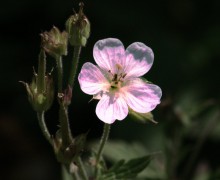
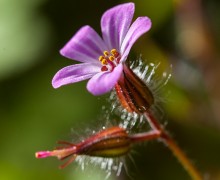
  • Cranesvill – Geranium spp.
  • Daisy – Chrysanthemum spp.
  • Dame’s Rocket – Hesperis matronalis
  • Fleabane Daisy – Erigeron hybrids
  • Foam Flower – Tiarella cordifolia
  • Geum – Geum hybrids
  • Goldenrod – Solidago hybrids
  • Heartleaf Bergenia – Bergenia
  • Helen’s Flower – Helenium autumnale
  • Hellebore – Helleborus spp.
  • Hibiscus – Hibiscus spp.
  • Iris – Iris spp.
  • Jacob’s Ladder – Polemonium caeruleum
  • Joe-Pye Weed – Eupatorium spp.
  • Maltese Cross – Lychnis chalcedonica
  • Monkshood – Aconitum sp.
  • Orange Coneflower – Rudbeckia fulgida var. sullivantii
  • Peony – Paeonia hybrids
  • Pinks – Dianthus spp.
  • Rock Cress – Arabis caucasica
  • Russian Sage – Perovskia atriplicifolia
  • Salvia – Salvia spp.
  • Sempervivum – Sempervivum spp. 
  • Snow-in-Summer – Cerastium tomentosum
  • Soapwort – Saponaria ocymoides
  • Spanish Baayonet – Yucca filamentosa
  • Speedwell – Veronica spp.
  • White Mugwort – Artemisia lactiflora
  • Yarrow – Achillea spp.


How to Swim with Manatees

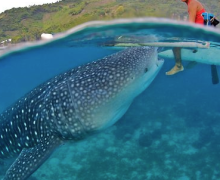
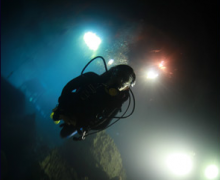
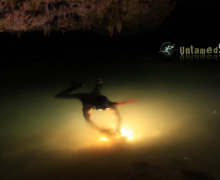
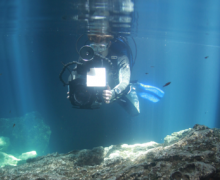
Manatees are protected by the marine mammal act and should never be approached in a way to harass the animal. All encounters should be initiated by the manatee.  We found a nice documentary only that discusses some of the problems with manatee encounters.

In theis short video filmmaker Tracy Colson documents the ever increasing pressure
manatees face each winter as tourists flock to Crystal River, Florida,
for an opportunity to swim with the manatees. 

Fair Oaks Dairy Farm

We found a great video about a unique dairy farm in the Midwest.  Fair Oaks Farms in Indiana gives a snapshot into the life of 21st century farming.  Its a type of Disney world for dairy farming.  They produce 2.5 million pounds of milk a day.  That’s enough to produce the milk needs for the town of Chicago and Indianapolis alone!  Its an amazing place.

They have unique milking stations for the milk cows.  The cows get on small carousels and are milked three times a day.

The farm also converts the manure into energy through the production of methane.

Not only that but the cows wear transponders that allow the farmers to keep records of how much milk a cow produces and how much it has walked that day.

Finally, if you want to see a cow being born, they have a birthing/nursing station on the farm.

Its an amazing place.

For more information visit Fair Oaks Farms Website

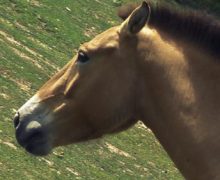
Why don’t we ride zebras?

The question of why we don’t ride Zebras is about the same as asking why we don’t eat zebra.  Ever asked yourself why we’re not riding Zebras like we do horses?  It’s a great question and something that Hannah Smith Walker of Podclasstv has asked in her Montana State University thesis film.


Frogs and Pollution

http://blip.tv/play/gYBm0PBcAg.x?p=1

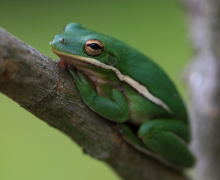
Amphibians are indicator species. Because of their sensitive permeable skin, scientists use amphibians to gauge the overall health of the worldwide ecosystem that we all share.  So with nearly half of the world’s amphibian populations in decline, we’re all potentially in big trouble.  But there are simple things you can start doing today to help.

The above film was made by Jen Grace from Montana State University

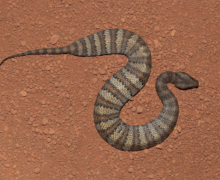
World’s Deadliest Snakes

http://blip.tv/play/htl24qViAg.x?p=1

Have you ever wondered what the world’s most deadly snake is?  We asked ourselves the same question.  In fact, in our travels we have wondered this many times.  Its not such an easy question either.  If you watch the crocodile hunter you will hear one thing, if you watch Austin Stevens you hear another.  And if you watch a BBC documentary you’ll likely hear another.

The trick is figuring out how they determine the deadliest and distinguishing deadliest from most venomous. Watch the documentary we created here and leave your comments.  We’d like to hear what you think is the world’s deadliest snake.

Top Toxic Snakes- LD50 Numbers

Ranking Based Just On Ld50 Test Figures (not on number of recorded deaths)

Species LD 50 mg/kg mg Venom yield
Hook-nosed sea snake (Enhydrina schistosa) 0.02 7.0 – 79.0
Russel’s Viper (Vipera russelii) 0.03 130.0 – 250.0
Inland taipan (Oxyuranus microlepidotus) 0.03 44.0 – 110.0
Dubois’s reef sea snake (Aipysurus duboisii) 0.04 0.7
Eastern brownsnake (Pseudechis textilis) 0.05 2.0 – 67.0
Black mamba (Dendroaspis polylepis) 0.05 50.0 – 100.0
Tiger rattlesnake (Crotalus tigris) 0.06 6.0 – 11.0
Boomslang (Dispholidus typus) 0.07 1.6 – 8.0
Yellow-bellied seasnake (Pelamis platurus) 0.07 1.0 – 4.0
Common Indian krait (Bungarus caeruleus) 0.09 8.0 – 20.0
Desert horned viper (Cerastes cerastes) 0.1 20.0 – 45.0
Common taipan (Oxyuranus scutellatus) 0.1 120 – 400
Common European viper (Vipera berus) 0.11 10.0 – 18.0
Tigersnake (Notechis scutatus) 0.12 35.0 – 189.0
Forest cobra (Naja melanoleuca) 0.12 ?
Puffadder (Bitis arietans) 0.14 100.0 – 350.0
Gaboon viper (Bitis gabonica) 0.14 350.0 – 600.0
Seakrait (Laticauda laticaudata) 0.16 ?
Neotropical rattlesnake (Crotalus durissus) 0.17 20.0 -100.0
Mojave rattlesnake (Crotalus scutulatus) 0.18 50.0 – 150.0
Egyptian cobra (Naja haje) 0.19 175.0 – 300.0
Harlequin coralsnake (Micrurus fulvius) 0.2 3.0 – 5.0
Ottoman viper (Vipera xanthina) 0.2 8.0 – 18.0
Erabu seakrait (Laticauda semifasciata) 0.21 2.0 – 14.0
African birdsnake (Thelotornis kirtlandii) 0.21 ?
Ringhal (Hemachatus haemachatus) 0.22 80.0 – 120.0
Olive seasnake (Aipysurus laevis) 0.22 10.0 – 33.0
Black-necked cobra (Naja nigricollis) 0.23 150.0 – 350.0
Saw-scaled viper (Echis carinatus) 0.24 5.0 – 48.0
Common mamba (Dendroaspis angusticeps) 0.26 60.0 – 95.0
Bar-bellied seasnake (Hydrophis elegans) 0.27 9.0 – 24.0
Spectacled cobra (Naja naja) 0.28 150.0 – 600.0
Annulated seasnake (Hydrophis cyanocinctus) 0.35 5.0 – 8.0
Fer-de-lance (Bothrops atrox) 0.35 100.0 – 200.0
White-lipped tree pitviper (Trimeresurus albolabris) 0.37 8.0 – 15.0
Hundred-pace pitviper (Deinagkistrodon acutus) 0.38 ?
Central American coralsnake (Micrurus nigrocinctus) 0.4 5.0 – 8.0
Northern moleviper (Atractaspis microlepidota) ? 5.0 – 10.0
Yellow-lipped seakrait (Laticauda colubrina) 0.4 ?
Jararacussu (Bothrops jararacussu) 0.46 200.0 – 321.0
Nose-horned viper (Vipera ammodytes) 0.48 ?
Common blacksnake (Pseudechis porphyriacus) 0.5 30.0 – 50.0
Deathadder (Acanthophis antarcticus) 0.6 70.0 – 236.0
Hardwicke’s seasnake (Lapemis curtus) 0.62 2.4 – 15.0
Southern coralsnake (Micrurus frontalis) 0.63 20.0 – 30.0
Blunt-nosed viper (Vipera lebetina) 0.64 12.0 – 150.0
Wagler’s pitviper (Tropidolaemus wagleri) 0.75 65.0 – 90.0
Cantil (Agkistrodon bilineatus) 0.8 50.0 – 95.0
King Cobra (Ophiophagus hannah) 0.9 350.0 – 500
Twin-spotted rattlesnake (Crotalus pricei) 0.95 4.0 – 8.0
European asp (Vipera aspis) 1 9.0 – 10.0
Western rattlesnake (Croatalus viridis) 1.01 35.0 – 250.0
Terciopelo (Bothrops aspera) 1.1 100 – 310
Jararaca (Bothrops jararaca) 1.1 40.0 – 70.0
Banded krait (Bungarus fasciatus) 1.2 20.0 – 114.0
Mamushi (Agkistrodon blomhoffii) 1.2 1.0 – 7.0
Eastern diamondback rattlesnake (Crotalus adamanteus) 1.2 200.0 – 850.0
Malayan pitviper (Calloselasma rhodostoma) 1.24 40.0 – 60.0
Picados pitviper (Porthidium picadoi) 1.33 5.0 – 70.0
Eyelash palm pitviper (Bothriechis schlegelii) 1.6 10.0 – 20.0
Timber rattlesnake (Crotalus horridus) 1.64 75.0 – 210.0
Common nightadder (Causus rhombeatus) 1.85 20.0 – 30.0
Lowland copperhead (Austrelaps superbus) 2 ?
Urutu (Bothrops alternatus) 2 60.0 – 100.0
Cottonmouth (Agkistrodon piscivorus) 2.04 80.0 – 170.0
Orsini’s viper (Vipera ursinii) 2.17 1.0 – 4.0
Western diamondback rattlesnake (Crotalus atrox) 2.2 175.0 – 600.0
Jumping pitviper (Porthidium nummifer) 2.4 40.0 – 60.0
Sidewinder (Crotalus cerastes) 2.6 18.0 – 50.0
Pygmy rattlesnake (Sistrurus miliarius) 2.8 12.0 – 35.0
Massasauga (Sistrurus catenatus) 2.9 15.0 – 45.0
Okinawa habu (Trimeresurus flavoviridis) 3.05 ?
Red diamond rattlesnake (Crotalus ruber) 3.7 120 – 450
Speckled palm pitviper (Bothriechis lateralis) 4 10.0 – 20.0
Bushmaster (Lachesis muta) 4.5 200 – 500
Rainforest hognosed pitviper (Porthidium nasutum) 4.6 12.0 – 25.0
Side-striped palm pitviper (Bothriechis lateralis) 4.84 10.0 – 20.0
Slender hognosed pitviper (Porthidium ophryomegas) 6.3 10.0 – 20.0
Godman’s pitviper (Porthidium godmani) 7.6 10.0 – 20.0
Rock rattlesnake (Crotalus lepidus) 9 129
Copperhead (Agkistrodon contortrix) 10.9 40.0 – 75.0

Visiting Homosassa Spring state park

Homosassa Springs State Park

Homosassa Springs State Park is a showcase for native wildlife of Florida.
The 210 acre park is located around this natural spring, which is the headwater of the Homosassa River that has its mouth out in the Gulf of Mexico. The temperature here stays at 72 degrees F all year-round, which attracts a great diversity of wildlife both in and out of the water. A section of the natural spring is closed off for the rehabilitation of West Indian Manatees.
Although it is most famous for its rehabilitation program on West Indian manatees, the park also holds most of the native wildlife found in the state of Florida including Florida Black Bear, Bobcat and even the highly threatened Red Wolf. The park also includes a couple of extra surprises you would not normally see in Florida…

The park also has about 350 volunteers that help in the operation, maintenance and improvement of the park.

Crew involvement

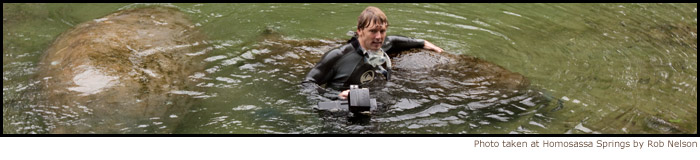
We visited Homosassa springs to shine light on the threatened West Indian Manatees that live in springs around Florida. The manatees are often injured from boat traffic, fishing lines and crab lines and today only an estimated 3500 individuals remain in the wild.
We were allowed to send Jonas down into the water with the 6 manatees that the park now look after. And if you think that these animals are shy, think again. Jonas even had difficulties getting the video he tried to get because these curious animals kept wanting to play. And when you have an animal of around 3500 pounds playing with you, there isn’t much else you can do. Just as an important reminder though, if you see manatees in the wild, do not chase them to get closer. If they feel like it, they will approach you. It is also against the law to touch them. They are wild animals that presently are very threatened.

jonas-manatee

Read more about the manatees here

https://untamedscience.com/biodiversity/animals/chordates/mammals/manatees-and-dugongs/manatees/trichechus/west-indian-manatee

More History

The park area actually used to be an exotic animal park with animals from all over the world, such as black spider monkeys, lions and bears. In 1989, the Florida State Park Service purchased the park from the county. Today all the exotic animals have been removed, except from one: Lu the Hippo, who was allowed to stay after locals put up a fight when Lu was supposed to be shipped out. Lu now holds an honorary state citizenship, still living in Homosassa park.

Daily Educational Programs

Wildlife Encounters: 10:30am & 2:30pm
Manatee Programs: 11:30am & 3:30pm
Alligator/Hippopotamus Program at 12:30pm

Costs

Adults (age 13 and over) – $9
Children (age 3 – 12) – $5
Children under 3 years – no charge

Visiting information

Park is open 7 days a week between 9:00am until 5:30pm
The park can be entered from two locations. Through the main entrance along Highway 19 in Homosassa you can go by boat or tram through beautiful forest scenery to the Wildlife Park where you can see many of the interesting Florida birds as well as a lot of alligators and fresh water turtles.

The park is located at 4150 S. Suncoast Blvd. (US 19 & 98) in Homosassa Springs, Florida

Common Forest Plants in Hawaii

http://blip.tv/play/geMCgdS6PgI.html?p=1

To help both travelers and locals learn about the flora of the Hawaiian Islands, I have compiled the most common forest species one will find in the Hawaiian Islands.  These species were selected based on the years of experience I had as a local nature tour guide on the islands.  The most common species a tourist might find when exploring the forests of all the main islands are listed somewhat higher on the list.  Less common species are listed lower.  The order is not exact, however, as I’ve added a few species toward the bottom that are locally abundant. Yet, this should give the traveler a good head start learning about the plants found in the forests.

Plants in Hawaii

Koa

Family Fabaceae

Plants Hawaii

‘Ohi’a lehua

Family Myrtaceae

Plants in Hawaii

Guava

Family Myrtaceae

Plants in Hawaii

Paperbark

Family Myrtaceae

Plants in Hawaii

Ironwood

Family Casuarinaceae

Plants Hawaii

Koster’s Curse

Family Melastomataceae

Plants in Hawaii

Candlenut tree

Family Euphorbiaceae

Plants in Hawaii

Koa haole

Family Fabaceae

Plants in Hawaii

Ti Plant

Family Agavaceae

Plants Hawaii

Kahili ginger

Family Zingiberaceae

Plants in Hawaii

Mountain Naupaka

Family Goodeniaceae

Plants in Hawaii

Malayan Ground Orchid

Family Orchidaceae

Plants in Hawaii

Wiliwili

Family Fabaceae

Plants Hawaii

Silk Oak

Family Proteaceae

Plants in Hawaii

‘Ie’ie

Family Pandanaceae

Plants in Hawaii

‘Lapalapa

Family Araliaceae

Plants in Hawaii

‘Ilima

Family Malvaceae

Plants Hawaii

Red Ginger

Family Zingiberaceae

Plants in Hawaii

Strawberry Guava

Family Myrtaceae

Plants in Hawaii

Christmas Berry

Family Anacardiaceae

Plants in Hawaii

Miconia

Family Melastomataceae

Plants Hawaii

Fiddlewood

Family Verbenaceae

Endangered Hawaiian Forests

As a nature tour guide on Oahu, I used to ask tourists to look at the green mountains that towered above Waikiki. “How much of that green do you think is introduced,” I’d ask. Responses would always vary but everyone was shocked when I told them that only about two percent of the forest plants on Oahu were native. That number wasn’t the total number of species but the biomass of the forest.

When walking through a lowland forest on Oahu, as in many of the other developed islands, it is difficult to even find a native species. The two most easily seen are Koa and ‘Ohi’a. If you’re in a good spot you’ll see many others, but the uncomfortable truth is that the forests are not like they used to be. Invasive plants have colonized the islands and are taking root faster than native species can grow back. Much of the forests are also secondary growth, having been cut down in the 1800’s and early 1900’s for cattle ranching.

How to learn more about plants in Hawaii

There are some great books and online resources to help the casual observer learn about the amazing diversity of native and non-native plants in Hawaii. The following is our list of top sources.


As a final note, this resource is an ongoing project. It’s something I do when I visit the islands (now that I’m living on the mainland). I’ve linked to the main species here, but have yet to create videos for all of them. If you want to help you can take some video, post it to Youtube and send me the link. I’ll link each species to the appropriate video. Happy planting!

How Frogs Mate

When frogs mate, the male frog tends to clasp the female underneath in an embrace called amplexus. He literally climbs on her back, reaches his arms around her “waist”, either just in front of the hind legs, just behind the front legs, or even around the head. Amplexus can last several days! Usually, it occurs in the water, though some species, like the bufos toads will mate on land or even in trees! While in some cases, a complicated courting behavior occurs before mating, many species of frogs are known for attempting to mate with anything that moves!

Check out the above video to see some examples of mating frogs!

Rhino Poaching in Swaziland

Our contact in Swaziland, Elaine Franklin just sent me this breaking news. On June 4th the first rhino was poached in Swaziland in almost 20 years. Devastating and sad, to say the least. It has been in the local Swaziland papers ever since the incident. Apparently this didn’t make international news and so she sent the news to us.

Unfortunately, the rhino threat was reported in April by the rhino conservation society. Here they stated that “seven people were reportedly arrested … for illegally hunting animals in the three protected areas of Swaziland’s Big Game Parks (BGP).” Unfortunately this threat resulted in the death of one rhino this June.

Swaziland only has a very small rhino population; they have 89 white and 18 black rhinos, as reported by TRAFFIC in 2009.  Rhinos are under attack because their horns are thought to have medicinal value in the far east. Unfortunately this is a myth that is killing the rhino.

Luckily suspects have been apprehended and have had their preliminary court hearing. Franklin hopes this will let the international organized crime ring behind them know that they can’t get away with poaching in her home country.

Meanwhile, rhino poaching in South Africa has been escalating and 333 rhinos were poached in 2010 alone. Everyone should be aware that anything made from rhino horns should not be purchased.

More information