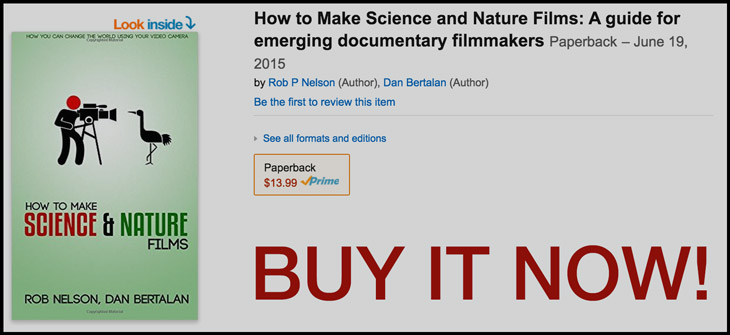
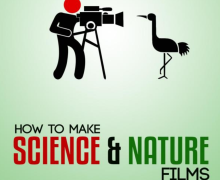
Our new book is out! This book is an introduction to the world of science and natural history filmmaking. Most books on filmmaking discuss ways to become an independent filmmaker. Yet, working in science and natural history is unique. This book fills a void in education in this field. It gives insight about getting into the industry via National Geographic and Discovery as well as breaking into the world of Youtube. To make science films in any of these venues you need a recipe for success. This book helps you make your own recipe depending on your goals.
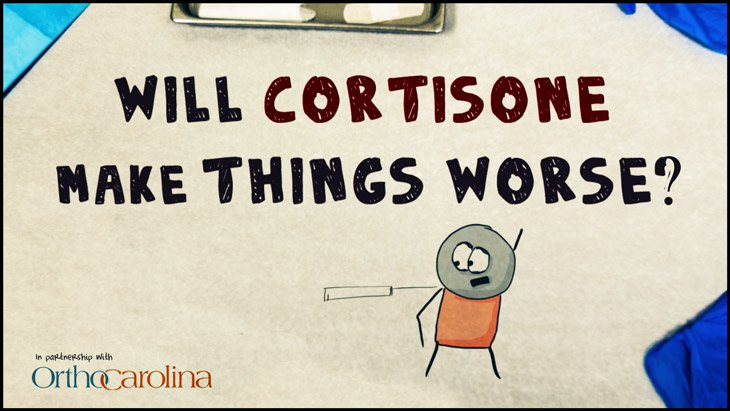
The question seems simple enough, right? Yet, how many people have thought to ask it? Most of my life I’ve heard about cortisone as an wonder drug that miraculously helps decrease swelling and reduces injury. But, the story get’s complicated. Here is a short we did to catch you up to speed.
So the take home message really is that cortisone can make things worse, if you don’t understand how it works. The science points to that answer. But to really understand this topic you have to understand the Basics of Cortisone.
Here is the actual VO script to the video just incase you prefer reading about it instead of watching the video:
Cortisone Basics: A Narrated Animation
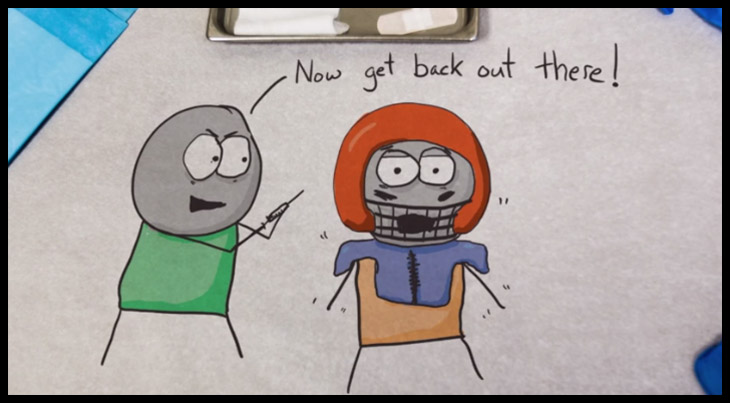
There is no denying that cortisone reduces pain and swelling. Because of that a lot of cortisone shots have been given to help people healing from joint injuries. But just because you get immediate pain relief doesn’t mean it’s helps your joint heal.
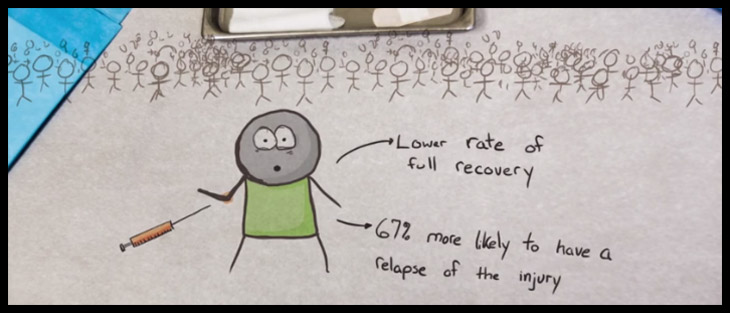
A recent analysis of studies on thousands of individuals with joint pain, particularly tennis elbow, showed that cortisone shots, did in fact reduce pain immediately. However, when they examined individuals 6 months later, they found that those with cortisone shots had a lower rate of full recovery and were 67% more likely to have a relapse of the injury. How is that possible?
To understand it you have to know more about cortisone.
What is CORTISONE
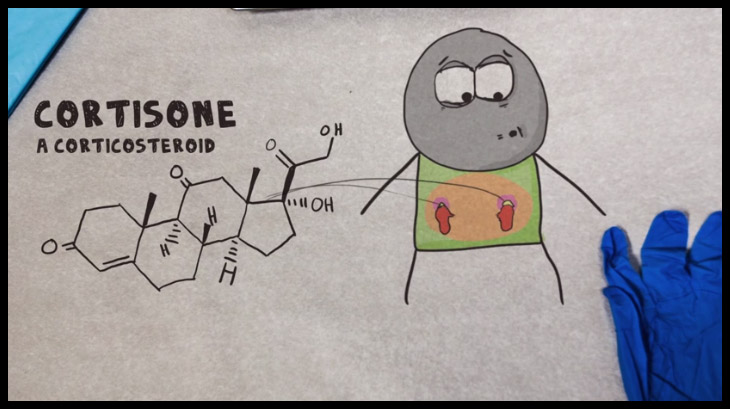
Cortisone is a corticosteroid. Its produced naturally in the body via the adrenal cortex (kidneys). If you’re familiar with cortisol aka the stress hormone, it works similarly.
You see, when your body is in a stressful situation, this hormone is released. It works like this, you want to get sugar to your brain – the most important thing. So the hormone, stimulates the breakdown of fat, protein and carbs into useable energy int eh blood. That means your blood glucose levels rise. It also suppresses other activities that aren’t vital in that immediate stressful situation, like the immune system. And that’s the main role of a cortisone shot – it’s as an immune suppresant aka anti-inflamatory.
So, you can use it medically to cure problems with immune response – like
asthma
rhematoid diseases
bell’s palsy
spinaly chord injuries
dermatalogic conditions
The problem is that the they are best used as a short term solution.
I mean, think about it, you don’t want your body filled with stress hormones long term because, there are side effects to what we associate with having high stress levels. Namely:
mood swings and sleep disturbances
hypoglycemia
decrease in the bodies natural corticosteroid production
decreased bone density
fat atrophy.
Fat atrophy probably sounds good, except when it occurs at the point of a cortisone injection.
In the end, there are somethings you would not use cortisone for – like
rotator cuff disease
Shoulder pain – like adhesive capsulitis
spinal injuries like cervical radiculopathy
knee osteoarthritis
Of course, with that said, the science does point to cortisone helping with things like:
lumber radiculopathy, plantar fasciatis, and morton’s neuroma.
So there you have it, Cortisone, is not the cure all treatment it was once thought to be. Know though that while it helps with some things, it can help with temporary pain releif – and well, it might decrease long term recovery. So if you’re an athlete or someone with a random tendon issue, you might want to think twice about getting cortisone. But, that’s what the doctors are for. Let them help you decide if it’s right for you
A big thanks to OrthoCarolina for teaming up with us to make this video successful.
Have you noticed that the science documentary networks that used to present 100% factual science content have now started drifting into an odd abyss of reality programming? I’m not saying it’s all bad (there are some great ones out right now), but there seems to be a diversion from good science – the stuff I remember loving as a budding filmmaker. The situation has been on my mind a lot lately, having now done several shows for various networks, including a TON of pitching various programs. I present the problem I’ve found with the current trends here:
The real problem I see isn’t the network, or the executives. The problem may be that the networks are basing programs on a faulty rating system. There are shows that are getting ratings that most of us science communicators think are terrible – all the ‘Real house wives of’ shows are testament to that. Is it because people love the show, or because people are shocked that there is something so odd on TV. Is it essentially a race for the most viral-type program. I hope not as I’ve made it my career to make good science programming. I think shows on discovery actually are reversing the trend right now. I give much of that credit to a few visionary execs at the top. But will it last?
I’m not sure what the solution is. I’d love to hear your thoughts on the trends, the problems, or ways to reverse it.
We’re so excited to bring you the news of our recent Emmy win for our documentary with the Mississippi Valley Conservancy, Mysterys of the Driftless. Here is the television coverage of the event.
We shot the film in 2011 and released it a year later. The film has been a huge success for us we’re so happy to showcase the work local conservation groups are doing in the area, particularly that of the MVC. If you haven’t seen the film here it is, in full, on Youtube.
I’d also like to give a special thanks to Rob Nelson and Dan Bertalan for making the film and Tim Jacobson and George Howe for believing in us to make it happen via the MVC. Read up more on the project here.
Thanks to the orgs that supported production of the film:
Mississippi Valley Conservancy
Untamed Science
Wisconsin Public Television
Riverland Conservancy
Iowa Natural Heritage Foundation
The Prairie Enthusiasts
Current Designs Kayaks
La Crosse Community Foundation
Gundersen Memorial Fund
Vernon County Tourism Council
Radisson Hotel La Crosse
Paul E. Stry Foundation
Coulee Region Trout Unlimited
Franciscan Sisters of Perpetual Adoration
D. B. Reinhart Institute for Ethics in Leadership
NewGround, Inc.
Visjonær Consulting & Communications
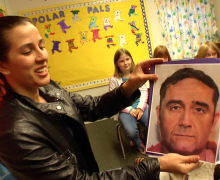
Dan Holding up Rob Nelson’s head during the celebration speach
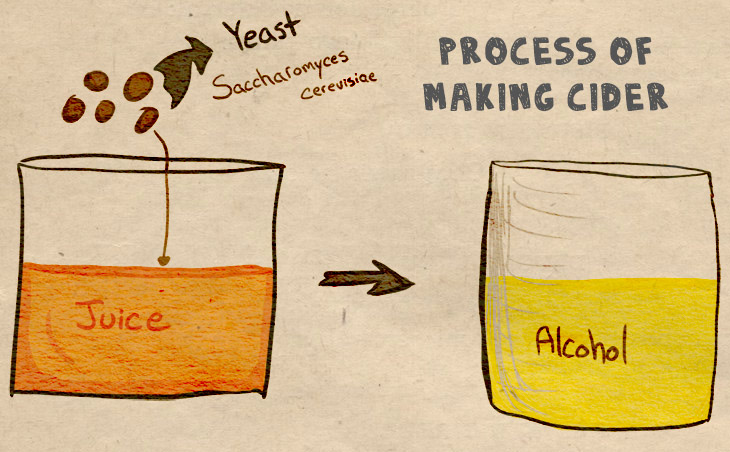
If you ever wanted a better understanding of how cider is made, this short video helps explain the ins and outs of making this classic fall drink.
In the US, we like to call alcoholic cider, “hard cider.” The rest of the world, just keeps it simple by referring to it as cider. The non-alcoholic stuff is called “sweet cider.” Understanding the science of cider has everything to do with understanding the conversion of sugars into ethanol by our favorite fungi – yeast.
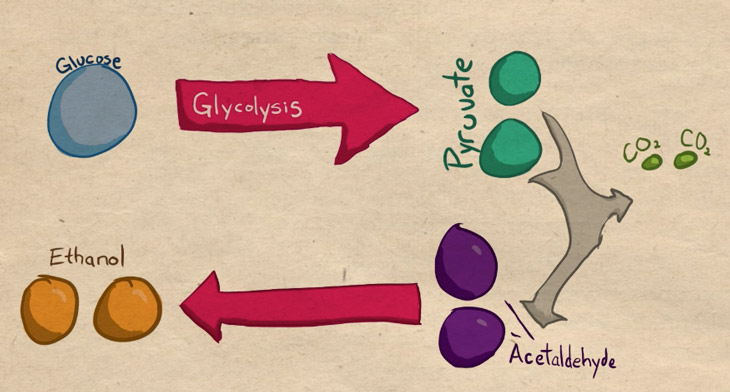
Glycolysis and Alcoholic Fermentation
The process of converting the sugars to ethanol is really the story of glucose converting via glycolysis into two pyruvate molecules. Then, via alcoholic fermentation, those pyruvate molecules convert to carbon dioxide and acetaldehyde. Those acetaldehydes then convert to ethanol. This process is performed in the absence of oxygen. The end products from the glucose then are your alcohol and your carbonation! It really is as simple as that.
Zombies. What does that term mean to you? Chances are you think about something from Hollywood. I actually thought that’s all there was to this Halloween character. I was wrong.
Zombies have a true biological basis to them. The stories as we know them have their origin in the country of Haiti. This small Carribean country is famed as being one of the only places where the African slaves revolted and kicked out the Europeans. After doing that, their African tribal culture took over. Many say it’s now more African than Africa! It’s also the epicenter of Voodoo.
The Legend of Vampires – Pellagra, Corn and Niacin Deficiency
Corn, which was discovered in the new world, was brought back to Europe in the 1500s. It quickly became a crop of the poor, who would often eat nothing but raw corn as their main energy source. But, here is the problem. Corn contains the essential vitamin niacin, but it is inaccessible in its raw form. Thus, eating a diet of only raw corn leads to a vitamin deficiency known as pellagra. Victims of pellagra are hyper-sensitive to sunlight. If exposed, the skin often turns shiny with scaly areas. The brain starts to degenerate causing the person to have insomnia, anxiety, aggression, and depression. Often the persons stomach bleeds, meaning they can not eat normal food and can often digest only blood.
Here is another interesting tidbit: Pellagra was not common in the new world where corn was native. The reason for this is that peasants in Mexico and Central America prepared corn differently. Corn tortillas were often prepared with lime (an alkali)which helped to extract niacin from the corn and thus insured that pellagra didn’t arise.
The Pumpkin
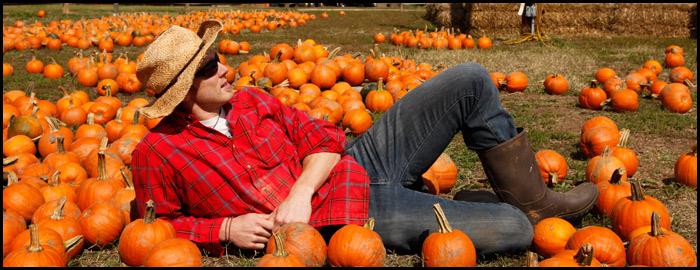
For centuries, people have utilized the pumpkin and its relatives. The pumpkin is native to North America; even before Europeans came the Americas, Native Americans were using them as an important food source. The thick skin of the pumpkin could be peeled, pressed, and made into mats. Strips of flesh could be roasted on the fire and eaten. The seeds could also be cooked and ingested.
When Europeans arrived, they saw how native groups were using the pumpkin and quickly began using it as well. Early colonists also brought with them other traditions that took the use of the pumpkin to a whole new level: Jack-o’-lanterns.
The Jack-o’-lantern
The tradition of using pumpkins as Jack-o’-lanterns came from an old Irish story of Stingy Jack. The story gets long and complicated, but the gist of it is that Jack had tricked the Devil multiple times whereby the devil agreed not to take his soul. So, when Jack ended up dying, the Devil was true to his word. But God decided he shouldn’t be in heaven so his soul remained on the earth. He was given only a hot coal to light his way, which he put into a small, carved turnip or gourd. He was remembered every year when people would carve out members of the cucurbitaceae family (cucurbits) and put them on the doorsteps or window ledges.
When the Europeans discovered American pumpkins, they quickly adapted their tradition with the much larger and easily carved gourd. It also became associated with the festival of Halloween.
Halloween
The traditions associated with Halloween have their roots in the Irish holiday Saween. Saween isn’t a celebration of the Devil or a lord of the dead as some people might think. It was celebrated from the night of October 31st to the evening of November 1st and is most closely related to our modern New Years’ Day. It was a celebration of the year and the harvest. In ancient tradition, carved gourds where put outside the house with coals in them to welcome back dead relatives and warn off Stingy Jack.
“Pumpkin” is just another name for Orange Squash
It’s common for more than one species to be described with the same common name. For instance, the colloquial term “banana” is used for more than one species found throughout the tropics. Most Americans see only one of these species, but there are actually many more. What we call pumpkins are phenotypically orange individuals from the following four species: C. pepo, C. maxima, C. mixta, and C. moschata.
The most difficult concept to grasp, however, is that each of these species has also been domestically bred into different forms to the point that we wouldn’t even call them pumpkins. Zucchinis, for instance, are the same species as the common pumpkin, C. pepo. We wouldn’t mistake a zucchini for a pumpkin would we? Thus, pumpkin is really a term used to describe a characteristically orange, squash-like gourd.
What about Giant Pumpkins?
http://www.youtube.com/watchv=wmHGM0Hwuzo
Giant pumpkins aren’t the same species as the common pumpkin you find every year for sale at Halloween. The species is C. maxima and the largest ones are especially “helped” along. The kind of giant pumpkins that win competitions take special care. First, it is important that the prize pumpkin is getting its supply of nutrients without having to compete with others on the same plant. Thus, once a pumpkin starts, the other flowers are pruned off. But, the pumpkin mania doesn’t stop there.
Special fertilizers are added to the soil and lotions are even rubbed on the outside of the pumpkin. The trick though is to make sure the pumpkins grow fast but not too fast. If they grow too large, too quickly, the pumpkin will cave in on itself.
When it comes to big lakes, those of us in America are familiar with our 5 Great Lakes. Anyone that lives in that area knows how long it takes to drive around them – they’re huge. But when it comes to volume, Lake Baikal has as much freshwater as all of those lakes combined! It has 20% of the world’s available freshwater and can boast being the deepest lake in the world.
https://www.youtube.com/watch?v=iC9-sYuNLgo
Biodiversity in Lake Baikal
This lake has a few pretty amazing biological stats. It is home to the world’s only true freshwater seal – the Baikal Seal, or Nerpa (A few other marine seals have colonies in lakes). It is also home to some 1,600 species of which 60% are endemic, meaning they’re not found anywhere else in the world. There are a few families of fish (sculpins) that are only found here. Additionally, the amphipods here are world famous.
Amphipods in Lake Baikal
Amphipods are an order of crustacean that generally live in the water. Most of them are pretty small – on average about 0.4 inches. However, there is a species in lake Baikal that can reach nearly 3.5 inches long! These amphipod’s size is restricted to the amount of dissolved oxygen and the oxygen in the lake is really high! In fact, unlike most rift lakes where there exists a strong layering of water, there is little to no layering of dissolved oxygen here. That means that life can exist readily all the way to the bottom.
Unique Fish
As I’m a fish biologist, this post wouldn’t be complete if I didn’t mention the unique fish assemblages. Surprissingly there are only about 60 native fish species here. Yet, half of them are found nowhere else in the world. In particular, the family Abyssocottidae (deep water sculpins), the Comephoridae (Baikal oilfish or Golomyankas) and the Cottocomoephoridae (Baikal Sculpins) are only found in this lake basin.
Some of the neatest unique fish are the Golomyankas, a type of deep water sculpin that lives in open water at depths of about 330 to 1,640 feet. These oily fish are the primary prey of the Baikal seals. There are also sturgeon, and Greyling unique to the lake.
Sport brings people together in the most amazing way. It’s part of why the Olympic Games are so important to us. There are so many different types of sports that we play, too. To be good at your chosen sport usually requires a combination of hard work, good technique, and good training ethics. Learning about the science involved in the sports we play can also make us better athletes.
So, we’ve created a new channel.
Sport Science is our new YouTube Channel dedicated to the science of sport. If you like learning about the physiology, physics, chemistry, and biology of sport, then we think you’ll like this new series. Watch this short promo we did for it, and if you like it, subscribe!
If you have followed Untamed Science over the last several years, then this set of parent videos makes a lot of sense. If you are coming to the site for the first time, welcome! Here’s a little sum-up:
Rob and I are science filmmakers with biology backgrounds. We are in our 30s, making babies and raising our family. So naturally, we’re fascinated and gung-ho about the science of our everyday lives—children, birth, pain, joy, sleep, not sleeping, what our kids eat—basically anything that happens. For us, it’s really fun (and sometimes useful or comforting) to ask lots of questions and talk to the top researchers in these fields about the science.
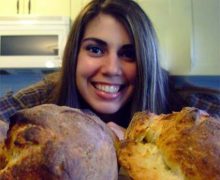
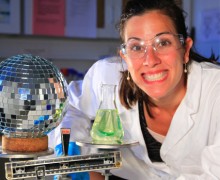
The idea for this series began at a ladies’ night with fellow mom and science filmmaker Melissa Salpietra (pictured below). Somewhere amidst drinks and tacos, we realized we HAD to make this series. We wanted to talk to experts and get the real scoop on so many things we asked ourselves and each other, so many things that couldn’t be explained with a Google search or the ultimate resource, our moms. We have had an absolute blast producing these together, and we hope we can dig deeper and make a million more!
To be very clear, parenting is not a science, but science is a huge part of our lives. Knowing the biology or the chemistry involved in the tasks and beautiful moments of daily life only deepens our appreciation and adds another layer to this wonderful and crazy time of our lives where we get to do the best job in the world. In the end, we all parent from our gut—and my gut says that all of this cutting-edge discovery is cool to learn about! Maybe there are other moms like us? We want to make sure everyone knows we are not giving parenting advice at all. We just want to share the joy of science in this new chapter in our lives.
In a most beautiful turn, talking to all these scientists and researching about all this stuff has given us even more respect, love, and appreciation for our parents, our children, and the role we now fill as parents. It’s an important job. It’s hard. It’s wonderful. It’s a gift. We are enjoying it and bungling through it the best way we know how—with faith, love, each other and science!
We hope you enjoy these videos—our first go at a labor of love! Please leave comments below and share them with your friends!
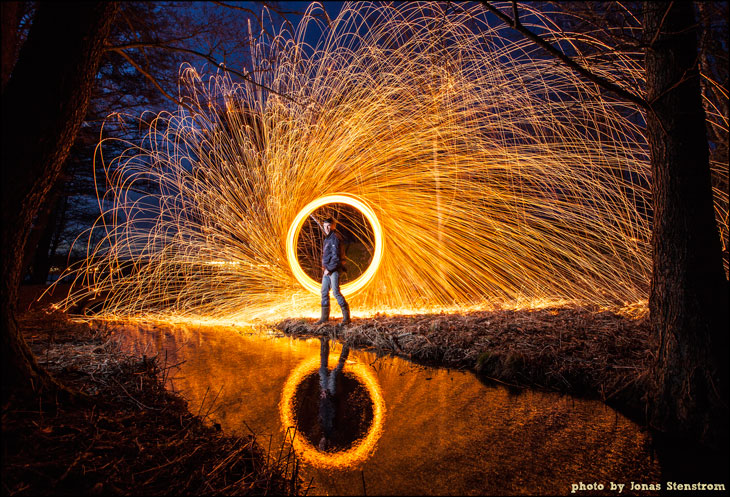
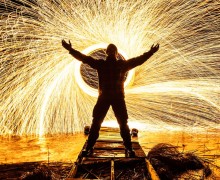
Here is a great how-to science experiment that you can try at home: burning fine steel wool with only a battery. The shock and awe that you get from the visuals is enough to get anyone excited. When you can explain the science, it’s even cooler. But, before we get to the experiment, you should know that there are some really cool artistic things you can do with it. Since we also teach filmmaking and photography, we thought you might first like the inspiration from this short video.
Burning Steel Wool (and Photography) Materials
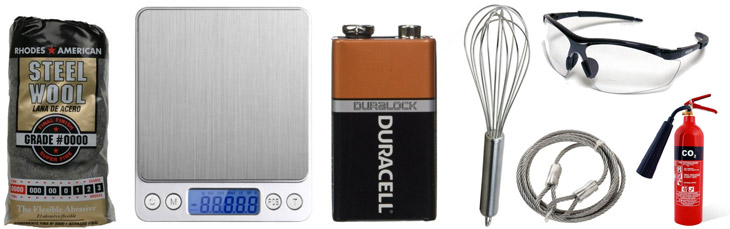
Everything you need to make this happen can be purchased at Walmart, a hardware store or online. Here are the things you need with quick links to amazon if you want to simply add them to your shopping cart (and yes, buying them through here actually helps us out).
I added these amazon links incase you want to buy the needed materials. They are affiliate links, so if you buy them through the link, it will help us out. Good luck with your photography
How it Works
The first thing to understand is that steel wool is actually mostly iron (Fe). In fact, steel is an iron alloy: iron with about 2% carbon mixed in. For simplicity, lets just say it’s mostly iron.
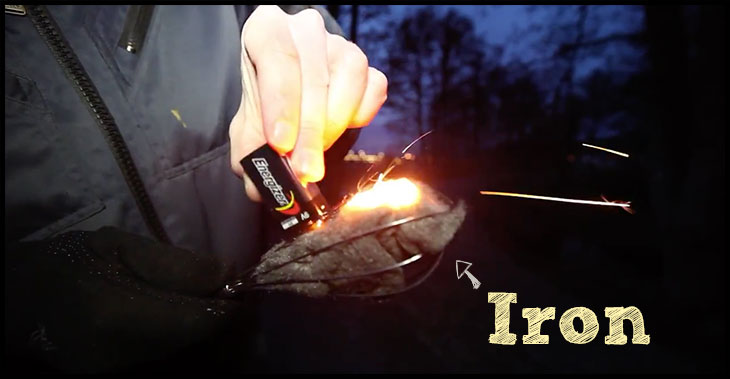
We used a 9-volt battery to light the steel wool because the terminals are close together. Touching the battery to steel wool sends a current through the thin wire, and it heats up a lot (to about 700 degrees C). These temperatures cause the iron to react with the oxygen (O2) in the air and creates iron oxide (FeO2).
This reaction releases heat, heating up the next bit of iron and so on, causing a cascading reaction through the steel wool. Fluffing up the steel wool and spinning it increases the amount of oxygen available, speeding up the reaction and giving us the amazing display that we used for these photographs. Cool, huh?
Warnings
Now to warn you about the hazards. Be very careful with this. You are dealing very hot things and spreading them over a considerable distance. Try to always do it over water or concrete as they will catch things on fire, even when you’re trying to be careful. Plus, some people consider this littering as you always send out little chunks of steel. Do you best to clean it all up when you’re done.
And of course, they can also burn you. Make sure you always have:
Eye protection
Head protection
A Fire Extinguisher
Non-flammable clothing to cover your skin
gloves
Steel Wool Science
Weigh the Steel Wool
The science of this is pretty cool. You’re basically creating a new substance—iron oxide—from iron and oxygen. After the reaction, the final product is actually heavier than the original steel wool. Who would have thought that burning something would make it weigh more? That’s pretty neat!
Another Science Video About Steel Wool
If you’re a parent or teacher and want to introduce your students/kids to this without actually doing it, I also recommend watching this science video we did.
Again, remember to be very careful with this. Good luck doing science and/or taking photographs with steel wool.