Memorize More

The secret to success is not always putting in long hours of hard work. At times you have to be smart about completing a task, even for studying. So if, as students, you have been cramming and all-nighters to jumpstart your GPA, then you might want to continue reading this article. 

Students’ performance is determined by numerous factors other than learning hours. This research on academic achievement indicates that the peers, social interactions, type of learning all contribute to one’s grades. However, students are often unaware of many effective learning techniques.

In this article, we are going to discuss a few of the research-supported and evidence-based learning methods that can help you transform the learning activity. 

Less Time, More Focus 

In our fast-paced world, where anyone is continuously bombarded with notifications, multitasking is the habit that needs cultivating the most.

Over the years, many pieces of research looked into the effect of how multitasking undermines productivity. A study published in the Journal of Experimental Psychology: Human Perception and Performance emphasizes how multitasking could lead to less efficiency. If you entertain or even enjoy the activity, try to focus solely on one task. It could reduce the distractions and allow you to focus on high intensity for shorter times, leading to more efficiency and quality at the same time. 

Space Out Study Sessions 

Students often tend to procrastinate studying, only to end up having to cram or miss deadlines. Nowadays, there are several ways for one to get extraordinary help with academic essays to complete assignments asap. However, cramming only for a day might not work well if you are preparing for some tests. 

In a 2009 study by Nate Kornell, the author discusses how spaced study sessions can be more effective than cramming. 

Spacing out study sessions has proved to have more satisfactory results and improve long-term memory. Researcher claims that coming back to a subject could help one jog the mind to boost the process of cementing the knowledge. 

Revise Current Techniques

Many studies support the idea that the more students are looking to understanding concepts, the better they will succeed in learning it. To be more precise, the right term is metacognition, which is now a commonly used phrase in educational circles. 

The concept is categorized into two phases. The first is knowledge, where a student becomes aware of one’s cognitive abilities, and the next step is categorizing it. 

Metacognition is an approach that students can apply in the very first stages of studying any subject. It is often similar to asking questions to yourself, such as why you do not understand a particular material and what to do to make it more comprehensible. The notion would help one grasp concepts better than memorizing data for no reason. 

Mix the Subjects

While multitasking might not always prove beneficial, studies show that switching between different subjects can increase productivity. At least, it will do more good than spending too much time on mastering one particular topic. 

In the research on interleaving subjects, it was observed that mixing them up is much similar to the spacing technique. The key is learning, forgetting, and relearning to reinforce memory. 

It is recommended to choose different topics on the same subject or at least some related fields. This way, the brain will find some connections allowing you to notice the similarities and differences among the various aspects you try to learn. This will further promote a more in-depth understanding of the material. 

Teach Your Peers

Peer teaching is considered a learning strategy by many in the academic circles. Expecting to teach others or your fellow students encourages one to study the material and reinforce it to be able to convey the information to another person effectively. 

This research on the impact of peer tutoring on learning of students discusses the different methods students can implement while tutoring. It could be reciprocal, class-wide, or cross-age tacts, each with its own opportunities. 

It might not be a surprise that students are already practicing all the approaches in one way or the other in terms of group study sessions. 

Paraphrasing

These days, paraphrasing is associated with writing alone. Nevertheless, it is a learning technique that could be used to get the hang of different concepts. It is an essential skill, especially for language learning, to develop communication and increase the existing knowledge. 

Judy Alden, an experienced teacher, notes that paraphrasing should be a core strategy of language teachers. 

If you apply the same thought to studying other subjects, it is easy to circle back to the first point where cognitive psychology has established students to teach themselves better. 

Paraphrasing can help a student to perform better in exams and strengthen their vocabularies. 

Opt for Mind Mapping

There are numerous learning tools available on the web with a focus on mind mapping. Essentially, it is a graphic way of representing information that helps to structure, analyze, and comprehend better. 

Nobel prize winner Roger Sperry’s research on mind mapping claims that visual forms of learning are superior to traditional note-taking. 

Though not a fairly new idea, when it comes to individual learning activities, visual forms are not always students’ favorites. According to Sperry, visual learning can boost the coordination of skills processed by two different hemispheres of the brain, helping to perform complex tasks faster. 

Test Yourself 

There is a reason why taking sample tests help a student perform better in exams. The retrieval practices of learning encourage learners to create test questions by themselves to comprehend a new concept better.

With the help of such self-quizzes, students familiarize themselves with the test style and prepare more efficiently. 

Wrapping Up

Many of these techniques might seem like a hard route for students. However, if you find yourself tired after a study session, it might be time to revisit the method. 

You may choose something else on the list and decide what is suitable for you to achieve better results.

Largest and Longest Snakes in the World

There are many big snakes in the world. There is no way to define what a giant snake is except that it’s bigger than most snakes. Most snakes are no larger than 1.25 meters.

We quickly look at some of the record holders in various categories of snake ‘gigantism’.

What is the longest snake ever recorded?
The longest snake ever recorded was a 11.5 meter green anaconda from South America (Oliver 1958 and Gilmore and Murphy 1993). Some biologists dispute this and consider the maximum length to be only 9 to 9.5 meters.

The longest Python?
The longest python on record was a reticulated python that reached a length of 10.1 meters. While it was common to find individuals with lengths up to 8 meters in the wild only a few decades ago, few wild creatures today exceed 5 to 6 meters.

Longest snake in Africa?
The African Rock Python is the longest African snake. One individual reached a length of 9.75 meters.

Longest pet snake?
The most popular ‘giant’ snake is the Indian Python (Python molurus). The longest pet snake on record reached a length of 5.8 meters. A subspecies of this python is the Burmese Python.

Longest Australian snake?
The longest Australian snake is the Scrub Python (Morelia amethystina) which reached a length of 8.5 meters.

Longest Venomous snake?
The longest venomous snake is the King Cobra.

Most Venomous Snakes in the World

What determines the world’s deadliest snake is different than what determines the world’s most venomous snake. Venom is a complex subject (see Snake Venom), and snake venom works differently on different creatures. But for the purposes of this page, we’ve listed the most toxic venom based on the lethal dose to mice, called the LD50.

The list of the most venomous snakes according to a compilation by Ernst and Zug (1996).

Species LD 50 mg/kg mg Venom yield
Hook-nosed sea snake (Enhydrina schistosa) 0.02 7.0 – 79.0
Russel’s Viper (Vipera russelii) 0.03 130.0 – 250.0
Inland taipan (Oxyuranus microlepidotus) 0.03 44.0 – 110.0
Dubois’s reef sea snake (Aipysurus duboisii) 0.04 0.7
Eastern brownsnake (Pseudechis textilis) 0.05 2.0 – 67.0
Black mamba (Dendroaspis polylepis) 0.05 50.0 – 100.0
Tiger rattlesnake (Crotalus tigris) 0.06 6.0 – 11.0
Boomslang (Dispholidus typus) 0.07 1.6 – 8.0
Yellow-bellied seasnake (Pelamis platurus) 0.07 1.0 – 4.0
Common Indian krait (Bungarus caeruleus) 0.09 8.0 – 20.0
Desert horned viper (Cerastes cerastes) 0.1 20.0 – 45.0
Common taipan (Oxyuranus scutellatus) 0.1 120 – 400
Common European viper (Vipera berus) 0.11 10.0 – 18.0
Tigersnake (Notechis scutatus) 0.12 35.0 – 189.0
Forest cobra (Naja melanoleuca) 0.12 ?
Puffadder (Bitis arietans) 0.14 100.0 – 350.0
Gaboon viper (Bitis gabonica) 0.14 350.0 – 600.0
Seakrait (Laticauda laticaudata) 0.16 ?
Neotropical rattlesnake (Crotalus durissus) 0.17 20.0 -100.0
Mojave rattlesnake (Crotalus scutulatus) 0.18 50.0 – 150.0
Egyptian cobra (Naja haje) 0.19 175.0 – 300.0
Harlequin coralsnake (Micrurus fulvius) 0.2 3.0 – 5.0
Ottoman viper (Vipera xanthina) 0.2 8.0 – 18.0
Erabu seakrait (Laticauda semifasciata) 0.21 2.0 – 14.0
African birdsnake (Thelotornis kirtlandii) 0.21 ?
Ringhal (Hemachatus haemachatus) 0.22 80.0 – 120.0
Olive seasnake (Aipysurus laevis) 0.22 10.0 – 33.0
Black-necked cobra (Naja nigricollis) 0.23 150.0 – 350.0
Saw-scaled viper (Echis carinatus) 0.24 5.0 – 48.0
Common mamba (Dendroaspis angusticeps) 0.26 60.0 – 95.0
Bar-bellied seasnake (Hydrophis elegans) 0.27 9.0 – 24.0
Spectacled cobra (Naja naja) 0.28 150.0 – 600.0
Annulated seasnake (Hydrophis cyanocinctus) 0.35 5.0 – 8.0
Fer-de-lance (Bothrops atrox) 0.35 100.0 – 200.0
White-lipped tree pitviper (Trimeresurus albolabris) 0.37 8.0 – 15.0
Hundred-pace pitviper (Deinagkistrodon acutus) 0.38 ?
Central American coralsnake (Micrurus nigrocinctus) 0.4 5.0 – 8.0
Northern moleviper (Atractaspis microlepidota) ? 5.0 – 10.0
Yellow-lipped seakrait (Laticauda colubrina) 0.4 ?
Jararacussu (Bothrops jararacussu) 0.46 200.0 – 321.0
Nose-horned viper (Vipera ammodytes) 0.48 ?
Common blacksnake (Pseudechis porphyriacus) 0.5 30.0 – 50.0
Deathadder (Acanthophis antarcticus) 0.6 70.0 – 236.0
Hardwicke’s seasnake (Lapemis curtus) 0.62 2.4 – 15.0
Southern coralsnake (Micrurus frontalis) 0.63 20.0 – 30.0
Blunt-nosed viper (Vipera lebetina) 0.64 12.0 – 150.0
Wagler’s pitviper (Tropidolaemus wagleri) 0.75 65.0 – 90.0
Cantil (Agkistrodon bilineatus) 0.8 50.0 – 95.0
King Cobra (Ophiophagus hannah) 0.9 350.0 – 500
Twin-spotted rattlesnake (Crotalus pricei) 0.95 4.0 – 8.0
European asp (Vipera aspis) 1 9.0 – 10.0
Western rattlesnake (Croatalus viridis) 1.01 35.0 – 250.0
Terciopelo (Bothrops aspera) 1.1 100 – 310
Jararaca (Bothrops jararaca) 1.1 40.0 – 70.0
Banded krait (Bungarus fasciatus) 1.2 20.0 – 114.0
Mamushi (Agkistrodon blomhoffii) 1.2 1.0 – 7.0
Eastern diamondback rattlesnake (Crotalus adamanteus) 1.2 200.0 – 850.0
Malayan pitviper (Calloselasma rhodostoma) 1.24 40.0 – 60.0
Picados pitviper (Porthidium picadoi) 1.33 5.0 – 70.0
Eyelash palm pitviper (Bothriechis schlegelii) 1.6 10.0 – 20.0
Timber rattlesnake (Crotalus horridus) 1.64 75.0 – 210.0
Common nightadder (Causus rhombeatus) 1.85 20.0 – 30.0
Lowland copperhead (Austrelaps superbus) 2 ?
Urutu (Bothrops alternatus) 2 60.0 – 100.0
Cottonmouth (Agkistrodon piscivorus) 2.04 80.0 – 170.0
Orsini’s viper (Vipera ursinii) 2.17 1.0 – 4.0
Western diamondback rattlesnake (Crotalus atrox) 2.2 175.0 – 600.0
Jumping pitviper (Porthidium nummifer) 2.4 40.0 – 60.0
Sidewinder (Crotalus cerastes) 2.6 18.0 – 50.0
Pygmy rattlesnake (Sistrurus miliarius) 2.8 12.0 – 35.0
Massasauga (Sistrurus catenatus) 2.9 15.0 – 45.0
Okinawa habu (Trimeresurus flavoviridis) 3.05 ?
Red diamond rattlesnake (Crotalus ruber) 3.7 120 – 450
Speckled palm pitviper (Bothriechis lateralis) 4 10.0 – 20.0
Bushmaster (Lachesis muta) 4.5 200 – 500
Rainforest hognosed pitviper (Porthidium nasutum) 4.6 12.0 – 25.0
Side-striped palm pitviper (Bothriechis lateralis) 4.84 10.0 – 20.0
Slender hognosed pitviper (Porthidium ophryomegas) 6.3 10.0 – 20.0
Godman’s pitviper (Porthidium godmani) 7.6 10.0 – 20.0
Rock rattlesnake (Crotalus lepidus) 9 129
Copperhead (Agkistrodon contortrix) 10.9 40.0 – 75.0


The Science Behind Slots

Online slots are fun to play and are among the most popular games at online casinos. You place your bets and hit the Spin button. The reels spin away and stop at a point in time. You win if you hit a winning combination. Simple, right? Yes, and no.

The entire process is simple for a player, but there is a huge amount of science involved in creating the entire experience: right from the way a slot looks and feels to the way you are guaranteed a completely random outcome for every spin with the random number generator (RNG) and, even further, the psychological aspect that makes slots so successful.

On this page we take a look at the science behind online slots and how it all works. We will first discuss about the RNG and then move on to the science behind the visual aesthetics.

The Random Number Generator (RNG)

Especially because of the remote nature of online casino gambling, one critical requirement is fair gaming. Online casinos fulfill this requirement for online slots by using a random number generator (RNG). The random number generator is an algorithm generated by a computer that online casinos use to randomize the results of a spin. It does this by generating a sequence of numbers, each number corresponding to a symbol on the reels, which one cannot predict by any means other than by chance.

There are typically 2 types of RNGs:

  • Hardware Random Number Generator (HRNG): This type of RNG genuinely generates random numbers. They are not even computed values that are obtained from an algorithm that executes repeatedly. They are truly random because you don’t even have a repeated set of numbers or a set algorithm to crack them. That is why they are also called True Random Number Generators (TRNG).
  • Pseudo Random Number Generator (PRNG): This type of RNG generates numbers that only look random. This is what it means: if you know the state of the PRNG you can reproduce the random number sequence generated.

How the RNG Works

How the RNG Works: The software sets up the algorithm with a seed value. This is only natural because for something to execute repeatedly there has to be a beginning: that is the seed value. The seed value is derived from any one of a number of repetitive actions or operations happening in the computer. It could be processes that are running, the specific pattern to a mouse click, a specific set of keystrokes, or even the computer’s clock.

What this means for Slots: Each symbol on a reel has a specific value assigned to it. When you spin the reels the RNG algorithm throws up unique numbers, at the speed of hundreds per second. The set of numbers that are thrown up when the reels stop spinning determine the symbols that appear on your computer screen at that point in time. The arrangement of the symbols on the reels, determined by the numbers they are represented by, determine whether you won, and by how much. That is how random the whole exercise is. There is another factor to consider: each symbol is weighted uniquely. This means in a game with 24 symbols per reel the chances of a symbol landing on a particular reel are effectively 1 in 24 and completely random.

Usually lower symbols are more heavily weighted. The probability of you landing a lower weighted symbol is far higher than the probability of landing a more heavily weighted symbol, like a bonus symbol or, to take it to an even higher level of randomness, the probability of landing a set of bonus symbols to trigger a bonus round. While the process itself is random, players need to be assured of that fact. That is why every reputable online casino gets its RNG audited by an independent third party that is known for its neutrality. Some of the most popular testing agencies that the online casino industry uses are:

The Return to Player (RTP) Value

Another bit of science that plays out when it comes to online slots is the return to player (RTP) value. The RTP value tells you how much, over a period of time, a slot pays you back. This value is usually calculated and represented as a percentage value; so a slot with a RTP value of 96% literally means that for every $100 you wager the machine will pay you back $96 over a period of time. One thing to remember: this is a theoretical value and a statistical calculation.

In the above example, the RTP value is the 96%, and the 4% is the house edge. So on every $100 you wager, the house stands to make $4. While the RTP does tell you how much you can expect to win back out of the $100 you wagered, in the earlier example, it does NOT tell you how often or how soon you can expect to win it back.

All of it is driven by the use of the RNG, at the end of it. That is what determines the fairness quotient and levels the playing field: your chances of winning on a particular spin are exactly the same as your chances of losing.

Slots and the Price Associated with Them

Each slot has a price, for both the player and the operator. For the player, the price is the cost per spin. So for a 50 cent spin, the price he sees is the 50 cents he pays. For the operator, on the other hand, the price would incorporate not just the cost per spin but other factors like the house edge. So, for a game with a 5% house edge, the price for the operator would primarily be the 5% they collect on each spin over a period of time. CasinoShortList has done extensive research to only offer the best online casinos offering these high RTP slots for you. These are slots with the best RTPs.

Slots and Human Psychology

There is another level of science involved when it comes to playing slots: psychology. There have been numerous studies conducted on this, mainly focusing on human behavior. It is as simple as the results of an experiment Skinner conducted in the 1970s: pigeons were caged and rewarded with food when they pressed a lever. The reward was random, and this made the pigeons hit the lever frequently, not knowing when they would win reward and hoping to win it every single time.

Another scientist, Natasha Dow Schull, a cultural anthropologist, has actually identified some of the features – called the trigger features – land-based casinos use to grab the attention of players and keep them hooked. Here are a few that we have always known about but never associated with the scientific aspect:

  • Screen type: Screens with soft color patterns and an inclination of 38 degrees ensure you don’t hurt your eyes and help preserve energy.
  • Sound: Most of the sounds in a slot machine are sweet music to the ears. There is a science to this, which most of us aren’t aware of: the sounds are generated in the C key, which has a pleasant ‘sound’ to it.
  • Location: The location and setting of a slot machine are designed to ensure privacy and give you a shot at playing some long sessions
  • Button usage: The button gives you a sense of control, of executing a task on your own, as does a lever. When you score a win you feel validated, and when you don’t, you feel the need to score one on the next spin.
  • Near misses: Near misses are a big factor in getting you to place the next bet. They give you the feeling of having lost out narrowly and therefore the need to correct that the next time around.
  • Low bets: The first thought when you see a penny slot is that you can have some fun here because it just costs well, a penny!

The Psychology of Winning

The great thing about slots is that there are thousands of games to play, and even more ways to win. No studies are needed to prove the obvious psychological fact that everyone loves winning.

8 Interesting Facts About New Zealand Wildlife

New Zealand is a Pacific island nation that is known for its stunning natural beauty, as well as its unique flora and fauna. One of New Zealand’s most famous and well-known native animal is the kiwi. However, there are many other curious critters to learn about. Here are a few examples of why New Zealand’s wildlife is unlike that of anywhere else in the world.

Image source: Pixabay

There Are Hardly Any Native Land Mammals

Two endangered species of bat, the long-tailed bat and the lesser short-tailed bat, are the only living land mammals native to New Zealand. Long-tailed bats are known to only produce one offspring per year and are located in various regions throughout New Zealand. Comparatively, lesser short-tailed bats are found in very few locations and hunt prey along the forest floor. This is rare to very few bat species, as most hunt prey while flying.

Wondrous Marine Mammals

Aside from bats, marine mammals are the only other native mammals. The New Zealand sea lion or whakahao is the rarest species of sea lion in the world, with a low population of approximately 12,000. They can largely be found along the shores of the Subantarctic Islands.

Image source: Unsplash

Pests Out!

Since the settlement of New Zealand by humans, non-native mammals like rats, possums and mustelids have been introduced. These invasive predators threaten New Zealand’s delicate ecosystem. They have been linked to the extinction of dozens of native species. The country has announced an ambitious plan to rid itself of all invasive pests by 2050.

Time Flies, Unlike These Birds

New Zealand doesn’t just lack native mammals — it is devoid of native land predators in general. With other birds their only predators, prehistoric birds found safety on the ground. And with tiresome flying no longer a priority, they gradually evolved to be flightless. As a result, New Zealand has 16 species of flightless birds: more than any other country. This includes, among others, three species of penguin and five species of kiwi. Flightless birds are particularly threatened by invasive species. This has led to the loss of their natural habitats, emphasizing the importance of conservation efforts.

Avian Giants

Another odd feature of island evolution is the phenomenon of island gigantism. This evolutionary quirk occurs when animals develop on islands lacking predators and/or competition. This means they are free to evolve rapidly to unprecedented sizes. In New Zealand, this gave rise to the moa and its only predator, the Haast’s eagle. The moa is an emu-like bird of 12 feet in height. It was extinct by 1445, having been hunted by Māori for food. The Haast’s eagle, with a wingspan of up to 10 feet, soon went the same way.

Back From The Dead

The takahē is a flightless bird and the largest living member of the rail family. Discovered by Europeans in 1847 but hunted by Māori for centuries, it was considered extinct by 1898. Then, to everyone’s surprise, living takahē were rediscovered in Fiordland in 1948. The striking swamp-hens are now a protected species. With efforts to ensure the growth and continued survival of their populations underway.

Image source: Pxhere

Living Dinosaurs

The curious reptile known as the tuatara is the only surviving member of the order Rhynchocephalia. With the rest of whom went extinct 60 million years ago. Tuatara share a common dinosaur ancestor with lizards and snakes. They can live to over 100 years old. Ancient Creepy Crawlies

With over 100 species throughout the country, the wētā is New Zealand’s star invertebrate. The giant wētā has been around for 190 million years, and is the world’s heaviest known insect, weighing a hefty 70 grams.

Monogamous Kiwis

The endearing kiwi is a rare example of a monogamous species. The birds often mate for life, and kiwi relationships have been known to last for over 20 years. Romantically, kiwi couples sing duets with each other at night, synchronizing their calls with complementary frequencies.

science projects should be more diverse

As we know, science is the most reliable source of knowledge and the involvement and use of diverse methods and practices can prove useful for this phenomenon.

When someone mentions a science program, you are bound to think of a group of scientists cohesively working in a laboratory. But what if science wasn’t only limited to the scientists alone, but also the general public or the ‘non-scientific’ people as well? With the best iptv service usa you will be able to get more done easily.

The result of such collaborative projects is what is now termed ‘Citizen Science’.

What is Citizen Science?

Citizen Science is the product of the collaborative efforts undertaken by professional as well as amateur scientists in several scientific projects. Several such endeavors are recognized in the form of Higgs Hunters, Gravity Spy, and Steelpan Vibrations to name a few.

What does Citizen Science do?

Citizen Science efforts allow individuals, or the participants, to learn from the scientific practices besides advanced scientific understanding. Although, as determined by Rajul Pandya and his 12-member committee at Thriving Earth Exchange, the institutes offering such diverse citizen science projects must be well equipped and educated.

Features of Citizen Science

  1. The first and the most important aspect of this approach is that anyone (literally) can participate in the scientific program.
  2. All the data that is available to the general ‘scientists’ is what the real scientists also refer to, which means that the combined data can be of premium quality.
  3. This data then helps the scientists to come to real conclusions for the project.
  4. Scientists and large communities volunteer data which can be accessed by all the citizen scientists along with the actual scientists related to the project.

Benefits of Citizen Science

  •        Availability of fresh knowledge

With the additional help, scientific projects include research done from different views and aspects, scientific as well as general. This leads to better results overall.

  •        Scientific Awareness among masses

Most of the time, the general public is not included in the programs that are conducted which formidably leads to very little scientific awareness. But with Citizen Science projects, the general public is included throughout the process allowing them to learn and understand the phenomenon of science better.

How else can a Science Project be Diverse?

Besides Citizen Science, there are several assorted areas which result in extensive scientific discoveries. Researches say that it takes a team of scientists with both the genders to come up with the most successful endeavors.

The best example of this is since the women are part of medical research teams, more attention is now being paid to the female health problems like breast cancer.

Is it Effective?

Scientific teams which are more diverse in nature, gender, and practice generate better outcomes than traditional scientific projects. This is due to the presence of mix perspectives under a single roof, which allows them to think beyond the natural horizon.

Scientific research becomes borderless with the recruitment of diverse researchers to the group, every individual brings something new to the table which makes the project even more progressive.

Black hole theory

Scientists have a way of messing with our heads every once in a while. That’s one of those
moments, I have read that stuff that is sucked into black holes don’t stay there forever.
It felt like one of those times we have the ruckus about Pluto. Scientists upset a lot of people
when they said Pluto was not a planet. There was an outcry before the scientists said it was a
sort-of planet, blaming the error on a dodgy calculator or something.

When I was a kid, things sucked into a black hole were never seen again. As I grew older, I
learned that black holes are when time and space wrap causing powerful gravity that even
light is sucked into it. Einstein’s theory of general relativity states that the mass of many stars
is crushed into the zero-size volume at the center of the holes. Below are some new black
hole theories that will have you re-think what you’ve learnt about the phenomena.

Cosmic Recycling Plants?

Papers published in the Physical Review D journals and the Physical Review letters challenge
the accepted theory about the inner workings and lives of black holes. The research is based
the new theory of gravity which the authors argue is necessary when dealing with small sizes.
Abhay Ashtekar, Parampreet Singh and Javier OLmedo, took the loop quantum gravity
theory and applied it to black hole-scenario. According to their theoretical findings, Einstein
was wrong as there isn’t singularity at the centre.

Instead, the strong space-time curve means it continues into the future, and here it becomes a
white hole, where what got sucked in including light is shot out. If their maths is right black
holes will one day vomit everything they ever swallowed.

Possibly Explaining the Unexplained

This new theory may explain other unexplained phenomena. High amounts of radio energy,
Known as radio bursts have been observed by scientists over a short period. Also observed
are, high-energy cosmic rays that collide with the earth’s atmosphere.

None of the phenomena are fully understood. However, if the research papers are correct, it
could be evidence of a black hole turning into a white hole. Could it be possible that the
matter that will shoot out of the white holes are seeds of a new solar system? Could scientists
be witnessing the universe recycling itself?

A Closer Look

The main reason why scientists are unconvinced that is a singularity exists in the middle of
black holes is the infinite theoretic density of objects that have mass but no size. Newton’s
law of gravity applies to objects far from earth, where an object closer to earth weighs more.
We can only understand those changes in behavior by using equations more complex than
Newton’s.

Smaller objects get more different gravity behaviours, which is why quantum gravity theory
was developed. If that expanded to loop quantum gravity, space-time needs to be understood
as evolving latticed spin networks which are mathematical ways of describing the
relationship between things.

Butterfly Identification at the Kaleidoscope Butterfly Garden | NC Zoo

Recently I was given the task of making a video about the Kaleidoscope Butterfly Garden at the North Carolina Zoo. It’s a fantastic little display in the the middle of the zoo that contains thousands of individual butterflies of dozens of species, all hatched from chrysalises’ brought in for visitors. Here is a glimpse at what you’ll likely see.

Butterfly Species in the House

The butterfly house at the NC Zoo has over 35 species from around the world. They’re brought in via their chrysalis and they hatch into the exhibit, all of which is on display. Here are a few of the more common butterflies that you can look forward to seeing on exhibit.

Monarch

The Monarch is one of North America’s most recognizable butterflies. It’s striking orange, black and white wings can be seen moving through the country from milkweed plant to milkweed plant. These spectacular butterflies will migrate every year north from their wintering grounds in the mountains of Mexico. If you love monarchs, consider planting some native milkweed plants in your yard so they can feed and lay their eggs for the next generation to continue their journey.

King Swallowtail

Swallowtails may take the trophy for the most majestic butterfly in the Americas. Although, that’s a tough trophy to take home given how spectacular the butterflies are in general. Swallowtails are large though. They’re often distinguished by their black and yellow wings that have small “tails” on the wings.

Pipe-vine Swallowtail

The pipevine swallowtail is a much less color than the other swallowtails. Pictured below is the female. Males will have striking blue mixed into their hind wings.

Zebra Longwing

Zebra longwings are typical of the tropical forests. It’s range starts in South America and extends into the southern US. Florida has this as their state butterfly.

Blue-banded Purplewing

These small, yet brilliantly colored blue butterflies are found in central and South America.

Blue Morpho Butterfly

Nothing says the rainforest more than the flitter of blue morphos. With wings open you’ll see the brilliant blue. With wings closed they’re almost entirely camouflage minus a few striking “eyes” on their wings.

Owl Butterfly

The “eyes” of the owl butterfly are even more distinct than those of the morphos. In fact, the owl butterflies are distinguished from morpho butterflies in that they have only this one spot on each side.

Paper Kite Butterfly

The paper kite is a large black and white butterfly of SE Asia.

Indian Leafwing Butterfly

Open this butterfly sports a brilliant blue and gold patter. Closed however, the wings look just like a dead leaf. It’s a striking example of camouflage.

Glasswinged butterfly

Glasswings are one of most delicate butterflies in the exhibit. Their wings are completely translucent minus a few orange and black patterns that shape the wing.

Julia Butterfly

The Julia butterfly (aka. Julia heliconian or flambeau) is a bright orange butterfly found from south Texas and Florida, south to Brazil.

Malachite

This is a beautiful green and black spotted butterfly.

Now Go See Them

Go check out the NC Zoo and see what you can find. More information here.

Eco-Rebellion

As a biologist and now science filmmaker, I’ve had the chance to study some pretty diverse places around the world. I started my graduate studies in marine biology studying the interaction of species with their environment. In particular, I looked at how the presence of sharks change the behavior of small fish on sand flats. I was also a tour guide for the 5 years I was in Hawaii helping tourists spot rare local species (99% of what was there wasn’t native so the native species were really special). I followed countless grad-student friends as they’d study and try to save the last individuals of birds, snails, and plants on the islands. Much of that was all about habitat loss and restoration.

Later I worked as an aquatic plant biologist where we’d replant native freshwater species to counteract invasive plants. I then spent time in Panama in a pristine rainforest and documented the slow dissapearance of frogs from an introduced fungus. I also spent time there with tapir and jaguar researchers who were documenting the slow demise of those species there. It seems nothing was immune to the threats. That’s about when I started to feel the pressure to do something. I had so much knowledge of the problems happening to our native habitats, but what was I doing about it? I felt like the wealth of information out there was high, but it needed more people to pass the information to the public. The non-biologists I talked to thought we were all doing just fine. Did they really have no idea or where they just happy to live in their little bubble and not really care about the global trends.

What would help? The key, as I saw it, was entirely based in education. If everyone knew their local environment just a bit, they could help stop the spread of invasive plants. They could plant native ones. They could champion for healthy habitats and more wild-places! But, if nobody even cared about learning about these places, we’d be doomed. So, I decided I wanted to at least make learning about them engaging. That’s why I’m doing the education I am now. But, we need a tribe. We need fellow ecogeeks to share with this fight to save what’s here. That’s part of why I’m making Eco-Rebel.

Why Rebels?

The want to keep places natural shouldn’t be a rebel cause. It should be the norm, but it’s not. I feel like a minority. Thus, we need to be rebels with this cause. In particular, the cause is habitat loss. As an eco rebel, we’re here to take a stand to learn as much as we can about what’s around us. To go native as much as we can. To spend time outside. And, to teach others.

2000 Mosquitos Bites!

Apparently this isn’t one of the things on most people’s bucket list, but it was for me. I’m a science communicator and so many of my colleagues have done it that at some point I felt like I was probably missing something. I had so many questions. How would it feel? Would I be able to handle it? Would I react to them? Could I talk coherently while I did it? All of these questions were answered from my experience in the video above.
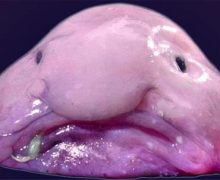
Things I learned about Mosquitoes

There are a few things I learned by doing all this. First, I learned that mosquitoes are extremely diverse. There are over 3000 mosquitoes worldwide and most of them don’t feed on human blood. Even with those that feed on humans, it’s still only the females that feed. They need a blood meal to complete their life cycle and lay another round of eggs.


How Mosquitos Pass on Disease

Simply, mosquitos can pass diseases around as they take multiple blood meals. They’re vectors of pathogens – agents that cause disease. To understand the complexities of this, however, I’d suggest watching this short (which contains a few small duplicate scenes from the above video).
Can we Prevent Mosquitos?

YES!

We can absolutely do something about mosquitoes if we’re aware of their biology. Let me start by showing you what mosquito control is doing to help prevent them. Then, we’ll diving into what you can and should do on your own property.

One of the big takeaways for me was that mosquito control isn’t actually just spraying randomly. They’re basing all of their spraying off of actual field assessments. They’re also spraying at times when it’s only really targeting mosquitoes so as to minimize impacts. Plus, spraying happens at such low levels that it’s not affecting us adversely. Clearly, I would be foolish to have already thought this was completely safe. They are after all spraying stuff that kills living organisms. I guess I’m just happy that after diving into the science and seeing who is directing mosquito control programs here in the US, I can say that we’re in good hands. Let’s hope we continue learning new things to make sure we’re both protected from disease.

Of course, we can all play an important role on our own property to make sure mosquitoes are not a problem. It starts with this:

Thanks again for watching these videos. Make sure to check out more of what I’m doing on Youtube by subscribing to our content. If you want to help support it financially, you can contribute through our Patreon account.

Sincerely –  Rob