How a roulette ball’s movement can be predicted with math

Demand for casino games is growing at a fast rate, the online gambling industry is currently worth over $55 billion dollars and is expected to reach $160 billion dollars by 2026. Roulette is one of the most played casino games, alongside poker slots and blackjack.
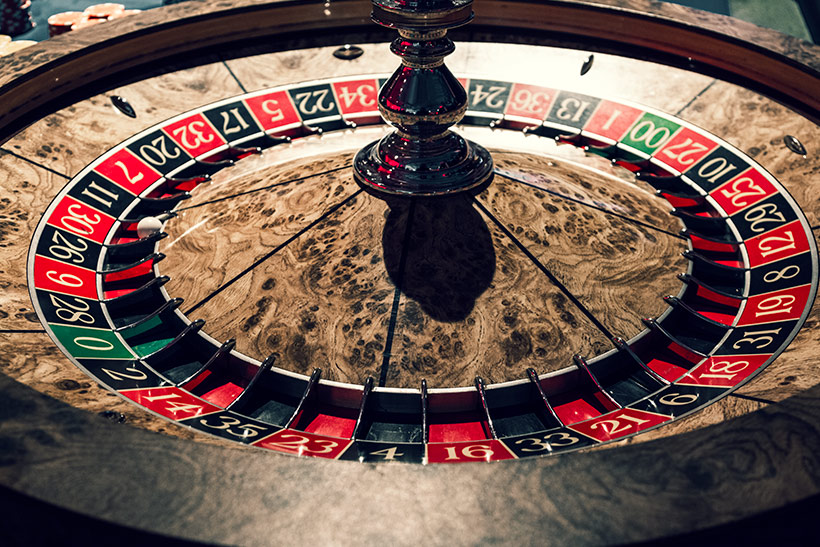
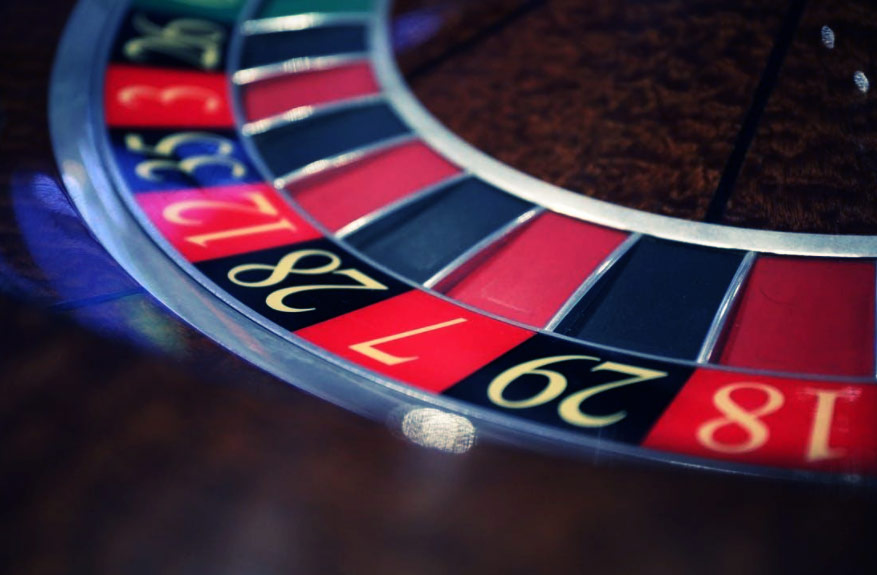
The game roulette was first played in the 18th century in France and was inspired by the Italian game of chance Biribi. The concept of roulette is fairly simply, a croupier spins a wheel of numbers and the player must bet on whether the ball will land on a single number, group of numbers or the colours red or black.

There are different variations of the game, for example American roulette has 38 numbered pockets while the European version has 37 pockets. The popularity of each variant depends on where you are in the world.

While this game has long been a popular choice at casino venues, it is now even more popular online. Online casino sites began hosting roulette games in the 1990’s and in recent years mobile casino sites and smartphone apps have become a convenient source of entertainment for fans of roulette.

One of the great things about this game is the simplicity of the games rules, there is less to remember than more complex casino games such as poker. However you do still need to play strategically in order to win.

Aside from the ease of play the online game offers other benefits, including the ability to choose between high stakes and low stakes games. There is also a huge variety of different roulette versions to choose from, in addition to American, European and French varieties, there are also fun themes like pinball or double wheels to enjoy online.

As we know, roulette is a game that requires strategic thinking in order to be successful. Understanding the math behind the game and how this can be used to predict ball movement is essential if you are playing to win big.

Calculating house edge

Firstly, to understand what it is you are up against you can use this simple formula to calculate the house edge:

House Edge = (Odds Against Success minus House Odds) x Probability of Success

The exact house edge will depend on what variant of the number you are playing. In games with one zero the casino’s house edge is 2.7%.

Basic strategies

Using complex mathematics and formulas can be a little intimidating for many players, particularly those who are new to the game. However there are a couple of basic roulette strategies that can get you started and help build your confidence in playing roulette.

The Fibonacci technique involves placing a bet that adds the total of your last two bets together, you can also pick even money bets such as red and black or odd and even. Another technique is the Martingale, using this strategy players simply place a larger bet every time they lose in the hopes of eventually recouping their losses.

Using the dealer’s signature

One way of predicting where the ball might land in a game of roulette is to look for the dealer’s signature, also known as sector slicing. This theory suggests that the dealer may hit the same numbers more often due to the way in which they spin the wheel.

While it is highly unlikely that they will keep hitting the exact same number repeatedly, it is possible that they might keep landing in the same section of the wheel. By figuring out which section this is and betting on it, you can increase your probability of winning.

The dealer might not even be aware that they have this signature as they probably do not put too much thought into the exact speed they spin the wheel at. It is the rhythm and the muscle memory that is responsible for the sector slicing phenomenon.

A roulette computer

While this is not a technique that can be used during gameplay (as it is considered cheating), there is a device called a roulette computer that can accurately predict where the ball will land on the wheel.

This special device works by reading the speed of the ball during the final moments of rotation as well as reading the angle of the ball’s descent. It will then turn out a prediction of which pockets have the highest probability of catching the ball.

A biased wheel

It is said that some wheels in land based casino venues throw up the same numbers too often to be considered completely random. The cause of this is not immediately obvious, it is likely due to the wear-and-tear of older wheels.

Frets sometimes become loose and non-visible damage can happen to the wheel’s pockets slowly over time. By observing this, you will learn where the ball most often lands and more accurate predictions can be made for future bets.
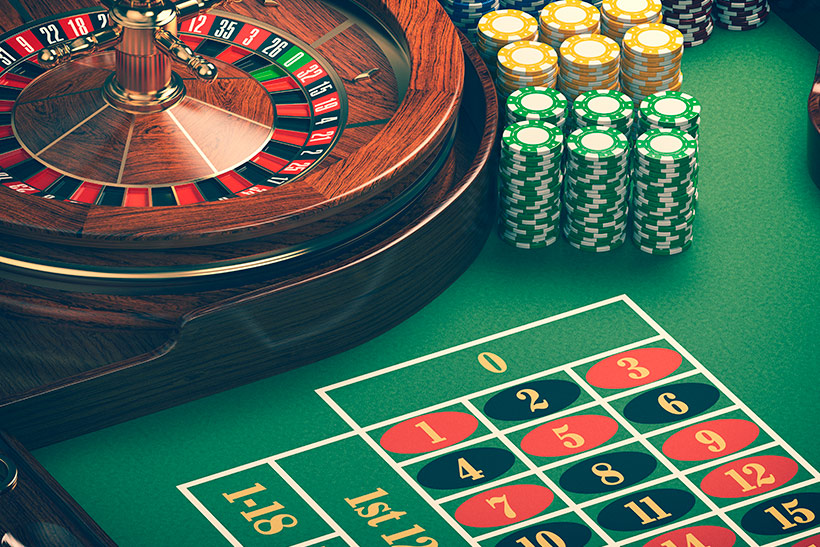
These are just a few methods for predicting the movement of a ball on a roulette wheel. While some apply only to land based games, others like the Fibonacci and Martingale can be tried out in both roulette tables online and bricks-and-mortar casinos.


Psychological Tricks to Make Blackjack an Attractive Game

In Blackjack, the aim is to use skill and strategy to reduce the house edge and beat the dealer with a higher value of cards without going over 21.  In casinos, the dealer must follow specific rules, including taking a card, known as a “hit” if the value of their hand is 16 or less.  The dealer must stick, or “stay” if their hand is 17 or more. In scientific terms, this finite-state means there are a small number of combinations the player can use for the best chance of increasing their winnings. 

Basic strategy

A basic strategy in Blackjack will not let a player win each time, but on average you will win more from the casino than someone with no strategy. Using a basic strategy removes any fear or anxiety about play, creating a psychological state where you can remain focused and calm in your decision making. 

You can download a basic strategy chart for Blackjack so you know which decision to make for each hand you are dealt until the chart recommends you stand. You can use some of the best blackjack systems to have the best chance of a win. Some of these systems have been used by Blackjack players for several years and proven to be successful.  

Play online

A basic strategy chart is best used online by new players until the strategy is memorized for play in a land-based casino. Online play is slower and your focus is less distracted than if you are in a noisy and ornate brick-and-mortar casino. Playing Blackjack online is a psychological trick since even the smallest of distractions can derail the game and change a winning hand to a losing one.

Variables

One variation from the basic strategy for Blackjack is known as the Table State where you subtract one for each card 10 through ace and add one for each card two through six.  The psychology behind the variation is that the higher the number of your card, the more likely you are to see a card with a larger value. By using the table state variation, you create a third data point on whether to hit or stay. You need to do this without the casino getting wind of it or they may decide you are counting cards and cancel your account.  

Play without fear

Having a positive mental attitude and being in a good frame of mind are important so that you stay within your budget and if you do have a bad run, you stay calm and continue playing your strategy since there is no way of knowing what the next card will be. 

Mistakes happen

If you make a mistake that causes you to lose a hand, let it go to keep your mind clear for the next hand. or you may miss a perfect opportunity to hit. Research by psychologists Dr Gideon Keren and Professor Willem Wagenaar and published in the Journal of Experimental Psychology studied the most common errors made by Blackjack players. Looking at 112 players, they found that 44 per cent of playing errors involved not taking an extra card when they should have and 16 per cent of errors involved taking an extra card in error. 

H.A.L.T

Blackjack requires the psychological strength to know when to stop playing. Doubling up on a loss is a terrible strategy that could lose your entire bankroll.  Keeping psychological control of your approach to the game will help you concentrate and analyze the hand to make precise, strategic and definitive choices.

The Most Popular Craps Systems

Craps is a popular casino game in which players bet on the total displayed on two dice. It is a game of chance, but there are strategies with choosing your bet that go beyond taking those with the lowest edge. At the beginning of a Craps game a ‘Come-Out’ roll is made and a ‘Point’ value set. The Point can be 4, 5, 6, 8, 9, or 10. The dice are then rolled again until the same Point – or a 7 – is rolled. The process can then begin again. 

Iron Cross

For a safe betting system in craps, the Iron Cross is a popular choice since you only lose everything if a 7 appears whilst every other total offers a win. The strategy of Iron Cross craps aims for a win on your first roll, then making a profit on further rolls and moving on. More specifically, the Iron Cross system is a combination bet on two sets of numbers: the Field (2, 3, 4, 9, 10, 11 and 12), plus Place wagers on 5, 6, and 8, which is a bet that one of these totals will appear before a 7. The biggest advantage of the Iron Cross is that it helps reduce the overall house edge for players to around 1.14 per cent. 

Pass and Come with odds

Betting pass and come with odds has the lowest house edge of any strategy that has you betting with the shooter. A pass line bet is a bet on the shooter’s roll to win, which means you are betting on the dice to roll a 7 or 11 on the come-out roll or on the shooter to successfully hit an established point. The pass line has a low house edge of 1.41 per cent. The house edge is even better with free odds, at 0.8 per cent with single odds, falling to 0.02 per cent at casinos that offer 100x odds. 

If a point number is established on the come-out roll, a Come bet can be placed on whether any of the point numbers will be rolled. The odds are the same for Come plus odds. 

Follow your pass bet with two or three come bets. Put the bulk of your bet in the free odds because they have no house edge. Start with the table’s minimum bet on pass or come, put the rest of your wager in odds, but check your bankroll can handle the risk. 

Don’t Pass and Don’t Come with odds

The opposite of Pass and Come, these are bets against the shooter making his point, though the house edge is slightly lower at 1.36 per cent. Edges when laying the odds also decline, to 0.7 per cent down to 0.01 per cent with 100x. As with the pass and come plus odds, the odds have no house edge, though the Don’t Pass and Don’t Come bets do. Be aware that as with the Pass and Come with odds bets, the total wager can be significant, even starting with minimum bets. 

Placing 6 & 8

This strategy is popular because you get to pick your own numbers, instead of waiting for the shooter to establish a point. You simply place bet on the 6 or 8 coming up before a 7 is rolled. The reason for this is that other than 7, the 6 and 8 are the most frequently rolled numbers. The house edge is higher on placing 6 and 8 at 1.52 per cent, which is still lower than most bets you can make in a casino.

10 Ways To Spruce Up Your Hectic College Life

During college, most of the students face the same issues. Among the most common and probably the worst ones are: stress from overload and lack of time, the struggle to combine personal life and studying, lack of sleep, and so on. Students don’t even dream about living a healthy and comfortable life.

Of course, removing all stress factors isn’t really possible. But it is achievable to put some effort into reducing their number. Follow the tips below and watch yourself become satisfied with life and productive in college.

Take care of yourself

This is the first and the most important point. Most of the problems one encounters while studying are due to poor health conditions. You can’t expect to be productive if your body doesn’t have enough power and resources. We’ll split this one into 3 main points:

Eating

It is needed to eat at least 3 times per day, with breakfast being the most important meal. Also, try to choose the dishes more wisely, giving preference to fruits, vegetables, whole grains, and meat. A balanced and well-timed diet is key for your body to always be ready to work, no matter the circumstances.

Drinking 

All of us like soda, juice, and alcoholic beverages. It’s not forbidden to drink them, but one should know the limits. A healthy person drinks water 4-5 times a day, resulting in at least 1,5-2 liters. It not only keeps you hydrated but also lubricates the joints.

Sleeping

This is the Achilles’ heel of every student. Feel like having no power and interest to do anything? That’s because you don’t sleep enough. Both brain and body can’t work at full power if they don’t have enough rest. At least 7 hours of sleep every day should be enough. And don’t even think of taking some hours from sleeping in exchange for any chores.

Use external help

Sometimes, all the circumstances are against you. And with all the services and platforms there are, it’s only natural to use them. For example, the most nerve-racking task of writing an essay can be delegated to professional writers. EssayPro review gives a good result, so you can choose the service for yourself. Use it wisely, and don’t forget that it’s a good idea to use professionally written texts as examples to learn from.

Get Organized

Make up a general plan of all the tasks, deadlines, personal goals, and free time. Yes, free time must be on the schedule. Otherwise, you’ll get back to square one – overworking and being under stress. Take the most important tasks first, then add space for relaxation. After that, allocate time to the least important chores. There’s no need to do everything simultaneously, give yourself enough time for everything. Or at least to what you consider the highest priorities.

Listen to music

All movies have a soundtrack that plays through a certain part or scene. One can do the same in real life. Choose a soundtrack for studying, walking, working out, or anything. It will turn any boring and tedious process into an entertaining and enjoyable one. And with all the platforms that give you access to basically any artist, exploring the musical world is a great adventure itself.

Spend time outside

Fresh air always has a positive effect on the brain and blood flow. It doesn’t necessarily mean running a marathon or hiking. Just try to spend at least an hour outside the house. Have a walk and erase your mind from everything. It needs to breathe too, in both physical and mental ways.

Challenge yourself

Sounds too hard, right? Don’t worry, there’s no need to see it as if one needs to complete all the tasks at once or manage to be successful at everything. What is needed, though, is not giving up after a failure. Overcoming the hardships will make you stronger and more motivated. That results in more self-confidence, increasing productivity and overall comfort.

Don’t multitask

Productive multitasking is a myth. People who think they’re multitasking simply switch between the tasks really quickly. But it doesn’t mean doing them at once. What is more, it highly reduces productivity and overall quality of your outcomes. Your brain needs to forget what it was doing a second ago and start working on the new subject. Just like stated earlier, one should know the priorities and do the chores one by one.

Work out

A simple warm-up or 30-minute running session is enough to keep the blood flowing and the muscles stretched. It positively affects your thinking processes, as the blood flow has a direct impact on the brain. With the amount of time that students spend sitting, especially counting the distanced education, it’s crucial to give your muscles some work. Of course, attending a gym is even a greater idea, but one can start with simple exercises and running.

Socialize

Don’t forget about your friends and the benefits of meeting new people. Being a healthy person also includes spending enough time communicating with other people. It keeps you from negative thoughts as well as keeps the brain working while receiving information. Surprisingly enough, it also has a positive effect on your productivity in the end.

Explore

Exploring always provides your mind with new information to process. Be it physical exploration, like walking through different landscapes, exploring books, or the internet. Just find what’s interesting to you and find all the data on the subject there is. With the presence of the Internet, it shouldn’t be any hard. Exploring opens new horizons and keeps the brain working. And don’t forget about all the new knowledge you receive.

To sum up

As stated in the beginning, one can’t expect to be free from any stress-causing factors. But, it’s crucial to know how to fight them. After all, everyone wants to live a comfortable life, right? Not even saying how stress decreases performance.

The tips listed above are aimed to keep you full of energy, motivation, health, and confidence to cope with any struggles while studying in college.

How to DJ Right: The Science behind the Drop

Have you ever listened to a song and got shivers? What is about music that gives us this pleasurable feeling of chills running down our spines? 

The scientific term for chills, shivers, or frissons is piloerection – a cold but pleasurable sensation that occasionally causes our bodies to shudder. These chills are a response to certain stimuli, most often a surprise. When we fail to predict our environment, but there’s no sense that we’re in immediate and serious danger, we experience a fleeting enjoyable scare, and our dopamine and adrenaline levels rise. This is why we like watching scary movies and riding on rollercoasters. 

This also applies to music. A large part of the enjoyment we derive from music stems from a delicate balance between the predictable and the unpredictable. This balance is the guiding principle behind how DJs pick their tracks and how they add effects or unique twists to familiar tracks so they can trigger the type of chills we associate with great music. 

What Is a Drop?

The term comes from hip-hop and refers to the moment when the needle arm is lowered onto the turntable deck. The drop or beat drop was popularized mostly by EDM (Electronic Dance Music) styles. It’s a point in a track where the rhythm suddenly changes, or you hear a bass line after a build-up and a break. 

You can find drops in musical genres such as rhythm and blues, hip-hop, EDM, trap, K-pop, and country. 

They’re created through electronic instruments and tools with the help of music production applications. They differ in sound and instrumentation and include basslines, drum beat, oscillating synthesizers, vocal samples, or other sound samples from royalty-free music websites like melodyloops.com.

The drop itself is only one part of a three-part structure. In the first part, you can hear the track’s rhythmic assemblage coming to an end. Then there’s some form of breakdown of musical elements. This could be simply a bass cut, or the track’s themes and rhythms will shift entirely. Then there’s a build-up produced through drum rolls, simplistic chords, screaming, or hi-hats. This builds until the drop of bass and rhythmic assemblage. 

The drop is based on the same tension and release, predictable versus unpredictable principle that’s fundamental to music. When performed at concerts and music festivals, drops are usually accompanied by visuals, lighting, pyrotechnics, and confetti explosions. 

Drop History

The bass drop, a type of drop, was popularized in the ’80s through bass hip hop. It was produced with the Roland TR-808 Rhythm Composer, usually referred to as the 808. The 808 is a drum machine the Roland Corporation manufactured in the early 80s. It was among the first to let you program rhythms instead of having to use preset patterns. Although it was a commercial failure initially and was discontinued, it later became popular with underground musicians because of its deep bass drum, idiosyncratic sounds, and affordability. It became a hallmark of electronic music that had yet to become mainstream. Since then, the 808 bass drop has been included in several EDM genres. 

But this tension and releases, predictability versus unpredictability principle has been part of music across cultures: Indian tabla, West African drumming, bebop, and jazz.

After the mid-90s, the melodic trance and progressive house genres began focusing more on the drop and incorporating hi-hats and drumrolls. 

Why Do We Love a Good Drop?

Advancements in brain-imaging technologies have enabled researchers to see what happens inside our brains when we’re listening to music. Music affects areas of the brain responsible for emotions, pleasure, and movement. Similarly to food and sex, the effect lies within anticipation and climax. Imagine you’re in your car or a club. You suddenly hear the first few seconds of a song you really like. You immediately feel this sense of excitement because you know you’re about to experience other parts of the song you really enjoy, so you’re looking forward to it. 

Our brains process music by trying to recognize melodic patterns and predict what’s going to happen next. The drop subverts this tendency, which is why it stimulates certain brain areas more than others. For example, during the interval before the drop, the pre- and postcentral gyri, which we use to recognize rhythms, tempo, pitch, and intensity, show the most activity. Stimulating these two areas leads to a sensation of tension and anticipation.

During the interval after the drop, we see more activity in the inferior and middle frontal gyri because we use these areas to interpret complex melodic structures. Stimulation of these areas also leads to a rise in dopamine secretion, causing us to experience a natural high. Even though music is just a fleeting, abstract pattern of sounds and not a substance you can ingest, it’s the brain’s impulse to interpret this pattern that makes us feel that natural high. 

Another natural reaction is movement. We start to move to the beat of the song. This could mean tapping our feet, moving our heads and hips, and waving our arms. One of the main goals of a DJ’s performance is to stimulate these reactions. In a club, at a concert or festival, strong music elements like bass lines cause the members of the group to synchronize, and the dopamine and adrenaline release generated by the music for each individual is transported and enhanced by the collective movements. Furthermore, moving in sync with others gives us the feeling of forming social bonds, so it had a profoundly relaxing and euphoric effect. We are a social species, after all. 

Composers, music producers, and DJs are always trying to find the perfect progression and build-up to prolong that pleasurable feeling of anticipation that makes the release of tension triggered by the drop that much more enjoyable. Some classical pieces can create anticipation on several levels due to their complexity. They build up our expectations on several layers. To do this, they can use a variety of techniques like playing with timing, delay, frequency, and flanger. This creates layers of anticipation and consequently has a more stimulating effect on the brain. 

Since, unlike food and sex, music is not critical for the survival of an individual or our species, it’s still unclear why the brain secretes dopamine to music unless we consider the role of music and dancing in social bonding rituals and finding mates. 

How Science Informs Popular Mental and Physical Endurance Sports

Scientific research continues to inform elite runners and the choices they make concerning diet and training

Have you ever watched people compete in a marathon and wondered how it is humanly possible to run so consistently, barely stopping for over 42 kilometers? Maybe you’ve been amazed while sitting in on a live poker tournament with professional players who must remain attentive for hours on end. Perhaps your favorite sporting event is the World Rowing Championships because you’re enthralled with the rowers’ extreme level of stamina.

If you’ve ever wondered how the world’s best athletes are so great at what they do, the answer actually lies in the science of endurance. Below we’ll take a look at how many sports, even the most unlikely, require intense levels of mental and physical exertion, and what exactly science’s role is in that process.

Long-Distance Running

There’s no doubt that long-distance runners demonstrate out-of-this-world levels of endurance and special characteristics compared to the everyday runner who enjoys a good jog around the block. The body of an elite runner experiences an internal scientific cycle which relies on sugar and glucose to make energy. And, the more energy a runner has, the longer they will be able to perform consistently well in an hours-long race.

This is where the common practice of “carb-loading” comes in, where meals that are carb-heavy produce extra levels of glucose which help to sustain runners. This glucose then works together with the body’s oxygen to make carbon dioxide, water, and energy, giving athletes that necessary push they need for long-distances. This type of running combines both mental and physical endurance skills with a special chemical process that allows for athletes to meet their extreme fitness goals.

Poker

You may be surprised to find the most popular game of strategy included on this list, but because poker requires elite levels of concentration, focus, and mental exertion, professionals of the game possess similar qualities to the most skilled athletes. Physical endurance may not be needed in poker, but mental stamina is absolutely essential to performance in marathons and tournaments.

In fact, the longest playing time by an individual was recorded as a whopping 115 hours of ongoing play, an accomplishment the incredible Phil Laak achieved in 2010 and still holds today. But how exactly do these talented players power through such long hours without cracking under the pressure?

Scientific research tells us that mental toughness is actually something that can be built and learned by strengthening the muscles of one’s mind. Defining traits like determination and perseverance, which clearly separate these players from the rest, are qualities that can be gained through specific strategies. The game of poker may not require endurance in the same way that other high-intensity sports do, but mental aptitude in the game undoubtedly drives success.

Rowing and Kayaking

Athletes of water sports aren’t always given the credit they deserve. Because more popular activities like football, baseball, and basketball have such large fan followings, competitive rowing and other sports like it are rarely noticed. However, each of these require whole-body workouts from athletes and an extreme level of physical endurance.

You may notice that rowers and kayakers are extremely fit and muscular as the sports requires a person to exert constant energy through paddling, while simultaneously using buoyant force to float above the water.

Because rowing relies on STEM studies, or the infusion of science, technology, engineering, and mathematics, the best expert strength rowing and conditioning coaches use science and evidence-based research to reduce rowing-related injuries and improve performance.

Golf

Golf is another sport that you may be surprised to find here, but because it is heavily informed by physics and requires absolute focus from its athletes, it’s a perfect example of an endurance sport.

In the same way that poker players must utilize strategy and focus for long hours in their gameplay, golfers also need to demonstrate concentration and elite mental clarity for as long as six or seven hours at a time. In addition, the best golf pros constantly consider the smallest elements like wind direction or amount of force in order to make the best swing decisions.

The Science Behind Writer’s Block (And Tips to Overcome It)

Even if you’re not a writer, you might be familiar with writer’s block. For example, everyone who has ever written essays in school or college knows what it feels like when you just stare at a blank sheet of paper and have no idea of what to write about. Creative block always goes hand in hand with any creative activities, and psychologists have studied this phenomenon for many years.

The Psychology of Writer’s Block

The concept of writer’s block was first described in the 19th century by the English poet Samuel Taylor Coleridge. Coleridge suffered from an “indescribable terror” because he was unable to write anything worthy of his writing talent. Coleridge’s experiences resonated with many other writers, and soon thereafter, many writers from France started to talk about a curse that makes all writers suffer.

In 1950, Edmund Bergler, who was a follower of the Freudian psychoanalysis school,  published his paper “Does ‘Writer’s Block’ Exist?” Bergler suggested that the process of writing is closely related to psychological sublimation and that therapy can help “unblock” writers. This idea turned out to be accurate after psychologists from Yale University published results of the research that they’ve conducted in the 1970s and 1980s.

The study involved many writers from different genres and niches, some of which experienced symptoms of writer’s block, and some of which didn’t. Writers who suffered from writer’s block also experienced signs of anxiety and depression. They demonstrated increased self-criticism and didn’t enjoy the writing process in any way. Many writers also demonstrated symptoms of obsessive-compulsive disorder that included procrastination, perfectionism, and repetition.

Although many writers shared some common symptoms of writer’s block, psychologists quickly noticed that writer’s block could express itself differently in each particular case. Some writers felt blocked because of their emotional state, while others mostly suffered from stress. Some writers were also generally disengaged and unhappy. Here are some of the most common reasons for writer’s block.

1. Perfectionism

As odd as it sounds, perfectionism may not help you be a better writer. In fact, it can be a reason why you cannot write anything at all. Perfectionism works as natural protection from failure or external criticism so there’s nothing wrong with willing to do your very best. However, if you want every sentence to be perfect, you may not be able to write even a single word.

2. Fear

Many writers experience fear on a regular basis because expressing their ideas takes courage. Writers know that they can be rejected by publishers, and if their work gets published, it can still face a critique. Sometimes, fear can be so strong that it causes writer’s block.

3. External pressure

Simply put, external pressure is what forces you to write even when you don’t want it. Some professional writers have to deal with external pressure when they are expected to provide a specific amount of written content within a certain type.

External pressure is also one of the most common reasons for writer’s block among students. For this reason, students end up purchasing essays on the internet instead of writing their papers by themselves. Writer’s block destroys motivation and prevents students from enjoying the process. 

4. Self-criticism

Self-criticism isn’t necessarily a bad thing, but it can stop writers from actually writing. Most often, increased self-criticism develops as a result of comparing yourself to more successful writers. The truth is that even the most successful writers often criticize their early work.

How To Overcome Writer’s Block

1. Prioritize progress over perfection

If your writer’s block is caused by perfectionism, don’t forget to remind yourself that you’re just working on the first draft. You are always free to edit it as many times as you want, but at least you will have something to work with.

2. Change your environment

Sometimes, changing the scenery can help you get some fresh ideas for your writing. If you usually write at home, try doing it from a coffee shop or a co-working space. The options are limitless — the main thing is to find a comfortable environment where you’ll be able to let your creative juices flow.

3. Exercise

Physical exercise can help you tackle many psychological problems, and writer’s block is no exception. Exercising can reduce stress, improve your productivity, and even boost your memory. Aerobic exercises stimulate the growth of new neurons in the hippocampus. The hippocampus is a part of our brain that is responsible for imagination, so if you lack creativity, exercising might help.

4. Change your schedule

No matter whether you’re a morning person or prefer to write at night, changing your schedule can help you overcome writer’s block and low productivity. According to research, many people have counterintuitive circadian rhythms, which means that you may be most productive when you don’t expect it. Moreover, if you’re more productive in the morning, your brain might demonstrate the best creative problem-solving in the evening and vice versa. Therefore, experimenting with the schedule can be a great solution.

5. Switch tasks

If you’ve been working on a certain task for many hours but there’s still no acceptable result, try to switch to a completely different task. For example, if you have a hard time trying to figure out the next major plot twist, you may focus on secondary characters instead, or you can switch to a completely different activity, like painting, exercising, walking, or cooking.

6. Stop binging

Binging is bad for you, and we’re talking not about watching Netflix (which can also be bad for you if you suffer from procrastination). Many writers don’t write for days or even weeks and then write in binges because of the pressure of deadlines. Binge writing can lead to exhaustion so you won’t have any energy to write anything at all. To avoid binging, set daily goals in words or pages, and write regularly.

7. Do nothing

Doing absolutely nothing may seem to fit the definition of wasting time. However, it can be very helpful, especially if you need to boost your creativity. When you do nothing and just relax, your brain is in a state of mind wandering. According to research, mind wandering still involves some brain activity, and the processes associated with mind wandering foster creativity and imagination.


Writer’s block is a very common problem among not only writers but also students. People from many creative professions often experience creative block, and it can be caused by different factors, including stress. We hope that our simple tips will help you avoid writer’s block and let your creative juices flow so that you’ll be more productive, and the writing process will be more enjoyable.

How Has Casino Technology Evolved Over These 20 Years?

A Detailed Review of How Technology Has Transformed the Casino Industry

How has the casino industry changed over the years? Read on to discover these changes.

Casino Technology Evolution

In every sector, there will always be changes. One of the contributing factors is innovations and gadgets each day. With enhanced technology, the gaming industry is transforming daily. The designs have resulted in an improved casino experience and enhanced games. The spread of internet connectivity has led to the rise of the number of gamers.

Technology is changing every sector, and the gaming industry is not any different. Within a short period, the gaming scene has adopted various modern technologies to provide an immersive and seamless gaming experience to gamblers.
Below are several ways that technology has changed casino technology:

Online gaming sites

In the past, people had to go to physical casinos to play their favorite games. As time went by, online casinos were introduced such as https://greatcasinoonline.com/fr/. Thousands of gaming websites came up over the years. Because gaming involves a particular element of luck/chance and is determined by calculations, computers eased converting casino games into online games. Additionally, the data amount exchanged between the punter and platform is minimum and very accessible.

Today, gamblers can access online casino games on either a PC or mobile gadget and enjoy the games anytime, anywhere. There is no need to queue to play games. Games are also available on demo mode in online casinos.

More opportunities for punters

Physical casinos mostly limited punters. Only a small majority of players could access casino games. However, people can now access online casinos from any part of the world as long as they have an internet connection. Players can also interact with many other players across the globe.


Increased variety

Every modern and new technology increases opportunities. Today, it’s almost impossible to know the total number of games available online. Many game developers are creating new games every day. Most gaming sites have developed applications that make the gaming experience more convenient and seamless.


Enhanced security

Whenever money is involved, safety is always a concern among punters. There are many fraud cases in physical casinos, unlike when you’re playing in an online casino. There is no need to look over your shoulders for pickpockets. However, always ensure you’re playing in a fully licensed casino.

Players can play on the go.

Online casino games fans can access the games anytime, anywhere. They can play games at home, on the bus and even at the office. Most casino games are mobile compatible, enabling players to play them on their tablets, smartphones, and more.

Improved marketing strategies

The styles, operations, and functions have improved massively since online gaming started. It has become easier for gaming providers to market their services on the internet. This way, they can reach bigger audiences.


In the modern world, technology in the gaming industry is at an unpredictable height. There is more to just playing online casino games. Today, punters can play their favorite games on the go, get help fast, make deposits to their accounts, and request withdrawals fast. With leading game developers powering the top casinos, the gaming experience will only get better in the future.

The Science Behind Poker Games

Poker differs from other casino games to such a degree that it is often considered a skill game and allowed in countries where gambling is prohibited or limited. In all other cases, there are websites like Sol Casino Finland, where people gamble on offshore websites. Behind every single game offered, there is more science than the regular observer would notice.

It takes more than simple luck to win those games, although video poker games tip the balance against skill. Therefore, before heading to online casinos with an extensive catalog of poker variations it is worth knowing the science behind it. That goes especially to Finnish poker players, who should be excited about their own Sol Casino Finland version.

How Does Poker Differ from Other Card Games?

Without giving that much thought, it could look as if there is not much difference between poker and blackjack, for instance. However, while a blackjack game can end as soon as it starts, it takes more for poker.

Imagine you opened a live dealer poker game on Sol Casino Finland and placed your first bet. Now, the game is divided into two parts, and patterns and rules will govern the next steps. Someone who starts off with a good hand may have the worst by the end of any round.

Therefore, the decisions made by every player has a high impact on the outcome of every round. However, each player also has the power to influence the decisions and actions of the other players. From bluffing to even being kind of a bully with everyone else playing the game, that is when luck ceases to be that important.

In other words, being a good actor and knowing the rules of poker well enough can defeat a perfectly lucky first hand.

Can Science or Math Help a Poker Player?

The science behind poker has more to do with psychology than with math. That is different from, again, the way blackjack works, for example. While counting cards can be of great assistance in some circumstances, that would not make sense in poker.

What does help – for example, while playing one of the poker games available for players on Sol Casino – is the odds theory.

After all, the best thing about card games is that players know upfront how many decks are at stake and the number of each card. Therefore, the odds of getting a card when most of it already appeared are low, and the other way around. That is how much one can involve math in a game that involves much more rational thinking and psychology.

How to Apply Poker Science to Online Games?

Websites like Sol Casino, available in 8 different languages and recently adapted to Finland, count on a wide variety of poker games. Some are single-player, and they might even involve side bets to make things more interesting. In such cases, making all kinds of expressions – or none, the famous “poker face” – will probably only exercise your facial muscles.

That is when the odds theory makes sense, and players have to dedicate 90% of their thinking to the best possible outcome, using their poker knowledge.

The same applies to the live dealer games on Sol Casino Finland. The Player’s hand is shared with dozens or hundreds of players playing together, all anonymously.

It is clear that those who are not the best when it comes to psychological games can benefit from playing online. Single-player games also count on the possibility to test the games for free for an unlimited amount of time. That is, by far, the best manner for players to practice if both their poker knowledge and odds theory are sharp enough to play for real.

What About Luck?

Unless everyone playing is only counting on luck, that is not the best way to decide between betting or folding. Supercomputers already defeated pro poker players, showing that decisions and skill matter the most. Consequently, poker is more about science than pure luck.

Of course, those looking to have the fun of poker without that much complexity and thinking can always opt for video poker games. They are simpler and easily found on Sol Casino Finland and other language versions available on the same website.

Everything You Need to Know About Peer Reviews

Peer review is when experts in a particular field examine the ideas or research work authored by another person in the area. The purpose of this process is to refine the author’s work by filtering out unnecessary information. Experts check on the validity, originality, and relevance of the study’s contents for quality assurance. This ensures the content published is of high value and has limited or no errors. The experts also give suggestions to writers on ways to increase the standards of their manuscripts.

Background

Peer reviewing started in the ancient Greek period and was documented by Ishaq bin. In a book, he advised that medical practitioners take notes recounting every session. The medical authority then analyzed the notes to check if the practitioners followed the set guidelines. If he did not adhere to the standards, a lawsuit followed. Later on, in 1655, the Royal Society’s Philosophical Transactions became the first journal to make the peer review process official. Peer review has received a lot of criticism, but most researchers believe it is the leading scientific evaluation method. A 2015 research study showed that eighty-two percent of researchers concur that the lack of peer review limits scientific communication control.

Types of Critiques

There are different methods of critiquing ideas, with varying benefits and problem areas. Currently, more people are pushing for more transparency in the review process. Journals provide information on their preferred method through their homepage. Here are the types of peer review methods:

Single-blind peer review. One way of peer reviewing is the single-blind review method. The author does not have access to the names of the reviewers. It is the oldest and most common method. One disadvantage of this method is that reviewers may be excessively harsh on an author’s work. Also, there are concerns that some reviewers may delay an author’s work with malicious intent.

Double-blind peer review. In this model, both parties are unaware of each other’s identity. The chances of bias are less since the reviewers do not have access to the attributes of the author. They do not know their gender, their publication history, their academic history, or any other information that may shadow their opinions. For established writers, it may be challenging to apply this method. This is because the reviewers may notice tendencies like the author’s writing style that identify them. Therefore, it is challenging to assure a writer of total anonymity. 

Triple-blind peer review. In the triple-blind method, the editors, author, and reviewers are all anonymous. This method is complex to implement as it requires anonymity right from the pre-submission stage.

How It Starts

Review commences when scientists complete research. They write a manuscript that shows the study’s purpose, the experimental procedure, the findings, and the study’s conclusions. After that, the author finds a journal that deals with a related research field and submits their manuscript. This is the pre-submission stage. The journal’s editors review the document to ensure it aligns with the journal’s field and quality requirements. A lot of manuscripts do not pass this stage. If it passes, the paper moves on to the peer reviewers or the referees. Editors select what documents pass for reviewing and also ensure the peers review the documents fairly and within the schedule.

After a Review

As stated, reviewers are like the quality assurance agency of research; they make sure the paper contributes to the advancement of the relevant sector and that the methods used are authentic. After making their recommendations, referees hand over the paper to the editor, who facilitates communication between the writer and the critics. This process is similar to when a college professor hands out essays with his remarks to give students a chance to correct them. It’s like when you order an essay, and it goes through various processes before the final draft. Editors clarify suggestions by the reviewers and may overrule some of them. Once there is an agreement, the paper moves to the production stage. Here, the editors edit and format it, and the paper is ready for publishing.

Who Are the Reviewers?

Those who participate in peer reviews need to know the particular subject. They must have a technical understanding of the journal’s topics. Without that, they will not understand the ideas you communicate in your journal. Thus, they cannot review your work. Age does not matter, but young reviewers tend to give faster and better-quality responses. In a year, reviewers conduct about eight reviews. To provide a broader perspective, journals include referees with different backgrounds and stands in the peer review team. They also invest in a large pool of reviewers to prevent burnout and time constraints.

Reviews are an essential aspect of any credible research. Currently, more people are lobbying for transparency, thus the open review procedure. This is where there is full transparency, and all parties know one another. This has led to faster and less biased reviews. However, reviewers may limit their opinions to avoid retribution. Therefore, the search for the best method continues.