Tracking the Great Egret

In the predawn darkness at Pine Island Sanctuary and Audubon Center in Corolla, NC, scientists are shaking off sleep and preparing for a morning of trapping and tagging. Their quarry is the egret, and there are an assortment of the elegant genus that call the North Carolina wetlands home for part of the year. Just how early is it? “It’s bird-thirty,” one of the team mumbles as he makes his way toward the coffee pot.

Until recently, the chore would only involve capturing a bird, placing a plastic or aluminum tag on one leg, and releasing it. After migration, the hope was that the animal might eventually be found, and scientists could record the information about the distance covered. Yet the question would remain: what happened between the banding and the recovery? There were still many holes in the scientific knowledge.

Egret Data: Trapping and Transmitting

Enter Dr. John Brzorad, ornithologist with Lenoir-Rhyne University. In addition to banding, Brzorad plans to place a small transmitter on Great Egrets that he traps. The transmitter will provide real-time information on exactly where the birds travel as they wend their way to breeding territory. This will help scientists learn about the route and where they rest (if at all) along the way. Such data could inform land management decisions in states where the birds travel. Even when they are not migrating, telemetry will enable scientists to determine how nesting egrets go through their day, how they forage for food, and what types of habitat make the best nesting grounds. (Learn more about telemetry from the Migratory Connectivity Project.)

The group will place decoys and a container of fish in a wetland, then pepper the surrounding area with the traps. Unlike other captures where the birds are caught in a “mist net” (think very thin and flexible volleyball nets that tangle the birds), Brzorad will use leg traps for this expedition. While the traps may look alarming, the jaws are actually made of hard rubber and use only enough tension to hold the bird in place until the team can grab it. That’s a far cry from past methods of “capture.”

From Fashionable Feathers to Egret Conservation

During the late 19th century, birds such as egrets were nearly wiped out in an international feather craze. The long plumes that egrets grow to impress potential mates were in high demand, and egrets and other species of birds were nearly driven to extinction in the pursuit of fashion. At one point, a pound of feathers was valued at more than double the price of a pound of gold. In the early 1900s, out of concern for the wholesale slaughter of the birds, the newly formed National Audubon Society chose the Great Egret as its first species targeted for preservation. Since that time, the Great Egret has made a comeback, and that success was memorialized when Audubon chose the bird as its symbol. It’s that bird, along with its cousins, that the team is hoping to tag today.

Success: Egrets in a Trap

After waiting and watching, the birds begin to take the bait, and one is trapped. The team moves quickly to keep the bird from injuring itself, and Dr. Brzorad covers the head with a towel. This calms the bird, and makes it less likely that someone will be impaled by an imposing beak. They manage to capture a number of species of egrets, including Snowy Egrets, Glossy Ibis, Tricolored Heron, and a Cattle Egret, as well as the Great Egret. Each bird will be sexed, weighed, and measurements taken of its bill and legs.

When it comes to the Great Egret, Brzorad bands the bird, but he also straps a GPS device to it. The tool is carefully chosen: the customary rule is that a tracking device should weigh no more than three to five percent of the bird’s total body weight. In this way, the bird can function perfectly, and neither the weight nor its attachment will inhibit its life.

In the case of this bird, the signal from the device is monitored in real time. At one point in its migration, it had moved all the way from North Carolina to Niagara Falls, and Brzorad was able to monitor the whole journey.

The Video: Watch Brzorad Tag Egrets

Fly with the Egret

If you’d like to track the migration of birds or a whole host of other animals around the world, check out the AnimalTracker App that has info stored on movebank.org. From the home page, click the tab marked “Help”, and then “Getting Started.” The instructions will allow you to register (for free) and choose from hundreds of projects that scientists have made available to the public. Not every project is viewable, but the curious will find an abundance of information that is helping conservation efforts around the globe.

The Tracking App: AnimalTracker

Recently we got the chance to interview Dr. Roland Kays about the new Animal Tracker App

Get AnimalTracker App

Related Videos and topics

Are polar bears really going extinct?

We have all heard about the extinction of the dinosaurs, and maybe you have even heard about the other four mass extinctions in Earth’s history, but did you know that due to the drastic loss of species worldwide, we are currently experiencing the sixth mass extinction? Now I know you might be thinking, “If these mass extinctions have happened before, then what is the big deal?” Well, the extinction rate that we are experiencing is much more rapid than that of any in the past, and much of the blame falls on humans. Here, Untamed Science explores the extinction threatening polar bears.

Our Impact

Whether people like to believe it or not, the natural world is currently experiencing drastic changes as our human populations continue to grow. Along with this rise in population comes an increase in our impact on natural habitats, either directly and/or indirectly. In another video from Untamed Science, Jonas looked at the protection of the panda bear (Ailuropoda melanoleuca), which is a species that has been heavily impacted by direct human influences, such as habitat loss. In this video, Rob discusses the status of the polar bear (Ursus maritimus), which is a species that is currently at risk due to our indirect impacts, such as greenhouse gas emissions, that have resulted in drastic global climate change and a frighteningly rapid loss of sea ice. The IUCN Red List has listed polar bears as vulnerable, largely due to their reliance on this ice, but are polar bears really going extinct, and is there any way for them to adapt to the change?

Do polar bears need ice?

Each year we lose more sea ice from the Arctic, but do polar bears really need it to survive? Yes, they do. Polar bears are extremely locally adapted to their environment, which means they are really successful in a very particular environment, and they will have a hard time adapting to a drastic change in their natural habitat, such as loss of sea ice. As much as it has been debated, there is plenty of evidence that polar bears do need ice in order to hunt the nice fat marine mammals that they need to survive. So, with the loss of sea ice, we can almost certainly expect a large decline in polar bear numbers and perhaps even their extinction.

What about adaptation?

The world has changed throughout geological time, and during this change organisms must adapt to their new environments, and many of them do. So, polar bears should be able to just adapt to the current change they are experiencing, right? Not so much.

First off, polar bears are extremely carnivorous, and it is difficult for them to get enough nutrients and high energy fats from anything other than the marine mammals they eat for most of the year. Secondly, the speed of ice loss in the arctic is likely too quick for polar bears to be able to adapt to. Therefore, it is highly unlikely that the polar bear could make the changes necessary to survive without ice if it continues to melt at the current rate.
Pizzly and grolar bear hybrids, oh my!

Now what about interbreeding with grizzly bears to create an awesome new hybrid? This is a tricky one. Polar bears and brown bears are able to interbreed, but there have only been a few cases documented in the wild, and most of them can be traced back to a single female polar bear. In most cases, polar bears and grizzly bears do not get along, so they are considered behaviorally sexually isolated; they could reproduce but they are different enough that they often never will. So, interbreeding is possible, but is not a likely solution to saving the polar bears. Besides, then we would have a bunch of hybrids and no true polar bears, so technically polar bears would still go extinct.  

What can we do?

If we do want to save the polar bear (which I know we do!), we need to begin to better mitigate our impacts on the changing climate by reducing our greenhouse gas emissions. Lobby your politicians for greenhouse gas reductions, be a part of the change yourself, go into (or even help to fund) green energy research, and let’s try to reduce our human footprint, so that future generations can live knowing that polar bears still roam the Great White North.

Want more Polar bear Facts?

Why should we protect pandas?

To answer the question “Why protect pandas?”, we will first introduce you to some biological terminology. It will help you to understand the issue of panda conservation. As a bonus, using these terms will make you look sharp at your next BBQ. You are welcome.

The Extinction Threat

Let’s get started with extinction. If you were born in the eighties, your mind probably wanders to Jurassic Park and zombies. But did you know that it is estimated that at least 10,000 species become extinct every year? After the last individual dies, a species is gone. Forever. You might have heard of Lonesome George. He left us in 2012 and was one of the rarest creatures in the world at the time; his passing marked the end of Pinta tortoises. However, extinction of species can be imminent long before there is only one individual left. Obviously, you need at least two. Preferably of a different sex. We hope you remembered that much from high school. In reality, we need a lot more.

A species is determined to become extinct when numbers get so low that a) the individuals are not able to reproduce, or b) inbreeding leads to a loss of biological fitness. No, not the gym kind of fitness. It means that their gene pool is losing quality because there is not enough variation in it. This is also the reason for breeding programs in zoos. Which brings us to conservation biology. A science that aims at preserving the different forms of life on our planet.

Hope in Conservation

The International Union for Conservation of Nature, or IUCN, publishes a Red List of Threatened Species. In this list, they evaluate the conservation status of plant and animal species and the threats they are facing. They have nine categories ranging from extinct to least concern. To determine these categories, they look at the population size; the speed at which the size is reducing; the number of mature individuals; and the geographic range. The species that are most likely to extinct are the ones that are threatened, vulnerable, or (critically) endangered.

The Common Denominator: Humans

So what is driving these species to extinction? It is perfectly normal for species to become extinct. There were some freak mass extinction crises, like asteroid strikes, volcano eruptions, and natural climate shifts (remember Ice Age?). Apart from that, some species just lose “the struggle for existence”, as Charles Darwin liked to phrase it in On the Orgin of Species. What is not normal though, is the most common factor in species’ decline nowadays. It is all of us.

Allow us to list some of the ways we drive plants and animals to extinction. We consume them; take away and fragment their habitat; hunt them; pollute them and their environment; spread diseases; and introduce invasive alien species. We figured you wanted to know more about that last one. To make matters worse, they are all threatened by climate change. Which humans are causing. Humans, yes that includes you, are the number one cause of species decline. Over the last 35 years, biological diversity (the number of different species) has declined by more than a quarter. Moreover, things are not looking up for the future.

So, one of the reasons to protect species is morality. We have a moral responsibility to preserve our planet, and the species that live on it. Instead of destroying it.

If this is too much of tree-hugging hippie shizzle for you, here is another reason: ecosystem services. Ecosystems–and the plants and animals that are part of them–provide humans with food, raw materials, fresh water, and medicinal resources. Without honeybees, for example, we will be out of fruit and veggies. And fast, too.

Pandas as Poster Boys

So how does all of this apply to pandas? They are lazy buggers and do not exactly reproduce at the speed of light. In fact, what is the use of a panda, besides being cute and getting rid of your excess bamboo? Bingo! Pandas are poster boys because they are cute. People are psychologically predetermined to like fluffy things with big eyes. That is why conservation organizations, such as WWF, use Pandas as a symbol. They draw people in, making it possible to educate them about extinction and conservation.

So no, you do not have to protect panda’s. However, it might be nice to think about where you stand in all of this. What could you do to help save species from extinction? Here are some options:

And while you’re at it, spread the word. Or wear a panda suit to your next BBQ.

The 2017 Eclipse to Look Out For

A solar eclipse is one of nature’s breathtaking phenomenon. It is truly a spectacle, an astronomical grandeur no less. Witnessing one in person is easily an achievement in life by itself. The year 2017 had this event in our horizon on August 21. And while we can have more such solar eclipses this year, there have only been as few as magnificent as the 2017 one.
What are solar eclipses anyway?

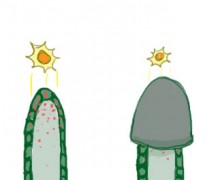
A solar eclipse is an event wherein the moon happens to pass directly between the sun and the earth. Since the sun is our primary source of light, it casts a shadow of the moon over the earth in such an event. If you happen to be in the area where the shadow falls, you get to see a wondrous sight.

The moon gradually starts blocking the sun. It looks a bit like a pie getting eaten slowly, but surely. You can actually see a huge shadow approaching like a storm. When the moon completely blocks out the sun, a bright ring of light surrounds the darkened side of the moon. Reminds you of the Lord of The Rings.

When the moon starts to move along, an immensely bright spot appears on the side which starts clearing up. The entire effect looks like a brilliant diamond ring. The ‘diamond’ increases in intensity and size, until the ‘pie’ is slowly revealed.

The Aztecs used to perform a sacrifice to the ‘sun’ god in order to make it rain. It was supposed to save them from the droughts and revive their farms. You don’t have to do that, however.

Here is a little more about how it went down by Veritasium (who saw it much better than I did):

The 2017 Solar Eclipse: Why Was it Special?

Sure, we have plenty of solar eclipses around the world – so that made the solar eclipse last year so much more special? It had all the ingredients for any other solar eclipse, after all, right?

But this eclipse was special for the US. This is because the eclipse stretched entirely from one coast to another across the USA staggering number of people were able to watch this across an impressive 14 states in total.

Since this special event is a first of its kind since 1918, it was the most anticipated one in the world, People all over are expected to watch it exclusively, making it the most watched event in this year. Traffic jams were expected to flare up because it will last only for about 2 to 3 minutes.

2018 and Solar Eclipses

There aren’t many solar eclipses lined this year though we did witness one in February. However, there is one lunar Eclipse that you can look forward to, on June 27.

You can look out for some other special effects too. Like the sun’s corona which appears during totality, a brilliant star named Regulus, the planets Mars and Mercury near the sun and the amazing color of the sky all over the horizon!

Oh, and since you are waiting for the next one, do not forget to wear glasses when it does happen – you really don’t want to damage your eyes.

How Smart are Chickens?

Despite the fact that chicken is a major dietary ingredient for most Americans, few have had time interacting with them. In fact, there is a general society driven mentality that chickens are dumb. That probably makes things easier for us when they’re on our dinner menu. But, it doesn’t take long to realize that chickens are actually quite intelligent. I found that out myself while raising a set of chicks from newborns to full grown adults.

Here are a few things I’ve learned that put them on par with some mammalian species:

  1. Delayed Gratification: Chickens actually have the ability to have some degree of self control. In studies where they tested delayed gratification, chickens could learn to refuse food if they knew they’d get more later if they did.
  2. Memory: Humans can recognize thousands of different people. Studies have shown that chickens can recognize different individual chickens (studies say more than 100). They can also recognize different humans.
  3. Object Permanence: This is an interesting concept. If you show someone an object, then take it away, we know that the object still exists, somewhere. We may look for it so as to find out where it is hidden. Chickens are able to do this. Baby humans aren’t able to do this until they’re a bit older.
  4. Counting: It has been shown that chickens can do basic math as objects infront of them are moved to and fro.
  5. Personality: If you’ve spent time with dogs, you know they all have strong personalities. They can form friendships and have a range of interests. Chickens are no different. They’ll change behavior depending on who is around them.
  6. Empathetic: Some chickens have shown the ability to be protective of not only their own chicks, but those of others.
  7. Manipulative: Chickens can be cunning and show some sort of machiavellian manipulation so as to get them what they want.

delware chicks and rhode island red chickens

The simple answer is that yes, chickens are smart. They’re intelligent in ways that most people would never know. Here is a good example of chickens learning with operant conditioning (feeding them when they choose a particular colored dot).


Creating 360 Degree Images

Every week I put out a simple video about how to improve your photo and video skills. It just dawned on me that I should at least introduce everyone to one of the simplest things I do when I travel – creating 360 degree photos to share later. So, on this page, I’ll link in the full explanatory video as well as the 360 degree videos we made from it – see those at the bottom. Then, I’ll add links to the Momento360 pages that give full explanations about how to embed them on any website you have, be it wordpress, squarespace, wix, or any basic html.

Step 1: Download the Apps

On android phones like the google Pixel, there is nothing you need to do. Simply choose the spherical panorama option from the drop-down box in the photo app and start clicking away. If you’re using an apple device, then you can download google street view which allows you to take 360 degree photos.

Step 2: Take the Panoramas

Capturing 360 spherical images on iphone

This is a really simple process. The apps walk you through where to position the phone. Just try as much as possible to rotate around a fixed point. The more you can do that, the better your 360 photos will be.

Step 3: Download and Photoshop

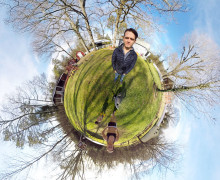
When you finish the images they’ll import as a flat portrait – much like a flattened map of the world. It might look like this:

Notice that there are some small imperfections. The feet and the shadow can be fixed in Photoshop. The easiest way to do that is in the new Photoshop CC 2018 update whereby you can convert these flat images into spherical panoramas via this menu click:

Now, it’s just a matter of fixing like you would normally in photoshop. Not all tools are active in this mode, but you can heal or content-aware fill the areas as needed (per the video tutorial above).

Export and upload to a Sharing Platform

The next step is to choose 3D>Spherical Panorama>Export Panorama to flatten the image and allow it to be uploaded to your chosen destination. You can easily share it on FB or Twitter in this format. However, if you want to embed it on your website, I found Momento360.com to be a great platform. Since we have a wordpress site, there is a plugin written that allows these 360 images to resize with your phone or tablet. That’s a handy feature. For full details on how to embed a 360 image on your chosen website go here.

Here are some of the final embedded videos from this shoot.

School 360 via Google Pixel

[momentopress url=https://momento360.com/e/u/4e4dd6832c5c4892beaa03b4481c4c99?utm_campaign=embed&utm_source=other&utm_medium=other]

School 360 via snapshots from my DSLR (fully manual)

[momentopress url=https://momento360.com/e/u/da81ebfb1fc540298bed85d1bb65ab44?utm_campaign=embed&utm_source=other&utm_medium=other]

Here are a few other places I’ve been that I thought were worthy of a 360 degree image.

Timna Valley – Israel

[momentopress url=https://momento360.com/e/u/0108ee6f7b5e4078b27ddbaa6bb40fea?utm_campaign=embed&utm_source=other&utm_medium=other]

This is the location that we found two tombs and helped with the excavation of 3 (possibly 4) bodies dating back to the time of King Solomon. I marked the location of our tomb digs on the 360 map. I also marked where I lost the drone. It’s up in those cliffs somewhere. Never found it.

Northern Lights – Abisko Station, Sweden

[momentopress url=https://momento360.com/e/u/4e0e9856d21b4534b1d4164815ae5dc8?utm_campaign=embed&utm_source=other&utm_medium=other]

This is the best place in Sweden to see the northern lights. We did a video on that here. This was the starting place and our resting place. We’d wander down into the flats to take photos at night.

Magnetic Island, Australia

[momentopress url=https://momento360.com/e/u/920f9d6f4a664cdd8135b5ed06a69f27?utm_campaign=embed&utm_source=other&utm_medium=other]

We spent a week on this tropical island paradise to film the bugs in people’s homes and do a few features about death adders!

Backyard Neat

[momentopress url=https://momento360.com/e/u/f332c8e28eb74226aadb16c371cf448d?utm_campaign=embed&utm_source=other&utm_medium=other]

360 Images with the DRONE!

The process of making these is very similar. However, you first have to stitch the images in photoshop together using File>Automate>Photomerge>Spherical. I explain the whole thing in this video.

And here is the final image!

[momentopress url=https://momento360.com/e/u/86211d1cbba243cfb7f4a3fbd94b27b9?utm_campaign=embed&utm_source=other&utm_medium=other]


Cortisone Shots

Being Skeptical: Is It Really Safe To Get Cortisone Shots Or Not?

This week we’re looking at Cortisone. Here are the basics.

Cortisone is a corticosteroid, and this class of drug is used to treat inflammation in the body. It is a chemical that is naturally produced by the body, according to Dr. Scott Saunders in an article he wrote for Home Cures That Work. He classifies it as a strong anti-inflammatory that can be beneficial in the treatment of symptoms due to anything from Arthritis to Lupus and Shock.

Dr. Jon Gelber, a Huffington Post contributor, tells us that the treatment has been available as an injection since 1897. It is still commonly used by orthopedic doctors for most acute inflammations and is considered as the first line of treatment in a hospital setting.

Because cortisone is widely used, it is relatively inexpensive. Cost Freak suggests that the cost of cortisone shots is around $25 to $100 per shot. The question is: is cortisone the silver bullet it would seem to be, especially considering its wide use? Can it be used for long-term purposes? Is it really safe to take cortisone shots or does the treatment pose health risks?

The Benefits

According to Dr. Hamid at Orthocarolinacortisone shots can alleviate the pain and inflammation directly without too many side effects. Aside from that, it can also treat allergies, eczema, ulcerative colitis, psoriasis, asthma, cancer, brain swelling, autoimmune diseases, to name a few.

Almost everybody can expect to be relieved of pain for, at least, a short period of time if cortisone is properly administered. However, Allred emphasized the treatment is not meant as a long-term fix. Gelber suggested that cortisone is not an intensively studied medication, and the indications for its uses need to be frequently re-evaluated.

On a more personal level, I have a hip injury from doing gymnastics for the better part of a decade. This injury has symptoms closely resembling those of arthritis. It can be debilitating and can limit me to bed rest for weeks, even months, at a time.

The pain is so stabbing that I frequently have the reaction of hysterical laughter when trying to stand, rather than grimacing in pain. I usually go to my orthopedic doctor for a cortisone shot to relieve the pain. I typically just need a single shot once every few years, but I don’t intend to depend on it all my life.

The Risks

The problems seem to arise when the matter of long-term usage comes into play. All three experts are critical when it comes to using cortisone shots four times a year. In fact, they don’t recommend the administration of the treatment more than once or twice per injury or trauma.

Saunders has brought out the biggest laundry list of the warnings when a long-term use is considered, and it includes joint infection, nerve damage, weight gain, swelling, severe depression, thinning skin, anxiety, confusion, very high blood pressure, chest pain, insomnia, sweating, and increase in blood sugar levels. That is because, once again, cortisone is a corticosteroid, so it has all of the same related risks as other medicines of the same type, even if it is just a simple injection.

Meanwhile, Allred asserts that cortisone is only a short-term treatment. If you depend on it so much, it can be counterproductive or even pose more risks to your health. He goes further to suggest other methods of relief before consulting a doctor regarding its use. Getting some rest, putting ice, using over-the-counter NSAIDs like ibuprofen should all be tried first.

Gelber, on the other hand, seems to be under the impression that cortisone is still not a fully understood treatment, which may be true, especially when it comes to its side effects and what causes them. However, he also says that alternative treatments such as a shot of PRP (Platelet-Rich-Plasma) or even that of stem cells are more effective but more expensive than cortisone shots. If you don’t have $1000 to shell out for a transfusion, the cortisone may still be your best shot, at the very least.

Conclusions

Body pains and aches can be much more debilitating than what many people may know. They can make a person unable to function in any normal capacity for long periods of time. Luckily, there are many methods to relieve body discomforts.

The very short-term treatment options include alternating between hot and cold therapy, NSAIDs like Aspirin, Naproxen or Ibuprofen. Cortisone treatments are frequently the best and most cost-effective for body aches or inflammations, but they can be dangerous if you use it many times.

52Things

Here are 52 things that you can try this year that should take your video and photo skills to the next level.

We’re constantly creating new ones via our revamped Science Filmmaking Tips channel, so stay tuned each week for new ones. Until then, here are plenty to get you started. Oh, and don’t forget that if you like this content, you can help us by supporting this outreach via Patreon. Thanks again:

New from our 2018 52Things series!

  1. How to Make Stop Motion
  2. Learn to Edit Faster with Keyboard Shortcuts
  3. How to Photograph the Northern Lights
  4. Take your Drone Flying to the Next Level
  5. Create 360 Degree Photospheres or Panoramas
  6. Create 360 Degree Panoramas with your Drone
  7. Practice your Handheld Camera Techniques
  8. Learn to Shoot Video by Yourself
  9. How to do Motion Tracking
  10. Drone Hyperlapse over 6 months
  11. Do a Droneception Photograph
  12. Bring theBring the Right Camera Gear – Adventure Bag Setup 2018
  13. How to Create Your Own Lightroom Presets
  14. Create Your Own Video LUTS
  15. Create Light Leaks and BOKEH
  16. Eat Surstromming
  17. Create BOKEH overlays in Photoshop
  18. How to do a Drone Hyperlapse
  19. Stitch Multiple Photos together to simulate a Long exposure shot
  20. Use After Effects Templates to Spice up Your Project
  21. Do Smoke Grenade Photography
  22. Take the Perfect Family Portrait
  23. The Vertigo Effect with a Drone
  24. Ultra High-Res MacroPhotography
  25. Use a Gimbal
  26. Shoot a DIY Video – Here’s how
  27. Contemplate Film School
  28. Create Fire Rain (Steel Wool Photography)
  29. Photocomposition with Toys
  30. Create Your Own Whoosh SFX
  31. Get a Gopro for Gimbal-free video
  32. Understand Wildlife Filmmaking Ethics
  33. Know the Basics of Your Camera Lens
  34. Take Better Photos with these 5 Tips
  35. Shoot Solo with 6 More tips
  36. Get Drone Shots without a Drone
  37. Be Creative with LED lights
  38. Learn the Steps to Make a Documentary
  39. Part 1 – Answer “Why are you Making it”
  40. Part 2 – Story Basics
  41. Part 3 – Lighting Basics
  42. Part 4 – Talking To Clients
  43. Part 5 – Shooting Interviews
  44. Part 6 – Choose an Editing Software
  45. Part 7 – Editing Basics – (With Adobe Rush)
  46. Create a 3-axis Moving Timelapse
  47. Make a Timelapse Between Seasons
  48. Make a Driving Timelapse
  49. Shoot an Aerial Timelapse
  50. Make a Tilt-Shift / Miniature World Time-lapse
  51. Shoot better B-Roll

Video and Photo Tips from Previous Years!

  1. Learn the Basics of your DSLR.
  2. Learn how to make Sketch Animations
  3. Make Better Videos for Instagram
  4. Create the Jittery Text and Hand drawn look.
  5. Learn what settings are ideal for your GoPro
  6. Learn how to make grey pictures white!
  7. Create Stunning Cave Photos.
  8. Shoot Underwater with your GoPro
  9. Buy a sweet Macro-Photography kit.
  10. Make a Hyperlapse
  11. Do a Day-to-Night Timelapse
  12. Make 360 or VR video
  13. Create a macro camera from your Gopro.
  14. Make a VLOG
  15. Get Music for your Videos
  16. Shoot better interviews
  17. Shoot better B-Roll
  18. Get Free Stuff for your Films
  19. Speed up your Editing in FCPX
  20. Add Color to Black and White Images
  21. Up your Photo-Game
  22. Learn to Deal with Depression
  23. How to Send a Weather Balloon with camera attached to Space
  24. Tips to Get Stuff Done
  25. Create a 3-axis Moving Timelapse
  26. Make a Timelapse Between Seasons
  27. Make a Driving Timelapse
  28. Shoot an Aerial Timelapse
  29. Make a Tilt-Shift / Miniature World Time-lapse
  30. Plan a Project somewhere you’ve never been
  31. Shoot a Wedding video for a friend.
  32. Add Dinosaurs to Photos via Masking in Photoshop
  33. Create Light Rays in Photoshop
  34. Shoot Waterfall Pictures using Shutterspeed
  35. Learn White Balance
  36. Become an Adventure Filmmaker
  37. Create Milky Way Photos in Lightroom
  38. How to Mount a Lavalier Microphone
  39. Use Magic Lantern to make an old DSLR into a HD video camera
  40. Shoot a White Background Video
  41. Use an Endoscope
  42. Get rid of flickering with Fluorescent Lights
  43. Do a Parallax Photo – 2D into moving video!
  44. Create Steel Wool Photographs
  45. Fake Epic Slow Motion!
  46. Deflicker your Timelapses
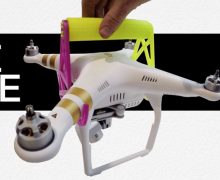
  47. 3D Print a Drone Handle
  48. Record Better Audio in an Airplane
  49. Be a better Documentary Filmmaking Crew Member
  50. 5 Drone Moves you should know!
  51. Shoot with a Steadycam
  52. Make good videos with your phone

Remember, there are more via our revamped Science Filmmaking Tips Youtube channel! Follow along every other week! And, if you’re keen to help supporting us at Patreon we’d be eternally grateful.

GOPRO TO SPACE

How to Send a GoPro to Space With a Weather Balloon

This is everything you need to know to send GoPros (or any payload, really) to space! Let’s start with the overview video.

OVERVIEW

To make this happen you’ll really need to concentrate on five things. The Prep. The Payload. The Balloon and Parachute. The Launch. The Recovery. Each has it’s challenges, but don’t worry, we’ll walk you through each step. To make it simple you’ll have to.

Your Tasks

  1. Prep: Acquire what is needed (links to where I bought everything within the article)
  2. Payload: Prepare the package (the payload is just a word for the stuff you are sending up.)
  3. Balloon and Parachute: I’ll show you just what you need
  4. Launch: There is some math involved, but have no fear, the charts are here.
  5. Recovery: Retrieving the balloon is a giant goose-chase! Exciting!

Prep: Things You Will Need

  • Payload: We used 5 GoPros to send up with extra battery packs (this is what we did, so I’m starting here – exclude as needed)
  • Something to mount them on in desired configuration – styrofoam cooler, adhesive, camera mounts, 3M stickies, plexiglass, foam
  • Weather Balloon – 3, 300g balloons, 80,000ft, 8FT Diameter, 12’4” burst
  • GPS tracking device – Spot 3
  • Parachute – 6foot
  • Something cool to put in the frame? Ultimately we attached a ruler and a photo of us, but an altimeter could also be cool.
  • Hand-warmers if you want to extend the life of the cameras. (they do add weight to the payload though).
  • Duct tape (do not use metal tape)
  • Digital scale (for accuracy weighing payload)
  • Helium Cylinder / at Party City it is – $160/$150 deposit: We chose the large, but a smaller one might do as well.
  • Tank Regulator – Comes with it at Party City
  • Plastic tubing
  • Zip ties
  • Small piece of PVC

The Payload

A payload is the package you are sending up to space with the balloon – the one you will hopefully retrieve after it floats safely back to Earth.

Here is how I made mine – (pictures and video, cutting holes for Gopros, diagram of payload camera directions, and GPS)

In essence, I just put some GoPros sticking out of a block of foam and duct-taped a GPS tracker on the top.

I chose foam and duct tape because it’s lightweight and easy to cut with a box cutter. It also is a nice insulator for the coldness of space (which can freeze your cameras and gps if you are not careful).

I have two GoPros pointing down, one pointing up, one to the side and the other side pointing at a photo of our Untamed Science team. (Since I may never go to space myself, I thought it would be fun to have some images of us floating in space with Earth in the background!) I cut a small hole for just the lens of each GoPro and made sure to pack it with foam snugly around it. There were no issues with the cameras freezing or fogging, and I think this is because the extra battery pack on each kept it warm and cozy. Still, I think I will include hand warmers the next time just to be safe – since I would like it to go higher.

Because you have to turn the cameras on at the last possible moment (bc of battery life and card space), I used duct tape for securing everything in place at the last moment. It’s best to have everything as ready to go as possible so that the time it takes to turn on the cameras, tape the payload securely closed and attach it to the parachute is as speedy as it can be. This is where it’s nice to have a helpful team – more on that later.

I placed the GPS unit on the top of the payload, unobstructed by anything except the miracle of duct tape. It didn’t freeze, but again I will add a hand warmer under it for future/higher flights. This is the only way to find my camera payload again, so it better work! The spot 3 device works really well. After I bought it, I set it up online (there’s a subscription fee) and downloaded the app to my phone. I played around with it around our yard and woods until I felt comfortable with how it worked. I haven’t ever used a GPS unit like this, and it was very easy. You set it up to ping in every few minutes – and it shows you where the unit is on a map. The battery lasts a couple of days, so I felt a lot of confidence it was up to the space challenge. I love you, techMology.

When I do this again, I will add a way to quickly attach the parachute to the payload in the design. It took too much time to rig it up this time (wasting precious GoPro footage on the ground)!

Remember to put your name and contact information on the outside of the payload, just in case it is recovered by someone before you find it. You are dealing with wind and weather and chaos and math and magic to guide the ascent and descent of your package, so try and control as many factors as you can here – and make informed decisions. It would totally suck to have a great launch and never be able to find your payload!

The Parachute

The parachute is what’s going to allow your payload to drift gently down to earth. You’ll need to get one that matches the weight of your payload. We got a 6 foot balloon from Rocketman. You can find your’s here. 

The Balloon

The balloon, like the parachute, needs to be matched to the size of your payload. The size also relates to how high you want it to go. There is some math needed in this section.

How high will the balloon go before it bursts?

First, you need to find the burst altitude. We suggest going to this Burst Calculator at Habhub

Some of the questions we want to ask at this stage are :

  • How do we get a balloon? How much weight can it carry?
  • How far will the balloon go? How high? Altimeter?
  • What will be its top rate of speed? How does speed vary on rate and descent?
  • How long will it take to get to space?
  • When will the balloon pop?

Calculations

How much helium balloon plus payload

Approximate lift of spherical volumes in liters of Helium in diameters of feet and lift in pounds. Assuming standard temperatures and pressures and no significant overpressure. Remember that hydrogen and methane are serious explosion and fire hazards so only use helium balloons.

Lift of Helium Balloons

Dia. Ft.  Vol. l     Lift gr.    Lift Lbs.
1      14.83       15.2        0.03
2     118.62      121.7        0.27
3     400.34      410.9        0.91
4     948.96      973.9        2.15
5    1853.45     1902.2        4.19
6    3202.76     3287.0        7.25
7    5085.86     5219.7       11.51
8    7591.72     7791.5       17.18
9   10809.30    11093.7       24.46
10   14827.58    15217.7       33.55
11   19735.50    20254.8       44.65
12   25622.05    26296.2       57.97
13   32576.18    33433.3       73.71
14   40686.87    41757.4       92.06
15   50043.07    51359.8      113.23
16   60733.75    62331.8      137.42
17   72847.88    74764.7      164.83
18   86474.42    88749.8      195.66
19   101702.34   104378       230.12
20   118620.61   121741       268.40
21   137318.18   140931       310.70
22   157884.03   162038       357.24
23   180407.11   185154       408.20
24   204976.41   210369       463.79

How to prepare the balloon for launch

Here are some other helpful links incase you are still doing research:

Filling the balloon

Filling the balloon is easy. All you’ll do is stick in a plastic tube, connected to the helium ballon and start filling it up. It’s not rocket science although you will want to make certain that you’re not filling it too much or too little. We filled our balloon to a diameter of 6′ so that it would burst at 12′ and have the right ascent and descent rate. Here is a good link for more info on that:

The Launch

This is what our package looked like.

Prep for Launch Day

It’s preferable to launch early in the morning for many reasons, so we prepped and packed everything in our vehicle the night before.

Buy helium at party city, previous day works well so you can launch early. Get a drop cloth or sheet. PVC for neck of the balloon. Zip ties. This can all be done in advance so you launch quicker. Bring some kind of hose or tubing to attach the helium regulator and go into the balloon.

Where should you launch?

You don’t want to land in a city, take off near an airport – or just plain lose you stuff in the ocean. The best way to figure out where to launch is to use this link as it is great for estimating where things should land.

You’ll need to know the weight of your payload (including balloon and parachute) and descent rate – which is listed in the handy dandy charts!

Recovery

Your recovery is the fun part! Remember, that you can estimate roughly where your balloon is going to land if you did some simple math at the beginning. Go to this website at Habhub to estimate the landing zone. From here you’ll have to track it via the gps tracker you attached to the top. Track via your phone and have fun!

You do have to be careful what day you launch though. You wouldn’t want it to land in the ocean! The habhub predictor is key to figuring out when and where it will land.

Extra Links You May Enjoy

I added a few extra links that are worth browsing through before you launch. There is a lot of junk on the web, so I’m trying to filter it all down for you. I hope this helps. If you do launch, let us know in the comments below. We’d love to see what you found.

Run3D Gait Technology Helps Athletes Avoid Injuries

As part of Innovate UK’s Success Stories series, we’re highlighting the achievements of Run3D. Initially a spin-out company from the University of Oxford, Run3D are a biomechanical engineering company whose focus is to create innovative technology to help athletes around the world prevent injuries.

Who are Run3D?

Specialising in 3D motion, Run3D have developed a high-tech gait analysis system. This looks at the way you’re running and highlights patterns which may lead to future injuries. This approach is highly effective in preventing both common and complex injuries while simultaneously improving performance.

No matter what type of athlete you are, running injuries are often a result of poor form or bad habits. With the help of Run3D, athletes and amateur runners can learn to combat this.

Funding from Innovate UK allowed the team to turn a dream into a reality and in 2016, after two years of intricate development, Run3D were able to launch one of the most pioneering biomechanical projects the running world has seen.

“We strive to help you optimize all contributing variable to improve your running” – Dr Jessica Bruce, Founder of Run3D.

How does Run3D work?

By using state of the art gait analysis and a detail oriented approach, Run3D can successfully identify the negative patterns in your running routine to uncover the root cause of recurring injuries. They can also offer advice to help boost your general running performance.

With the use of infrared cameras, their team of experts can accurately track every movement your body makes when running. This helps to identify and re-shape your personal running technique.

Run3D pinpoints any form or techniques which may be detrimental to your progress. They then work strategically to correct these. Through real time reporting and re-training they can then analyse your progress.

The company use the data they’ve collected to help athletes with:

  • Exercise therapy
  • Rehabilitation
  • Footwear recommendations
  • Gait retraining
  • Injury prevention advice
  • Physiotherapy
  • Performance recommendations
  • Progress monitoring

The Next Step for Run3D

Upon building a franchise of sports performance clinics, the team now operate in 6 UK locations. The next step for the company is to open this intuitive 3D technology up to the world of professional sport. This could be a real game changer which allows professional athletes to push their bodies to new limits.

The Run3D experts are now taking their findings and research to athletes and sport scientists around the world. With Innovate UK’s funding, the business have developed a prototype 3D gait analysis system which can now be used in sports clinics. This can be tailored to the requirements of different sports. The potential for this level of reporting and retraining is applicable to a wide range of athletes of all ages and sports.

“We know that the technology can benefit runners of all ages and all abilities” – Dr Jessica Bruce, Founder of Run3D.

If you’d like to see more videos like this, you can subscribe to Innovate UK’s YouTube channel here.

Additionally, you can follow @InnovateUK on Twitter here.