Raw Nature on Animal Planet

http://blip.tv/play/hJsCgaHxTwA%2Em4v

he Ecogeek Giveaway

This fall we’re happy to hand out some excellent Animal Planet DVD’s about film makers making wildlife films. This style of adventure and filmmaking is very much like what we do and thus we thought it was a good fit for our first prize.

To get one of the five, all you have to do is help us test our beta site.  Log on to UntamedScience.com and sign in as an ecogeek through our facebook connect feature.  Then add information to your profile.  The 5 users with the best profile will be our winners.  We’ll contact you on October 5th, 2009 to send them out to you!

ABOUT RAW NATURE

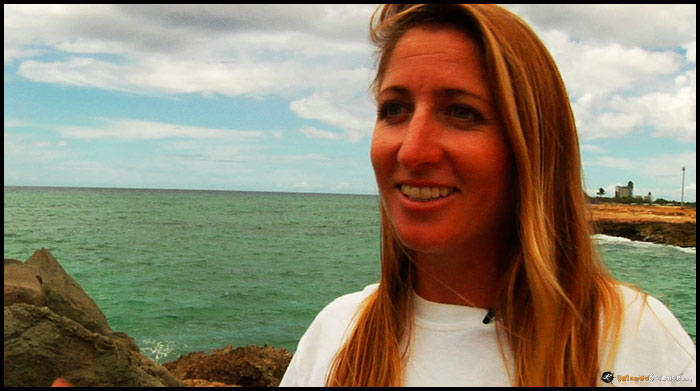
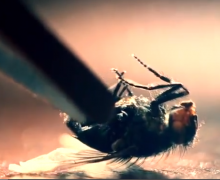
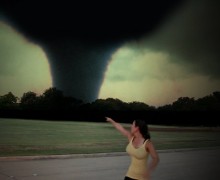
Raw Nature follows filmmakers Matt Renner, Mitch Tanen, Gianny Truttman and Anneli Gericke as they travel across the world to document wildlife professionals working to help animals survive human encroachment.

Subjects include a man dedicated to rescuing poached sloth bears turned entertainers on the streets of India, and a Sumatra biologist who’s doing everything she can to help save the orangutan population from total extinction.

Viewers will also be provided with an up-close-and-personal view of animals — from Komodo Dragons’ whose spit will kill you to white rhinos who will charge at a moment’s notice.

In addition, the series will also emphasize conservation, preservation and an understanding that the world needs to ensure its own survival.

More information about Raw Nature

Learn how to create your own Nature Documentary

Untamed Science is dedicated to helping provide information on making your own science documentary. For more information on how to create your own nature documentary go to our How-to-Filmmaking Guide.

 US23

Iceland

http://blip.tv/play/hJsCgZO5CgA%2Em4v

Untamed Science crew member Jonas Stenstrom recently returned from Iceland as a part of this year’s production. The country is an island, slightly larger than the state of Oregon, that lies in the middle of the North Atlantic ocean with the tectonic boundary between the North American plate and the Eurasian plate, the Mid-Atlantic Ridge, running straight through the country. In fact, it is the only place you will able to go and see the Mid-Atlantic Ridge above sea level.

This location means that geologically, Iceland is extremely active with several volcanoes, countless hot springs and geysers. The English word GEYSER is actually derived from Geysir, or Great Geysir, and the oldest known geyser in the world is located in Haukadalur Valley on Iceland. The geothermal activity also provides most of the 300,000+ people living in Iceland with cheap electricity and hot water.

Iceland-map2

Iceland also has the largest glaciers in Europe. In total, about 11 percent of the country is covered by glaciers. More than 60 percent of the country is tundra and largely uninhabited.

I went there to document Iceland’s unique geological location and was met by a country beautiful in every way with amazing nature and incredibly friendly people.

The main purposes of my trip were to document climate and why different parts of the planet experience different climates, and to take a closer look at plate tectonics and Iceland’s geological activity.

Highlights of the trip:

US-silfra

Dive in Lake Silfra

Silfra is located in Thingvellir National Park about an hour drive from the capital Reykjavik. It’s incredibly interesting nature and history has given Thingvellir a place on the UNESCO World Heritage List.

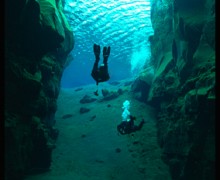
In the park lies Lake Silfra. The lake has become world famous amongst scuba divers for its incredibly crystal clear water. It also lies right on one of the fault zones that break Iceland apart, which is another reason I had to take a closer look (with great help from “Scuba Iceland” and Finni Finnbjornsson).

With us on the dive we also had underwater videographer Thorvaldur “Valdi” Hafberg with his great experience of shooting video in the waters around Iceland.

Glaciers

I also paid a visit to one of the many glaciers found on Iceland. Geared up with the right equipment we walked out on the compact ice that looks nothing like the snow and ice we are used to seeing in winter. Glacial ice is very different. And, the massive pack of ice creates its own weather systems. In our first hour we had rain twice, hail twice, snow, sunshine, storm and no wind–absolutely incredible weather fluctuations. It has to be experienced! But play it safe, glaciers can be treacherous. Right gear, training and a guide are crucial.

If you would like to experience Iceland the way we did, check out our professional contacts below:

Diving around Iceland

Finni Finnbjornsson
www.scubaiceland.net

Underwater videographer

Thorvaldur “Valdi” Hafberg
http://www.youtube.com/valdikafari

For any adventure experiences to see the true Iceland contact

Professional Iceland Tour guide
Villi Godi
www.theguide.is

More Underwater Video from Thorvaldur “Valdi” Hafberg of Iceland

Iceland-banner

Climbing Mount St. Helens

In an attempt to make a short earth science film about volcanos, we took a trip up Mount St Helens in Washington. For those planning to climb Mount St Helens, we thought we’d document our trip so that you can be as prepared as possible for the climb.

http://blip.tv/play/geMCgZa1CQA

General Information about the Area

Mount St Helens isn’t like most National Parks that I’ve been to. The main visitor center is almost an hour and a half from where you’d start hiking. In fact, the access to the mountain is from small roads – none of which go around the mountain. If you were at the Johnston Observatory, it might take you 3 hours to get to the other side of the mountain. Make sure you know where you want to go when preparing to climb the mountain. We recommend making your first destination the small town of Cougar, WA.

mt-st-helens-climbing-map

Hiking the Monitor Ridge Climbing Route

The hike to the top of the crater rim is a 4.5 mile one-way hike that takes you from 3,700 feet to about 8,300 feet at the summit. It took us 5 hours to get to the top while taking video along the way. The first 2 miles are through a beautiful old forest. The last 2.5 miles are steep and through rocky, unstable ground. The last section to the summit is ashy pumice – making it incredibly difficult to gain any forward ground. We would recommend getting to the top as early as possible as we heard that the ash starts blowing around on the summit more as the day progresses.

Rob-Nelson-on-Mt-St-Helens

Getting Permits for the Climb

To hike to the rim of Mount St Helens, you need a climbing permit. The park only allows about 100 people up the mountain a day and, since its a very popular climb, you should try and get the permit well in advance. It can be purchased online at active.com for around 15 dollars each climber. Once you register online, you can pick up your permit at the Lone Fir Motel in Cougar WA. They have a Climber Registration table set up just outside the motel’s main desk.

More Video of Mount St Helens

We found a few more video pieces of Mount St Helens that we thought you’d like.This one is from National Geographic

This one is from the BBC

https://www.youtube.com/watch?v=vBJ9xZws7ro

Biomimicry Institute

Untamed Science went to Missoula, Montana, to visit the Biomimicry Institute.

This institute works with a great approach to finding solutions for a sustainable future. Basically the message is, find ways to solve your needs by getting help from the most experienced teacher there is – Nature.

Does this sound weird? Well, let’s give a few examples.

If we live in a hot climate we need to figure out a way to cool our houses and likewise if we live somewhere cold, we would need to heat up our houses, right? Climate controlling air-conditions are really good for this, if it wasn’t for the amount of energy used to run them and other personal and environmental costs involved.
The question was asked, “There has to be some animals that have to deal with the problem of climate control in nature?”
The observation was termite mounds in hot African savannahs.

Scientists dug into how these small architects and construction workers dealt with the heat and found that the termites were building their mounds in a way that kept the inside temperature much less than the outside temperature just by regulating the air going through the mound (not many termites have access to regular air conditioners you know…)

The principle was used to buildings and showed to work both in hot environment (cooling the houses down) and in colder areas (keeping the houses much warmer than the outside). Who would have though termites were holding on such an incredible solution to a problem concerning so many people? All we had to do was ask… or at least open our eyes to new ways of thinking

Another example is the propeller rotor. For example the giant wind turbines that make use of the wind energy that is then converted to energy we can use. We try to build the propellers as efficient as possible to harvest as much energy as possible.

So, do you think this process could have anything to do with whales? Well, as a matter of fact yes.
Scientists observed Humpback whales and asked themselves if the humps on their fins could serve a purpose. Research discovered that the humps actually helped the whales to glide more efficiently through the water and a conclusion that maybe the same idea could be applied to propeller rotors to be more efficient. And, it worked.

And there are hundreds of examples like this already developed, where observations in nature have led to products that we use everyday. Insulation materials, adhesive compounds, ventilation systems, building material and construction strategies, surfaces that don’t absorb water etc.
Not to mention all the undiscovered examples.


Just another great reason to Never Stop Exploring Your World!

 BiomimicryInst


Cataract Canyon

The Colorado River is known for having some of the biggest and most fearsome rapids in the country.  While the Grand Canyon is usually known as being the largest and most difficult, I’ve found that many consider Cataract Canyon to have a just as tricky rapids.

On this rafting  trip down Cataract Canyon, the four of us (Peter, Rob, Hazen and Jaime) decided to take on the rapids.  I was along to film and be filmed, but have very little whitewater experience under my belt.  The waves were looking very gentle until we hit one small set of rapids just before The Big Drops.  That is where we flipped our raft.  Here is the short video we took. I hope it portrays a bit of how scary it actually was.

http://blip.tv/play/gYJ+gY3YfAA

For those of you who wonder what actually happened, we hit the button hole and rolled. After we got back on the raft Peter took the throw-line and dove overboard, hoping to tie the raft up before it floated into the big drops. It got pulled away from Peter, which sent us on our way, upside-down and alone.

Luckily for us, Hazen has a lot of experience in rapids.  We tried as hard as we could to eddie out on the edge of the river but had no luck for at least a mile.  Finally, we got to the side and after about an hour, were able to flip it back over.  This made us very worried however, to do the big drops.  We ended up walking Big Drop 2 and 2.5 and slept on a very rocky and wet shoreline that night.

The next day we flipped the raft again on Big drop 3, of which the camera was packed away tightly.

I would definitely raft Cataract Canyon again, but I’d make sure I did everything I could to keep the raft upright this time.

US19b


Mountain Biking in Moab

This week we are in Moab to film one of the most beautiful desert/desert scrub areas in the country.  While we are in the area we thought we’d film the piece using mountain bikes.

http://blip.tv/play/geMCgYuhQAA

This trail is known as the slickrock trail and it’s one of the most popular trails in Moab.  It’s considered to be the most difficult yet readily accessible trail here.  I’m not a mountain biker but I do have a lot of road biking experience and this was very challenging for me.  I fell a few times, and most of those times I slid all the way down the face of the rock.  Both Hazen and Jonas, who have more practice on the mountain bike would probably agree with me that it was extremely fun and exhausting at the same time.

moabmtn

Devil’s Den

An Introduction

Devil’s Den is a sinkhole in northern Florida that is fed by an underground spring.  It is set up as an ideal dive location and represents a unique look into the amazing underground cave networks of Northern Florida.

http://youtu.be/HaimftwZpkw

As seen by the crew

Untamed Science dove at Devil’s Den while doing a video on the unique process of sinkhole formation.  Since Devil’s Den represents an amazingly scenic sinkhole, we thought it would be great to start the video here.

devils-Den-Diving2

We found that we were extremely lucky to have visited the Den on a Thursday as we were the only divers there from early morning to about 3pm.  This allowed us to explore the 48 feet of depth to the floor without other divers kicking up silt.  It also gave us the chance to get some great images of the cave.

What we found was a type of upside down mushroom shape.  Before a small tunnel was built, the only entrance to the sinkhole was a small opening between two oak trees. As we enter the cave through the tunnel, we descend a couple flights of stairs before reaching the main dive platform.  From here we could dive outwards around a sunken dome.  Small grates block the inward and outward flow of water.

The wildlife of the cave is composed of small native fish including guppies, crappie and catfish.  Also of note is a giant catfish that must 50 pounds.

Other Interesting Stories about the Den

The Den is the site for many interesting fossil finds. Many of these bones are at display at the University of Florida in Gainesville. The animal remains date from the Pleistocene Age (2 million to 10,000 years ago).

Devils Den gets its name from the steam that would rise from the den on cool winter mornings.  The temperature of the Den remains around 72 degrees all year round, making for great steamy displays in the cooler months.

Contact Information

Visit the Devils Den Website to learn more about facilities and costs.

Devil’s Den
5390 NE 180th Ave
Williston, FL 32696
Phone: 352-528-3344


devilsden_diving


Roatan Caves

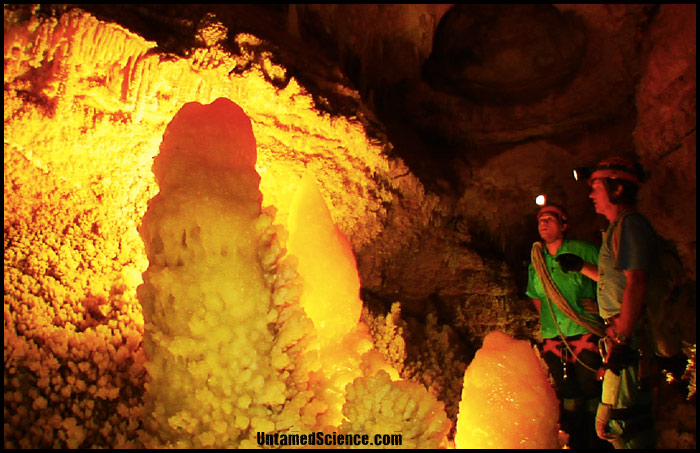
In March of 2009, the Untamed Science Crew ventured to Roatan, Honduras. Guided by caver Brian Chamberlain, the crew and deep sea explorer Karl Stanley discovered several unexplored caves, lowered themselves into heart-pounding adventure, and documented biodiversity in these unique environments. This is our brief story of two of those caves…

CAVE NEAR WEST BAY

caveroatan2

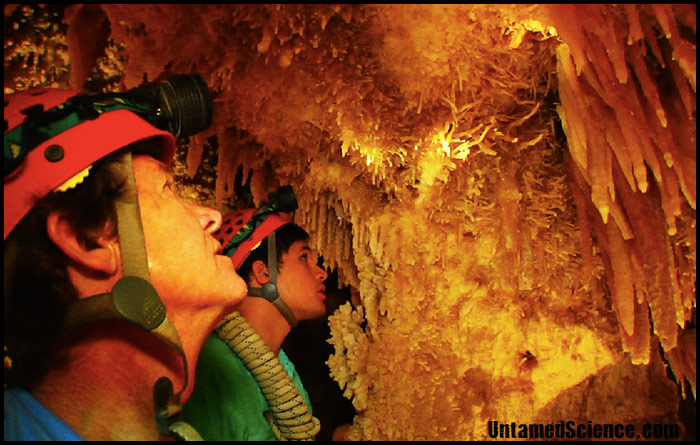
The cave pictured above was discovered near some Karst formations in West Bay. Hiking up the hill, we could hear bats and followed the sounds to the cave’s entrance. Once ropes were tied, we began the journey. The cave’s narrow and precarious opening descends to a muddy ledge from which we saw our first tarantula and an unfortunate frog. Bats continued to closely fly around us as we scaled down a rock wall to reach a landing and a sparkling, underwater lake.

We explored all the terrestrial parts of the cave, searching for alternate entrances and any life. We found no other entrances through the ceiling, so we waded in and each took a route that followed a different finger of the “underground river.” We are still unsure how far these channels go; perhaps there is an underwater entrance from the ocean. Navigating in these areas was tricky, to say the least. We had to lay on our backs and float face up, with about 3 inches of airspace above (less if you were wearing a headlamp). Inching back further into the cave through each passage was exhilarating (and good practice in prayer and techniques that center on mind over matter). The lack of airspace and tight-walled tunnels would be enough to send any slightly claustrophobic person into a panic attack, but the most disconcerting thing to me was that my ears were covered by water, so I couldn’t hear unless I stuck my face underwater. There were several places that you had to swim a little bit under some rock to get to the next bit with airspace, all the time wondering if the rain outside had any possibility of flash-flooding into this hole and making that couple of precious inches of air disappear. It was definitely not an adventure for the weak of heart.

batsRoatan

We intentionally entered the cave close to dusk so we would not disturb the bats when they should be resting. Failure to do this would eventually lead to the bats leaving or even dying. Even so, many bats remained and returned to the cave during our excursion. Hundreds of them flew through tight spaces and hung from the stalactite-covered ceiling. When there was was little light, we could still feel them whizzing by our faces and bodies.

CAVE NEAR WEST BAY #2

The next cave system we explored was also in West Bay.

On the way up, the crew paused for a gorgeous view of the island. Heading back down the hill, we happened upon a large crack, so we saddled up the rope and headed down.

caveroatan3

After descending 20 feet into the main cave, we held on to the walls and took turns shuttling across a muddy, 45 degree sloping ledge. Falling here would lead to an unknown fate down the blackness that hovered to our left.

cave_whipspider

Once we descended a little further, we gained better footing and took a better look around. We filmed the elusive amblypygids that make these caves their home. Many people call them “tailless whip scorpions” or “whip spiders”, but they are neither spiders nor scorpions. They are a closely related arachnid, though. If you’re interested you can view another video we did on amblypygids.

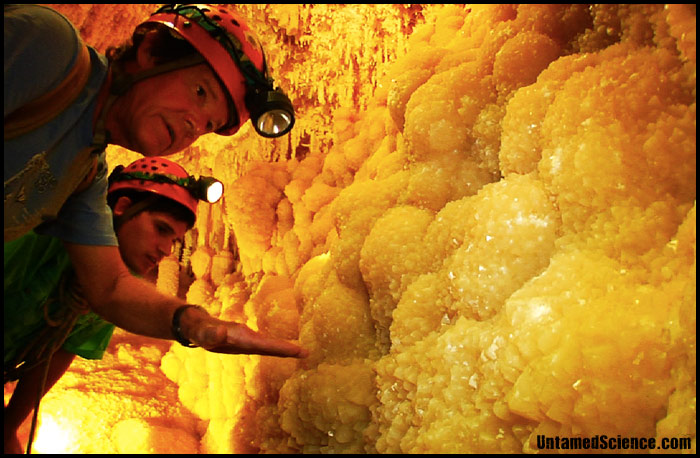
The formations in this cave were even more spectacular than the last–soda straws, saw tooths, draperies (cave bacon), helictites and several more that made me wish I were a geologist.

Getting out of this one was easier than getting in, and we will definitely be back with more gear and more light. I can’t wait to find out where this cave goes and what waits in its dark, unexplored corners.

Still interested in Geology in Roatan?

Here is a brief article about some of the island’s karst formations.


roatancaves_0

10 Ways to Use Video in the Classroom

Over the last several years we have been giving presentations to teachers across the country, encouraging them to start making their own videos for their students. We have a few handouts that we give to the teachers, including this short list – 10 ways to use video in the classroom. 

  1. Introduce a topic with a video YOU made.
  2. Show a video from the web (youtube).
  3. Make cell phone videos
  4. Use an Untamed Science video.
  5. Use time-lapse photography
  6. Make a class video for Untamed Science
  7. Subscribe to a set of podcasts
  8. Use a green Screen
  9. Make students present with video
  10. Make a classroom podcast

What makes videos engaging for science classrooms?

The following article was written by Rob Nelson to help filmmakers create better videos for the science classroom.  It is also intended to help teachers in their quest to produce videos for their own classroom.

ABSTRACT

This article investigates the fundamental question: “What makes a science film for the classroom effective in helping educators achieve their goals for the largest number of students?”  I argue here that effective films take students on a journey. The best films are experiential, taking students on a ride as opposed to telling them what to think.  I have also compiled a list of several key ingredients that effective films tend to share: they are generally short, they employ elements of humor and action, they avoid heavy narration, they are accessible using the latest and most widespread technologies, and they are associated with supplemental information and activities for teachers to maximize use of the material.  To discuss what makes a film effective, I make the distinction between levels of effectiveness in the classroom.  Science films that tend to be more effective are defined here as student ignition points. Those that fall toward the other end of the spectrum, those that are least effective, I define as student snoozers. 

This thesis is a compilation of almost a decade of thought and application regarding the creation of effective science videos for use in the classroom.  The culmination of this work has resulted in the Untamed Science video series that is included in the Miller and Levine high school biology book, the Pearson middle grades science books, the Pearson high school chemistry book, the Pearson elementary science books, and the Untamedscience.com web portal.  While the techniques for creating classroom science videos vary due to the intended target age ranges (from kindergarten to 12th grade), there are filmmaking “key ingredients” effectively employed over the entire age range. This discussion focuses on the high school and upper middle grades demographic.

INTRODUCTION

A cursory examination of many science videos currently distributed throughout the American educational system demonstrates a consistent failure to meet the goals of science educators. Science educators want their interactions with students to create not only a platform for delivering facts and theories about a subject, but also to produce a more fundamental goal to spark a desire by students to learn independently more about the subject; i.e. helping the students reach the ignition point at which a more meaningful learning process begins.

If filmmakers are to create effective films for the science classroom, they should have many of the same goals in mind. Science films for use in the high school classroom should not simply deliver facts and visuals about subject matter – they should engage the students and ignite a desire for further study.  In fact, I argue that this is the most important part of a science classroom film.  Creating a film like this requires not only engaging the students, but igniting a desire for further study.

In this research, I found that, or I will show that, there are several key ingredients that make science videos in the classroom engaging.  To compare and contrast videos that fall on opposite ends of a spectrum of engagement in the classroom, I use the terms student igniter and student snoozer The defining characteristic between these two types of science video is the degree to which they hold student interest in a high school or middle grades science classroom.  Student igniters engage students, keeping their interest in the science film at hand. Snoozers exert less hold on a student’s attention – students fall asleep, either literally or figuratively.  Although igniters and snoozers have existed in the science classroom since the earliest films were available for classroom use (in the 1950’s), noone has produced a guide to aid filmmakers in producing student igniters.  Using the knowledge gained from over ten years of creating more than three hundred videos for each grade level in the science classroom, I present a guide to distinguishing between snoozers and igniters and a set of guidelines that make science videos created for the high school and middle grades classroom more engaging.

STUDENT SNOOZERS AND STUDENT IGNITERS

This study is not the first to analyze the qualities of effective educational films.  In fact it builds on great deals of research conducted by formative and summative resarchers.  The first major attempt to conduct this research on educational videos began in the late 1960’s when an ingenous kids show designed to teach underprivaledged children and get them ready for school was thought up – Sesame Street. The Children’s Television Workshop (CTW) formed a collaboration in 1968 with the production team of Sesame Street to test learning in kids that watched the show.

Testing of students was done in two broad categories: students in individual settings and students in group settings. In both categories, distraction and attentiveness were indicators used to gauge a film’s effectiveness. One child at a time would sit alone to watch segments of Sesame Street programs. In a corner of the same room, a slide show of other interesting images would be also visible to the student. The researchers recorded and timed the student’s visual attentiveness on the two sets of images every 7.5 seconds. If segments of Sesame Street tested too low on this “distraction test,” that segment would not be aired (Fisch and Truglio14).  While researchers at CTW did not classify segments into snoozers and igniters, I would classify an episode that tested low on their “distraction test” as a snoozer. The students “snoozed” by looking away from the primary test video. Segments that scored high on these individual tests can be viewed as student igniters because they were able to hold the attention of the individual students.

In a later series of tests, the same researchers placed students in group settings that more closely approximated classroom conditions. While the researchers were concerned that this group-testing might bias results because of random influences of individuals in that group, they found that in this setting, very engaging Sesame Street segments scored even better and less engaging segments scored even worse. The researchers assumed this was because if an individual segment was not engaging, some students would get distracted, which would thus distract the rest of the group (Fisch and Bernstein 50).

CTW Researchers linked a low level of student engagement to making a student snoozer, where students do not retain as much information from the video.  Researchers with Seasame Street found that there was a strong correlation between the results of both test approaches (group or individual) when looking at student engagement (Anderson et al. 446).  Sesame Street researchers were concerned with examining student engagement because they found a direct correlation between student interest in a video segment and retention of information (Fisch and Truglio 15).  In other words, if a student liked the video they retained more information. Thus, to be a student igniter, a film must be highly engaging and enjoyable.

While both of these tests may be broad indicators of the overall effectiveness of the videos in generating and maintaining student interest and retaining information, these particular tests don’t identify the elements that cause them to excel or fall short in that effort.

Additional research at Seasame Street did attempt to identify the overall film segment length, the tone of voice of the narrator, and the nature or lack of video action as key elements that affect student attention, engagement, and knowledge retention. However, few have attempted to study this for science films for older students. The examination of these points compose the second half of this paper.

Student snoozers are not necessarily “bad films”; in fact, they can be some of the most interesting and beautiful science videos currently being made. Snoozers range from high budget blue chip films to low-budget films made for the classroom. For example, the one-hour long Blue Planet videos are a joy to watch on Sunday nights with the family, but in the classroom long films that lack an overarching storyline do little to intrigue students for the length of the film. The sonorous, omniscient “voice of god” narration that accompanies amazing shots through the world’s oceans may bore the pants off middle and high school students. In this case, it’s likely a combination of the length of these long segments and the fact that they are not experiential that give them a snoozer rating.  Students don’t always like narrators to tell them what to think, they enjoy hosts that can take them along for a ride, giving them a sense of immersion.

Students have short attention spans.  Middendorf and Kalish studied the attention span of students at an Israeli University in two undergraduate psychology classes. They found that students were only able to significantly absorb information in the first ten minutes of a lecture if it wasn’t broken up in some way (1).  Documentaries can act just like a typical classroom lecture. If they’re not broken up, or shorter than about ten minutes, the students won’t retain as much.  Thus, long format films, such as, Blue Planet (2001), Planet Earth (2006), March of the Penguins (2005), and Earth (2007) may not be the best use of class time for a teacher.  Instead of being a tool to boost learning, this type of science video becomes a monkey wrench thrown into a class period – slowing down what could be otherwise an exciting, engaging learning process. Science videos and documentaries over ten minutes are not made for the demographic of the student watching them: students with short attention spans sitting in a classroom as a teacher presents a topic.

However, even videos made specifically for the classroom can still be snoozers. A great example of this is the highly acclaimed, widely used The World of Chemistry video series (Annenberg/CPB).  In 1989, the Annenberg/CPB foundation provided money to produce a series of twenty-six chemistry videos intended to help increase student learning of chemistry topics.  The videos were produced for high school classrooms and adult learners.  Each video was a half hour long and consisted of a female narrator, and a male Nobel laureate (Roald Hoffmann) who would bridge the gap between segments of scientists describing topics such as molecules, electrons, polymers, and inert gases.  The series also took visits to industrial venues and conducted experiments that teachers often can not perform in the classroom. With videos chock-full of experts, facts, visual diagrams, animations, experiments and field trips, this series had a lot going for it.  It could easily have been engaging, but this series still gets a snoozer grade. Harwood and McMahon interviewed high school students and asked them what they liked and didn’t like about the videos (627).  Students described them as slow, which may be attributed to the narrator’s long monologues that could be viewed as boring (626), and to the fact that the videos were too long (thirty minutes) for student attention spans. This required teachers to stop and start at several points to increase learning (Harwood and McMahon 625).  The study summarized the parts that the students enjoyed, particularly noting the experiments, animations and the field trips (627).  Even though this series is a snoozer, it is constantly cited as proof that science videos are effective in the classroom. The overall conclusion by Harwood and MacMahon was that integrating science videos into the classroom did have a significant effect on both student achievement and student attitudes.  They based this conclusion on the fact that students from the test group who watched the videos scored better on standardized tests and expressed a greater interest in the subject of chemistry.  That being said, it is important to note that this study showed that student attitudes toward chemistry only rose from 69.0 percent to 69.7 percent.  Thus, although being exposed to these videos did not turn students away from science, I argue that their interest in chemistry did not significantly improve.  Imagine what a series that truly ignited interest in chemistry through a host lead immersive journey might have done to reinforce a positive attitude towards chemistry.

Student igniters on the other hand are videos that hold the attention of the student better than snoozers. They are on the opposite end of a spectrum of engagement. While there are many types of videos that a student might enjoy watching in the classroom, I’m restricting my definition to videos a teacher would show in the science classroom.  Many videos that have science focus are not student igniters because they fail in one or many categories that make them appropriate for classroom use. For example, the Blue Planet series videos are not student igniters because they are too long and lack a cohesive story tying the short bits together.  They simply explain topics rather than taking students on an experiential jorney. The World of Chemistry videos are not student engagers because they are utterly dorky, somewhat dull and humorless.  Yet, the successful programs like Discovery Channel’s Man vs. Wild and Animal Planet’s River Monster’s that have enthusiastic and knowledgeable hosts, quick editing, and grungy graphics tend to be very engaging to students.  Add to that the fact that these shows immerse the host in the midst of a journey.  They put the hosts in awkward situations, forcing them to overcome obsticles. This is extremely important and key to making a good, attention-grabing video.  So is there a list of attributes that one can use to make engaging videos?

Good student igniters have a number of factors that make them engaging for students.  The first and most important factor is that they show, rather than tell the students what to believe. They are immersive journeys.  In addition, they often share many important filmmaking “ingredients”: they are short, humorous, science-topic focused, rich with engaging hosts, use some form of repetition, are produced to appeal to the student demographic, and are also tagged with supplemental material so teachers can use them effectively in class.  For example, the Brainpop videos, a series of humorous animated shorts (1999-2011), are great student igniters. They are found on the Internet and are often accompanied by interactive post-show quizzes.  Shows like Bill Nye the Science Guy (1993-1998), which feature an entertaining host, Bill Nye, are also student igniters because of the way Nye appeals to young students. The show seems to attract students because of the antics of the presenter and the quirky style of editing.  Personal communication with teachers reveals great value in the Bill Nye videos because of their extreme science topic focus.  Topics from Bill Nye the Science Guy Season one (1993) include: Animal Locomotion, Digestion, Evolution, Flowers, Food Web, the Heart, Plants and Populations.  They are ideal for teachers because they follow the subjects that a science teacher would teach in a middle school classroom.  Discovery channel videos such as Man vs Wild episodes, while engaging, are not focused on a science topic taught in the classroom, and thus can’t be used in this setting.  The factors that make a video a student igniter will be discussed in-depth in the next section.  Before I delve into that, it’s important to understand why student igniters are useful in a science classroom.

Student igniters are great to show in the classroom because they not only help educators teach science topics, but they also improve students’ perception of science.  As mentioned previously, studies such as Harwood and McMahon’s evaluation of The World of Chemistry series have shown that even relatively non-engaging “snoozer” videos are useful in the classroom (617). Even though they did show a small degree of change in student’s adoration to chemistry, imagine what greater effect a highly immersive student igniter might have?  While there are no studies that compare the effectiveness of different videos to each other, Yigal evaluated the effectiveness of Brainpop, an online video series that presents science via an animated boy host and his mute robot (451). Yigal conducted his study at private schools in Israel, where he studied 418 fifth and seventh grade students.  A control group did not watch the videos, while the experimental group used the videos as a learning tool.  Yigal found that students who watched the videos showed a significant increase in their understanding of the material.  Yigal continued his study to examine student’s perception of science. By watching the Brainpop videos, he found that students who were able to watch the videos did have a higher apprecitation of science after the course than those who did not (452).  This study represents one of the few studies that clearly show that engaging videos, like Brainpop, are useful for a teacher in the science classroom because they help students perform better on tests and leave the class with a better perception of science.

Student igniters are one of the best tools for a science teacher to introduce a science topic. While student igniters work well to diversify a lecture at any point in the class period, these igniters are most effective as a ‘hook’ to get students interested in the lecture topic.  Because videos can take students places they might never have gone and show science concepts foreign in nature (such as space travel, distant rain forests, or the deep sea), the videos act to engage the mind of the student before the lesson begins.  Randy Olsen, in Don’t be Such a Scientist (2009), argues that science videos should first engage and then explain topics.  Failure to do so risks losing the interest of the students early in a lecture.

A great example of how science videos can be used in the classroom to introduce a subject is through the personal communication with a Montessori school teacher in Minneapolis, Haley Chamberlain.  She uses Untamed Science podcasts as a tool as she teaches her students.  This series, a production of the authors here, are short (three to five minute) science videos that end up being very similar to the Bill Nye series – except they star a series of young, back-packing “ecogeeks” with a tendency to present concepts from an ecological or biological perspective.  Chamberlain notes that she uses the Untamed Science Halloween episode about pumpkins, squash and other gourds to help her students grasp important biological concepts around this holiday (Ecogeek video podcast #24).  In this episode, the hosts explain that all of the gourds are in the family Cucurbitaceae. They go on to show that pumpkins and zucchini are, in fact, the same species – only having different characteristics because of selective breeding.  This video acts as a springboard for her lesson about the rudiments of classification.  To add another dimension to the lesson, she brings many different types of squash used as examples in the video. Chamberlain explained that she tries to use a lesson-specific science video early in teaching a topic – to give students visuals they can refer to as they discuss the topic further. She feels that having real examples is the best scenario, but video is very important (often necessary) for showing things you cannot bring into the classroom. In addition, Chamberlain notes that her students often refer to the video examples then raise their own questions about particular topics: “It gives them concrete examples to think about as we head into a new subject with all new vocabulary and concepts. It makes a huge difference to have an entertaining topic video at the beginning of a lesson.”  Chamberlain claims the immersive and experiential style of the Untamed Science podcasts greatly ignites her students’ enthusiasm to learn more about each topic, and she feels it is one of the key ingredients that makes students look forward to science class (personal communication – interviewed May 2008).

Another example of how the videos can be used in the classroom comes from Chris Borgatti, a high school biology teacher at an all boys school in Boston.  Borgatti uses a different Untamed Science BioAdventures video once a week to start off a particular unit or chapter.  He explains that the students began looking forward to the videos as part of their class lectures, and that much of the class discussions that follow (even after further lecture) centered around the information and examples in the videos. In fact, Borgatti reveals that his students very often use examples from the BioAdventures videos when asked to give specific case study examples on tests. Another effect of this initial video springboard was his students’ growing interest in the biology of Panama, due to the fact that many videos were set in Panama. Borgatti then set out to organize a class field trip to Coiba, an island just off the coast of Panama, giving them the chance to have “bio-adventures” of their own. While most teachers wouldn’t be able to take this springboard effect this far, one can clearly see the power videos can wield to get students excited about science.

Igniters inspire students by taking them places they can’t normally go.  Just like showing chemistry experiments, videos can show students processes that are outside the scope of a normal in-class lesson.  For example, in a lesson about forces in which students need to understand that wind friction is a force that pushes against the force of gravity, Untamed Science produced a highly experiential student igniter about Terminal Velocity (see Ecogeek podcast #66 – Terminal velocity). The concept of terminal velocity is fairly easy to understand: it’s when the force of wind friction is equal (and opposite) to the force of gravity. Yet, how many students would ever be able to see the process first hand.  The video starts with a shot of skydiving, an action sports sequence that students always seem to love watching.  However, because it’s difficult to see that a static skydiver falling toward Earth has actually stopped accelerating after the first ten seconds, the episode moves into a simulated free-fall wind tunnel. We feel it is extremely important to immerse the hosts in the explanitory examples. In this case, the hosts do a walkthrough of the facility, showing the fans that will create a constant 110 mph in the tunnel.  As the host jumps into the wind-tunnel they do not move up or down because wind friction against the sky diver’s body equals gravity.  The video continues to show dramatic action as the hosts change their body shape, shooting them up into the air.  The change in body shape, changes the wind friction and thus, changes the forces acting on the sky diver.  The video wraps with the expert fliers doing tricks in the tunnel. Because few students are old enough to skydive, and few wind tunnels exist in the world, this video is able to show a concept in a fun way to students visually.  But maybe more importantly it inspires an interest in students to want to learn more.  We’ve provided the student’s ideal examples of what a scientist should do. Our hosts are living the process of discovery – asking a simple question about Terminal velocity and then exploring it with kid-like enthusiasm.

In another video, Untamed Science explains a different topic that’s difficult to show in the classroom: how different wavelengths of light diminish with depth (12.4: Why is the Ocean Blue). To do this, our host took six colored SCUBA tank toppers down to a depth of 110 feet. The video of the underwater descent is sped up – so the viewer can easily see how the colored toppers appear to change with depth.  These visuals compliment the narration, helping make the associations (Yelland 108). In only three minutes of video, Untamed Science introduces the topic and takes students to make the conceptual discovery themselves.  Again, this process of immersive discovery is one of the key elements of the Untamed Science videos.  In this case, the SCUBA and skydiving episodes are good examples of student igniters that allow students to understand the complex concepts outside the framework of the classroom.

KEY INGREDIENTS FOR CREATING STUDENT IGNITERS

Filmmakers will have a greater opportunity to create student igniters for the science classroom by employing a combination of “key ingredients” laid out below. The key ingredients chosen here are a collection of concrete elements (compiled through personal research and the research of others) that contribute to creating engaging science videos specifically used by teachers in the classroom. These key ingredients are guidelines to keep in mind while creating a science video, rather than strict rules or a checklist of items that should all be included in every video.

Because making video is an evoloving creative process, filmmakers must employ many non-concrete elements such as creative adaptation to the humor of the present time and modifications based on artistic style. These combined elements ultimately lead to a synergy that cannot be broken down into a simple list. The whole video is more than the sum of its parts, and these key ingredients give filmmakers concrete choices to think about in their own creative process.

Key Ingredient #1: Length

In the same way that studies suggest classroom lectures should accommodate student attention spans, the length of student igniters should be tailored to accommodate the average attention span of the students for which it is being created. Many high school teachers show the fifty-minute Blue Planet episodes in class. It’s doubtful that these teachers take into account the fact that a high school student’s average attention span is less than the fifty-minute video… and neither do the filmmakers. One reason a video like this is a snoozer in this setting is that it is too long for use in the classroom. Studies have found undergraduate student attention spans during classroom lectures to be approximately ten to eighteen minutes long. In one study, Johnstone and Percival observed students in nintey lectures, with twelve different lecturers, and recorded breaks in student attention throughout the lectures (49).  They detected a general pattern that was, after three to five minutes of “settling down” at the start of class, the next lapse of attention occurred around ten to eighteen minutes later. In another study of undergraduate attention spans, Burns had students write summaries of the lecture after it concluded. He organized the information reported by the students into the time it was presented within the lecture. He reported the information given for each half-minute segment of the lecture, and he found that most information given by the students was reported from the first five minutes of the presentation. In addition, the information recall was the lowest at the fifteen to twenty minute level. With both of these studies suggesting a fifteen to twenty minute attention span during lecture and Burns’ study suggesting the most recall may be in the first five minutes of the lecture, Burns recommends “building a ‘change-up’” into classes to “restart the attention clock.”  The “change-ups” are any “deliberate break . . . usually commanded a better attention span from the class, and these deliberate variations had the effect of postponing or even eliminating the occurrence of an attention break.” (2)

While these studies focused on lectures from teachers, filmmakers can use this idea of restarting the attention clock and the waning ability of students to absorb information over time to their advantage. Simply put, filmmakers have a better chance of making a student igniter if they craft shorter videos than the attention span of the targeted students and introduce the main ideas early in the video.

Producing videos longer than the attention span of a student can still be effective in the classroom if filmmakers designed them for viewing in smaller segments. A filmmaker may desire to make a longer video for the classroom with more depth and/or information, and filmmakers must still find a way to accommodate student attention spans. By further applying the studies of Burns and Johnstone, the filmmaker can create longer videos designed to incorporate “change-ups” that can “restart the attention clock” every few minutes.  For example, The World of Chemistry videos studied by Harwood and McMahon are thirty minutes long.  For the test group that used the videos, they informed teachers to break up the video into short sections, stopping occasionally to ask students questions (617). If students didn’t understand a concept, they were instructed to rewind the video and play it again. The results of this study showed a significant increase in students’ positive attitude toward chemistry using this method. By breaking up the video, students have the opportunity to evaluate the material already seen, re-engage in the subject at hand and, perhaps, avoid an attention break.

In designing the length of videos for the recent Untamed Science BioAdventure series, I incorporated this information about attention span.  Each video in the series fell into a time span of six to nine minutes, with the average run time around seven minutes.  I chose this length based on the research of Burns and Johnstone, product testing conducted by Pearson Publishing, and email feedback from teachers utilizing Untamed Science videos in their classrooms. Teachers tended to agree that videos around eight minutes are the most helpful as they left enough time for a short introduction, held the students’ attention, and created a springboard for discussion of the rest of the lecture, and activities. On the other end of the spectrum, Pearson’s product testing revealed that videos shorter than three minutes tended to leave the students and teachers wanting more (personal communication – email with Mary Ellen Leahy). Untamed Science also agreed it is more difficult to explain complex high school science topics with an adventure story in videos shorter than five minutes (personal observation).  For example, it is difficult to discuss the topic of Boyle’s Law through a SCUBA diving story in less than five minutes.  We use one minute to open and wrap the video, while we use about three minutes to wrap student’s heads around the gas law. For all of these reasons, Untamed Science planned videos that were over five minutes and under ten minutes. The resulting series, containing videos ranging from six to nine minutes, tests well among high school classrooms (personal communication – email Walter Rodriquez).

Key Ingredient #2: Repetition

Repetition in science videos helps students stay engaged in a video because of the way the human brain works.  Middendorf and Kalish noted that the human brain does not record information the way a videocassette does (1).  Students deal with information by breaking it down into meaningful chunks, known as categories.  Students learn as they fit the information they gather from the world into pre-existing categories. As they learn new concepts, they create new categories.  Categorization determines how people acquire a concept and how they retrieve it from memory (Tobin, Tippins, & Gallard 45). As students process information from a video, their learning potential increases when they reinforce concepts from categories.  In other words, if a topic is introduced early in a video, a student’s brain will process that information by creating a category for it.  If we repeat the concept within the video, we force a student’s brain to pull from the same category that it first created, thus strengthening the perception of that concept. In a summary of teaching studies Eitington notes that teachers have used this technique since the earliest studies of teaching in the late 1800s (13).

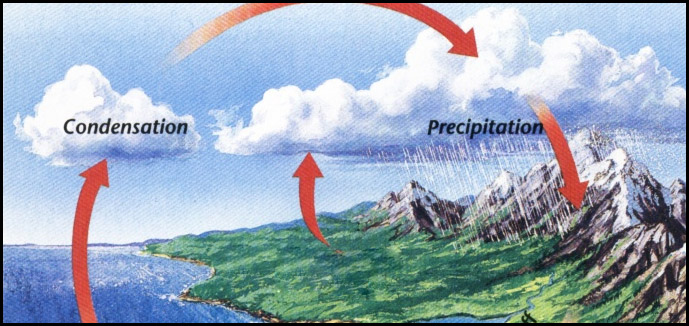
The Untamed Science series employs the use of repetition in each video by stating what we want to say, giving an example, and then repeating why that example demonstrates the topic. For instance, repetition is used throughout the Untamed Science middle grades The Water Cycle video to drive home the cyclical nature of water in a system. The video begins with a short animation showing the steps of water cycle.  Examples of the steps of the water cycle follow in the same order as the hosts raft and kayak down the Colorado River.  Finally, we summarize the process again (in the same order) with a cartoon version of the examples on the Colorado River. This structure for repetition, advocated by Untamed Science, follows Middendorf and Kalish’s study suggesting the way students learn. In this case, the brain’s new “category” is a newly introduced science concept or process, and the episode revisits the “category” in several ways for reinforcement.

A specific variation of repetition used in educational media is known as the “James Earl Jones Effect.”  This form of repetition involves pauses in the delivery of information, giving viewers the opportunity to process what was just spoken or to be thinking about what is about to be spoken.  The “James Earl Jones Effect” got its name because James Earl Jones used it in his appearance on a segment of Sesame Street, during which he speaks the alphabet in his deep, rich voice.  His delivery is slow, and he leaves long, pregnant pauses after each letter, while the next letter appears visually onscreen.  Formative researchers noticed that students would repeat the letter just spoken in their first viewing. With successive viewings of the segment within the show, students would begin shouting out the next letter before Mr. Jones said it. The benefit of the pauses seems two-fold. The pauses give the student time to process information when it is presented for the first time, and (with repeated viewing) pauses allowed students the opportunity to participate and essentially quiz themselves about what they are learning. Sesame Street stumbled upon this technique almost by accident and, due to its success in engaging students, became widely used throughout the Sesame Street program (Lesser 4).

This type of repetition can also be found in language learning videos for adults and children, wherein words or phrases are spoken slowly with pauses between translations. This allows the viewer to repeat the information aloud. In this way, the “James Earl Jones Effect” gives language learners time to the process and practice foreign words at their first introduction. Over multiple viewings, the adults and children test and gauge their progress.

Untamed Science adapts repetition techniques for use within many videos in the BioAdventures, Middle Grades, and Chemistry series.  This often takes shape as a brief, planned pause just before the delivery of information, each time it is revisited. For example, in a video about oxidation-reduction reactions, the conditions for the formation of rust are given 3 times. The first time it is mentioned briefly with an animation, with a pause between each ingredient. The second time it is explained in a specific context, slowly listing the conditions with visual examples. The last time the conditions are repeated the host says, “So what do these things give us … ? (Pause) That’s right, rust.” This deliberate repetition combines Middendorf and Kalish’s idea of reinforcing “categories” in the brain and Sesame Street’s “James Earl Jones Effect” by repeating information several times after its introduction and using pauses in the delivery of information. By building these techniques into the videos, Untamed Science hopes to give students the opportunity to be actively engaged, to feel like they are able to keep up the with the pace of the video, and to learn the main concepts from the video.

Key Ingredient #3: Humor

Humor is one of the historically least used, but arguably most effective tools for a science filmmaker. Several studies have shown that using humor in a classroom setting can help students pay more attention, ease tension, and increase learning (Bobek, 2002; Friedman, Halpern, & Salb, 1999; McLaughlin, 2001). One study by Fisch and Truglio even showed the benefit of humor directly in video.  They conducted their research as part of the formative research of Sesame Street to determine which Sesame Street segments work to keep children engaged.  While this study focused on very young children, work on attention spans with middle grades students (Brooks and Tees 2), college students (Olmsted 525) and military radar workers (Mackworth 1) all seem to show similar patterns of attention, allowing me to conclude that a study like this also translates well to older children.  The Sesame Street researchers concluded that the best method to help engage and entertain students is through the use of humor (2).  Other studies on the use of humor have directed research into the broader application of humor in a classroom, rather than within a video. For example, in one study Garner showed that college teachers who used humor while teaching in class increased the performance of students on end-of-year tests (177).  Ziv, in an Israeli study, found similar results when testing the use of humor by teachers for students in both psychology courses and a statistics course (5).  These studies show evidence that humor increases student test scores, likely because it increases interest in the subject. For this reason, humor is a useful tool for any filmmaker, including science filmmakers, to wield and increase interest in their subject.

Key Ingredient #4: Fast-Paced Editing Style

Videos in the science classroom can become more engaging – become more of a student igniter – if filmmakers use a fast-paced editing style.  Fast-paced editing helps to focus the video on the target demographic. In this case, students in middle school and high school. There are no studies that show that student’s benefit from fast-paced videos in school. However, one can examine the shows on TV that have successfully reached older students and draw parallels to the classroom.  Of particular interest is the work of Robert Pitmann, founder of MTV.  Pitmann started MTV in 1980, creating the original programing.  The program had a fast paced audio and visual style combined into music videos.  Teenagers were quickly attracted to the program, making the program a success.  Yet, MTV rarely gets into classrooms.  Bill Nye the Science Guy, picked up on this fast-paced style. Videos are quick, punchy and MTV-esque.  The Bill Nye series does a good job hitting a middle school demographic, part of which has to do with the editing style.

Series that use a slower paced editing style risk boring students. Blue Planet (2001) and Planet Earth (2006) have long shots between edits.  Home (2009), a documentary composed entirely of aerial footage is notorious for its long shots.  The classic science film The World of Chemistry video series, is a great example of a student film series edited for an older demographic.  This series consists almost entirely of a monotone narrator explaining the science concept over poorly shot clips.  Clips are often pulled from a stock library to explain the topic and edited in a rather slow manner.  Occasionally an older, dry, and fairly monotone scientist appears to explain the chemistry. These elements make the video a student snoozer.  Videos of this sort do little to reach the high school demographic.  If the teacher wasn’t there to stop and start the video, the students would likely fall asleep. Video intended for middle grades and high school students must be produced with that age group in mind, and the editing style altered.

Key Ingredient #5: Engaging Hosts

Another method the Untamed Science series found to work well for the high school demographic is the use of engaging hosts that take students on an experiential journey.  Fitzgibbons did a survey of the most viewed shows on Animal Planet in 2006 and found that one element they all had in common was the use of hosts that would immerse themselves in the action – rather than the use of omniscient narration (25).  Untamed Science found (through student/teacher feedback and Pearson Publishing product testing) that elements of video considered successful in the eighteen to thirty year old range (the range studied by Fitzgibbons) tend to be received well by high school students.  Teacher feedback of the Untamed Science videos also indicates that the languid, calm voice of a third person omniscient narrator tends to allow students the opportunity for an attention break, while the use of a host that is in the action tends to keep students more attentive and engaged. Pearson Publishing felt so strongly about these tendencies that they discontinued working with other vendors  (who were providing them with omnisciently narrated science material) and sought the hosted format of the Untamed Science team to accompany the best-selling science book, the Miller and Levine high school biology textbook. Students and teachers interviewed overwhelmingly agree that watching a video piece with an engaging host is preferable in the classroom setting (email communication Walter Rodriguez).

Untamed Science is assembling an ongoing list of typical shared elements of engaging hosts for the high school and middle school demographic. The hosts from the Fitzbiggons study tend to be physically attractive, humorous and tend to have a conversational delivery when speaking on camera.  They also tend to immerse themselves in the physical action as opposed to simply narrating segments. Current examples include Bear Grylls in Man vs Wild, Jeremy Ward in River Monsters, Mike Roe in Dirty Jobs, and Pat Spain in Beast Hunter.

Humor is a great tool for general use within science videos, and a humorous host can be successful for many of the same reasons. Just as Fisch and Truglio’s study shows that students are entertained and engaged by humor in general, having a host who is perceived as funny can work the same way. For example, in a high school student survey question asking,“Which Untamed Science host is your favorite and why?” the most popular reason for choosing a favorite is based on humor. Students tend to want to watch a host they consider funny, rather than any other quality. The second most popular answer is related to physical attractiveness, and no student ever chose a favorite host based solely on the perception of the host’s intelligence.  If a science filmmaker is choosing a host for a high school audience, they must be aware that a host that can be funny may powerfully resonate with students.

Key Ingredient #6: Create Videos Featuring a Classroom Science Concept

Filmmakers that intend to create science videos for the classroom should focus on science concepts or topics that most teachers will teach in the classroom.  The reason for this is that kids have a harder time seeing a video in class if there is no relevance to the subject at hand.  This might seem obvious, but it’s extremely important to review the reasons why. With programs in America like No Child Left Behind, teachers are, more than ever, teaching only topics and concepts that appear on standardized tests (Broder 1).  Because of this, novelty lessons, especially in science, are often kept to a minimum (Cloud 41).  Relevant science classroom topics can be found on public state science standards lists or in the table of contents of a science textbook. The topics can range from a large, overarching concept to a specific process. A few examples of science classroom concepts or topics include photosynthesis, cell biology, natural selection, mitosis, classification, and human biology. By creating a video that is focused around a concept or topic like this, it has a better chance of actually being used in the classroom.

Key Ingredient #7: Create Supplemental Material

Science videos that include supplemental material are more likely to be used by teachers than those that have no supplemental material. Teachers have a limited amount of time to come up with lessons, find material and conduct class.  Berger et al argued it was not enough to simply have technology in the classroom (466). Teachers must do something with it. Many popular nature shows have figured this out and give teachers the tools to use the video in the classroom.  The Strange Days on Planet Earth series stands out. The producers created an entire campaign around the series to get teachers to use the video.  Even a series like Blue Planet have made it a priority to create short lessons for students.  The Untamed Science textbook series presents another example of ways to integrate video with factual content.  In the BioAdventures series, the videos do more than have lesson plans, they go hand in hand with the Miller and Levine High School Biology textbook by Pearson Publishing (Miller and Levine).  For example, the beginning of each chapter in the book includes a short science mystery.  To compliment this, the Untamed Science videos highlight this mystery at the beginning of every video.  These mysteries are then tied into the topic of each of the Untamed Science features. Students try to solve these mysteries as they go through the textbooks.  This ties the videos well with the existing chapter lessons and makes the whole product more effective.

Key Ingredient #8: Make it accessible on the web

Putting science videos on the web is important because it is the easiest way for teachers to search and find topics relevant to the lessons. Putting a science video on the Internet gives it maximum exposure with minimal cost.  Before the Internet, a copy of a science video had to be physically present in the classroom in order for a teacher to show it.  Today science filmmakers can get instantaneous global distribution as soon as they upload a film on the web. Uploading to YouTube, blip.tv and vimeo is free. While any one of the Untamed Science podcasts might take from a week to an afternoon to produce, within a couple hours of finishing a podcast we can distribute them to the world.  A few hours after that, it may have several thousand downloads.  Within days, it may have almost 20,000 viewer downloads.  On average, Untamed Science gets about 7,000 views a day on our web uploads. This is something few would have thought possible a decade ago.

Even without distribution via podcasts, having a film online will allow people to find and use it.  Teachers often find what they are looking for with web searches. This basically opens up one more potential viewer base.  Finally, putting a video on the Internet without charge means that teachers, who often have very little extra money for teaching materials, can utilize the work for the betterment of student learning.  It’s a gift filmmakers can give teachers and one I hope more filmmakers will realize.

Having science videos online also serves the purpose of creating a unique learning tool for students using computer technology.  While this paper focuses primarily on the use of video by teachers in the science classroom, students can easily use videos while alone or in small groups around a computer.  In fact, Kearney notes that the computer environment encourages small group interactions and permits a more intimate engagement with tasks. This environment offers students control of the tasks and allows teachers more time to interact with students (3). Kearny studied tenth and eleventh grade physics classes to see how effective interactive computer-based media was at disseminating information and keeping student attention. Through post-lesson interviews with students, he found that students enjoyed this type of learning.  They enjoyed the ability to manipulate and control the actual demonstration because it was presented on the web.  However, one thing students kept saying was that the quality of the video clips were very important. Some videos worked well because they used good examples, while others were not shot well and couldn’t explain the concept they were trying to learn (22).  Their description of these videos is key to my argument – videos must be quality student igniters for the classroom for students to get the most out of them. 

CONCLUSION

Over the last ten years, I’ve worked to find better and better ways to incorporate video into the science classroom.  Most of my decisions have come from personal observations working directly with students and teachers. I’m delighted that a great deal of study has gone into certain areas of educational films, particularly the work done by the CTW on Sesame Street.   Most of this research is based on the ability of a video to engage and thus educate a student.  The studies of Harwood and McMahon on The World of Chemistry series likewise concentrated mostly on the ability of the films to teach.  While teaching is a great goal for science educators, I think that the goal of future films should be simply to inspire.  I believe that most kids just need a reason to take up a passion in a subject. Films are the perfect venue to inspire life-long learners in middle grades and high school students.

Filmmakers have a huge amount of responsibility on their shoulders.  Given the importance of films in learning, it’s now up to the filmmaker to make those films.  I dare to say that today there are few student igniters on the market.  It’s the job of filmmakers to make those films.  Filmmakers must be able to learn how to make an engaging film for the students sitting in a science classroom. It’s a different type of film from what most are trained to make.  Besides taking into account the key ingredients I have outlined above, I feel one of the most important avenues is to take students with you on a journey. Don’t just tell them about the rainforest; take them with you. Don’t just tell them about the deep sea; take them there.  Don’t just tell them about terminal velocity; let them vicariously experience it on skydiving from 13,000 feet. Students live in a time when experiential documentaries are the key to engaging them.

Researchers and filmmakers should also find a way to unite to help our understanding of educational science films for older children.  Like the CTW did with early childhood filmmaking, we need similar collaborations with films for older students.  Researchers have already learned that films are useful in the classroom and thus, the research should focus on other aspects of the films.  They should focus on learning more about how to make films that inspire an interest in science.  I know that I’m doing what I’m doing today because of the Jacques Cousteau films I saw as a kid.  Students will likely never see a Jacques Cousteau video and thus, they need modern inspirational videos produced to ignite their imagination and drive them to become life-long learners.

REFRENCES

Anderson, Daniel R., Lorch, E.P., Smith, R, Bradford, R., and S. Levin. “Effects of peer presence on preschool children’s television viewing.” Developmental Psychology 17 (1981) : 446-453. Print.

Anderson, Daniel R., E. P. Lorch, D.E. Field, and J. Sanders. “The Effects of TV Program Comprehensibility on Preschool Children’s Visual Attention to Television.” Child Development 52 (1981) : 151-57. Print.

Baldi, Stephane; Jin, Ying; Green, Patricia J.; Herget, Deborah. “Highlights from PISA 2006: Performance of US 15-Year-Old Students in Science and Mathematics Literacy in an International Context.” National Center for Education and Statistics (2008) : 1-16. Print.

Ball, S, and G. A. Bogatz. “The first year of Sesame Street: An evaluation.” Educational Testing Service (1970). Princeton, NJ, 1970

Berger, C.F., Lu, C.R., Belzer, S.J., and B.E. Voss. “Research on the uses of technology in science education.” In D.L. Gabel Ed. Handbook of research on science teaching and learning Ed. D.L. Gabel. New York, NY : Macmillan, 1994. 466–488. Print.

Bolter, Jay David and Richard Grusin. Remediation: Understanding New Media. Cambridge: MIT Press, 1999. Print.

Borsook, Terry K. and Nancy Higginbotham-Wheat. “A Psychology of Hypermedia: A conceptual Framework for R&D.” Annual Meeting of the Association for Educational Communications and Technology (1992) : 1-21. Print.

Broder, David S. “Long Road to Reform: Negotiators Forge Education Legislation.” Washington Post 17 December 2001 : C4. Print.

Burns, R. A. Information impact and factors affecting recall. Paper presented at Annual National Conference on Teaching Excellence and Conference of Administrators, Austin TX. (ERIC Document Reproduction Service No. ED 258 639) May, 1985. Print

Cloud, John. “Are we failing our geniuses?” Time 27 Jul. 2007 : 40–46.

Condie, K.C. Plate tectonics and crustal evolution. 4th Ed. Boston : Butterworth-Heinemann, 1997. Print.

DeBoer, George E. “Scientific Literacy: Another Look at Its Historical and Contemporary Meanings and Its Relationship to Science Education Reform.” Journal of Research in Science Teaching 37.6 (2000) : 582-601. Print.

Dede, Chris. “Commentary: Children and Computer Technology.” The Future of Children 10 Fall/Winter (2001) : 178-80. Print.

Dongsong, Zhang, D. Zhou, L. Briggs, and J. Nunamaker. “Instructional video in e-learning: Assessing the impact of interactive video on learning effectiveness.” Information and Management 43.1(2006) : 15-27. Print.

Eitington, John. The Winning Trainer. 4th Ed. Boston: Butterworth Heinemann, 2002. Print.

Ellis, Jack C. The Documentary Idea. New Jersey: Prentice Hall, 1989. Print.

Escalada, L., and D. Zollman. “An investigation on the effects of using interactive digital video in a physics classroom on student learning and attitudes.” Journal of Research in Science Teaching 34.5 (1997) : 467-489. Print.

Falk, John H. Free-Choice Science Education : How We Learn Science Outside of School. New York: Teachers College Press, Teachers College, Columbia University, 2001. Print.

Fisch, Shalom M. and Lewis Bernstein. “Formative Research Revealed: Methodological and Process Issues in Formative Research.” “G” is for Growing: Thirty Years of Research on Children and Sesame Street. Daniel Anderson. Ed. Shalom M. Fisch and Rosemarie T. Truglio. Danbury: Lawrence Erlbaum Associates, Incorporated, (2000): 39-50. Print.

Fisch, Shalom M. Children’s Learning from Educational Television : Sesame Street and Beyond. Danbury: Lawrence Erlbaum Associates, Inc, 2004. 30. Print.

Fisch, Shalom M., and Rosemarie T. Truglio. “Why Children Learn from Sesame Street.” “G” Is for “Growing” : Thirty Years of Research on Children and Sesame Street. By Daniel Anderson. Ed. Shalom M. Fisch and

Rosemarie T. Truglio. Danbury: Lawrence Erlbaum Associates, Incorporated, 2000. 233-44. Print

Garner, R. L. “Humor in Pedagogy: How Ha-Ha Can Lead to Aha! College Teaching”, v54 n1 2006. 177-180. Print

Gitelman, Lisa. Always Already New: Media, History, and the Data of Culture. Cambridge: Massachusetts Institute of Technology. 2006. Print.

Gobert, J. D. and Clement, J. J. “Effects of student-generated diagrams versus student-generated summaries on conceptual understanding of causal and dynamic knowledge in plate tectonics.” Journal of Research in Science Teaching. 1999. 36: 39–53. Print.

Harwood, William S and Maureen M. McMahon. “Effects of integrated video media on student achievement and attitudes in high school chemistry.” Willey and Sons, Inc. J Res Sci Teach. 1997. 34: 617-631. Print.

Huston, Aletha C., John C. Wright, Mabel L. Rice, Dennis Kerkman, and Michelle St. Peters. “The Development of Television Viewing Patterns in Early Childhood: A Longitudinal Investigation.” Developmental Psychology. 26, 1990. 409-20. Print.

Jenkins, Henry. Convergence Culture: Where Old and New Media Collide. New York:
New York University Press, 2006. Print.

Johnstone, A.H. and Percival, F. “Attention breaks in lectures”, Education in Chemistry, 13, 49-50. 1976. Print.

Kearney, Mathew. Doctoral thesis. Student and Teacher Perceptions of the Use of Multimedia Supported Predict-Observe-Explain Tasks to Probe Understanding. University of Technology, Sydney. 2001. Print.

King, Sabrina H. “The Limited Presence of African-American Teachers.” Review of Educational Research. Summer 1993 vol. 63 no 2 115-149. Print.

Kozma, R.B. “Learning with media.” Review of Educational Research, 61, 179–211. 1991. Print.

Kyong Chun, Wendy H., and Thomas Keenan, eds. New Media, Old Media : A History and Theory Reader. New York: Routledge, 2005. Print.

Lander, E.S, Gates, S.J. “Prepare and Inspire.” Science. 8th of October. Vol. 330 no. 60001 p. 151.

Lesser, Gerald S. Children and television: lessons from Sesame Street. New York:
Random House, 1974. Print.

Levin, S.R. The effects of interactive video enhanced earthquake lessons on
achievement of seventh-grade earth science students.” Journal of Computer-Based Instruction, 1991. 18, 125–129. Print.

Lowery, Shearon A., and Melvin L. DeFleur. Milestones in Mass Communication Research : Media Effects. Upper Saddle River: Pearson Education, Limited, 1994. Print.

Mayer, Richard, & Moreno, Roxana. “Animation as an aid to multimedia learning”. Educational Psychology Review. 2002: 87-99. Print.

McCreedy, Amy. The “Creativity Problem” and the Future of the Japanese Workforce. Woodrow Wilson Industrial Center for Scholars. June 1-3 ed. Washington, DC: Asia Program Special Report, 2004. Print.

McPherson, Tara. Reload: Liveness, Mobility, and the Web.” New Media, Old Media : A History and Theory Reader. Ed. Wendy H. Kyong Chun and Thomas Keenan. New York: Routledge, 2005: 199. Print.

Middendorf, John and Kalish, Andrew. “The “change-up” in lectures”. FORUM, 1996; 5(2), 1-5, Print.

Mielke, Keith W. “Research and development at the Children’s Television Workshop.” Educational Technology Research and Development. December 38 1990: 7-16. Print.

Olsen, Randy. Don’t be Such a Scientist: Talking Substance in an Age of Sytle. Island Press. London. 2009. Print.

Peck, Lee Anne. “Democratizing: Current TV Gives College Students, Others, a Voice.” Quill. Aug. 2008: 16-20. Print.

Pittman, Robert. “We’re Talking the Wrong Language to ‘TV Babies.” New York Times 24 Jan. 1990: A23. Print. Reeves, T.C. (1986). “Research and evaluation models for the study of interactive video.” Journal of Computer-Based Instruction, 13, 102–106. Print.

Rice, R. E. New media technology: Growth and integration. Beverly Hills: Sage Publications, 1984. Print.

Roberts, Donald F, Ulla G. Foeh, and Victoria Rideout. Generation M: Media in the Lives Media of 8–18 Year-0lds. Kaiser Family Foundation. March ed. Menlo Park, CA: The Henry J. Kaiser Family Foundation, 2005. Print.

Tobin, K., Tippins, D., & Gallard, A. Research on instructional strategies for teaching science. In D. Gabel (Ed.), Handbook of research in science teaching and learning (pp. 45-93). New York: Macmillan. 1996. Print.

Treagust, D., Duit, R., & Fraser, B. (Eds.), Improving teaching and learning in science and mathematics. New York: Teachers College Press. 1996. Print.

Yelland, Nicola. Shift to the Future : Rethinking Learning with New Technologies in Education. New York: Routledge, 2006. Print.



Yigal, Rosen. The Effects of an Animation-Based On-Line Learning Environment on Transfer of Knowledge and on Motivation for Science and Technology Learning. Baywood Publishing Company, Inc. Journal of Educational Computing Research, 2009. v40 n4 p451-467. Print.

Ziv, Avner. “Teaching and Learning with Humor: Experiment and Replication.” The Journal of Experimental Education. 1987. Vol 7. num. 1. pp. 5-15. Print.

Humor


Baughman, M.D. Teaching with humor: A performing art. Contemporary Education, 1979. 51, 26-30. Print.

Berk, R.A. 2000. “Does humor in course tests reduce anxiety and improve performance?” College Teaching, 2000; 48, 151-58. Print.

Bobek, B.L. Teacher resiliency: A key to career longevity. Clearing House, 2002. 75, 202-205. Print.

Friedman, H.H., Halpern, N., & Salb, D. Teaching statistics using humorous anecdotes. Mathematics Teacher, 1999. 92, 305-308. Print.

McLaughlin, K. The lighter side of learning. Training, 2001: 38, 48-52. Print.

McMorris, R.F., Boothroyd, R.A., & Pietrangelo, D .J. “Humor in educational testing: A review and discussion.” Applied Measurement in Education, (1997) 10, 269-297. Print.

Nilsen, A.P. In defense of humor. College English, (1994) 56, 928-933. Print.

Pollio, H.R. “Humor and college teaching.” In S. F. Davis and W. Buskist (Eds.), The teaching of psychology: Essays in honor of Wilbert J. McKeachie and Charles L. Brewer. Mahwah, NJ: Lawrence Erlbaum. (2002) 60-80. Print.

Renner, C.H., & Renner, M. J. “How to create a good exam.” In B.Perlman, L.I. McCann, and S.H. McFadden (Eds.), Lessons learned: Practical advice for the teaching of psychology. Washington, DC: American Psychological Society. (1999) 43-47. Print.

Sev’er, A., & Ungar, S. “No laughing matter: Boundaries of gender-based humour in the classroom.” Journal of Higher Education, (1997) 68, 87-105. Print.

Tauber, R.T. & Mester, C.S. Acting lessons for teachers. Westport, CN: Praeger. 1994. Print.

Ziv, A. Teaching and learning with humor: Experiment and replication. The Journal of Experimental Education, (1988) 57, 5-15.

Student Attention Spans


Alkin et al. Encyclopedia of Educational Research. (1992) 6th ed. Vol 1, pp. 103-107. Print.

Blake, M. J. F. Psychonomic Science. (1967) Vol 9, pp.349-350. Print.

Bowers, N. D. and Zagar, R. J. “Time of Day and Its Effect on Pupil Problem Solving and Classroom Behavior.” Psychology in the Schools. (1983) Volume 20, July, pp.337-345.

Brooks, J.G. and Tees, S. “Study of Instructional Effectiveness of Last Period Middle School Classes.” Annual Meeting of the American Educational Research Association. (1985) March. ERIC Microfiche Number: ED 257 863. Microfiche.

Colquhoun, W.P. Biological Rhythms and Human Performance. Academic Press, London. 1971. Print.

Davies, D.R. and Parasuraman, R. The Psychology of Vigilance. Academic Press, London. 1982. Print.

Kraemer, S., Danker-Hopfe, H., Schmidt, A., Ehlert, I., Herrmann, W. “Time-of-Day Variations of Indicators of Attention.” Biological Psychiatry. 2000. V 48 no 11 December 2000. 1069-1080. Print.

Lewis, G., Robertson, I., Watson, P., and Datta, A. “Circadian Rhythm of Sleepiness and Vigilance Studied in Man.” Journal of Physiology (1998) 506. Print.

Mackworth, N. H. “Notes in the Clock Test-A new approach to the study of prolonged perception to find the optimal length of watch for radar operators.” Air Ministry F.P.R.C. Report, (1982) No.586. Print.

Muyskens, P. and Ysseldyke, J.E. “Student Academic Responding Time as a Function of Classroom Ecology and Time of Day.” The Journal of Special Education. (1998) Vol. 31, No. 4, pp.411-424. Print.

Olmsted, J. “The Mid-lecture Break: When Less is More.” Journal of Chemcial Education, v 76 no 4 April 1999. p. 525-7. Print.

Swanson, H. L. and Cooney, J. B. “Relationship Between Intelligence and Vigilance in Children.” Journal of School Psychology, 1989. Vol.27 pp.141-153.


Ecological Place-Based Education and Environmental Education in the Classroom