Hiking Ka’au Crater

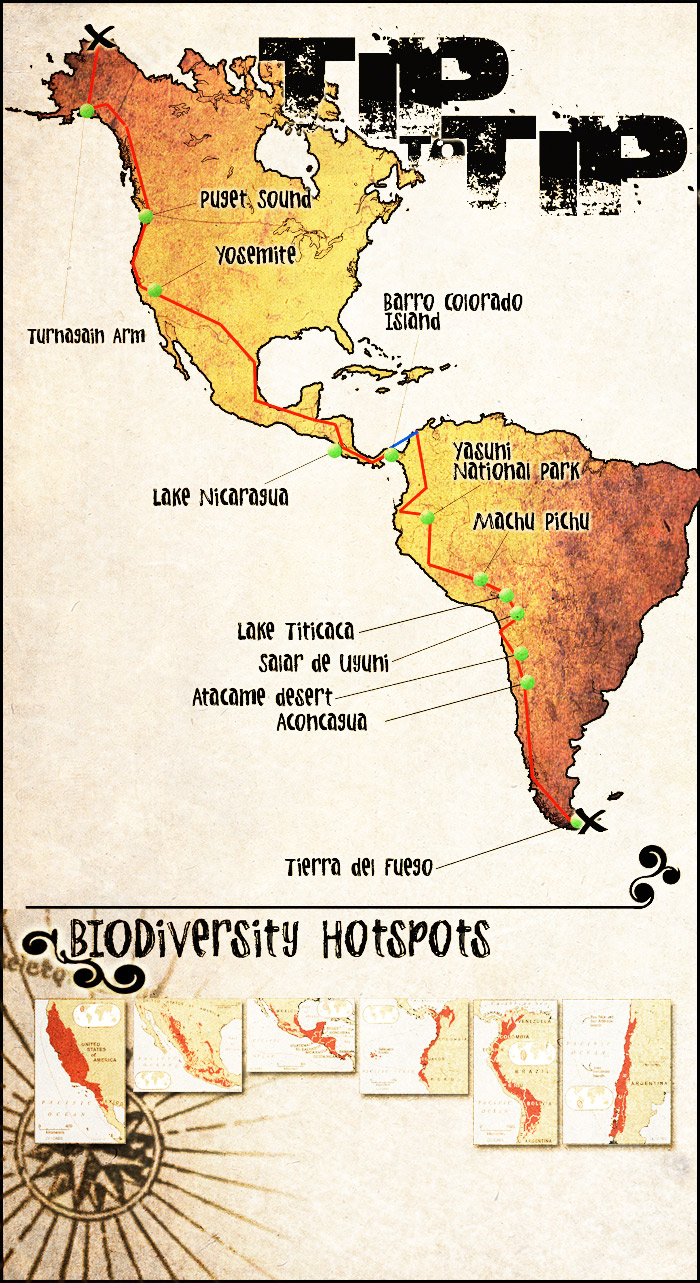
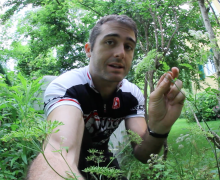
One of my favorite hikes in the islands is Ka’au crater in the back of Palolo Valley. When I was here as a graduate student I learned about this hike. It is not listed in any guide books as you have to walk through some private land and then pass some of the government no-tresspassing signs. I only list it here so that I have a link to direct friends to when they ask for the best hike in that area.

Getting to the trail head:

To get to the base of the hike you’ll need to drive up 10th avenue in Palolo Valley. Take a right turn towards the back of the valley at Waiamao Road. Follow it all the way down the road until it becomes a narrow single car road and past the Korean temple. When the sign says NO trespassing stop and park your car. If there is no parking here, because of residents, park further back down the road and hike up. I suggest carpooling out of courtesy to those that live up there. Pass the first sign on the road that says no trespassing. The road will split in two. Stay to the left and do not go up the hill. You will pass two houses. Be quite here. If the residents greet you just ask them politely if you can do the trail. You can’t do it without their consent. If they don’t come out, just hike up to the first fence. Walk around the fence and you’re on the trail.
Palolo-Valley

The trail

For the first 45 minutes you follow a water line made by the state. It will take you almost all the way to the first of the three major water falls. Once you get to here stop and relax and continue around to the other two. At the third waterfall you’ll be climbing up the waterfall itself with ropes. Its not a hike for the weak of heart.

Once at the top of the trail, we recommend that you hike all the way to the top of the ridge. That might take you another hour. In total the climb to the top took us about 3 hours going pretty slow taking photos etc. It took 2 hours on the way home. All in all I guess its about 7 miles round trip. Great hike. If anyone does the hike, leave a comment here and let me know what you think.

Screen shot 2010-04-06 at 4.50.57 PM

Video of the Hike from Rob Nelson

The following video was taken by me in 2001. Its old and a bit silly, but it’ll give you a good overview of the hike.

http://blip.tv/play/geMCl5xhAA

Northern Michigan Shooting Trip

The entire crew gets together every few months to film music videos and bond as a team.  We stayed in a beautiful logtreehouse in the woods working and playing.
Crew1

This is a shot of our set. Rob serves as central command and the crew works to get information from various places.

Crew2-Danni

This was Danni’s first time on a river in Michigan – but not her last.  She want’s to paddle this same river in the dead of winter.

Crew3-Dan

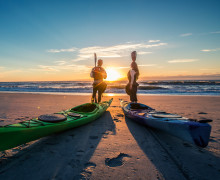
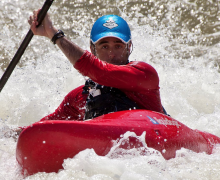
While filming a piece on Kayaking, Dan served as the cameraman’s navigator.  We paddled 5 miles of pristine rivers in the area.

Crew4-Jonas

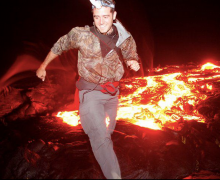
Many scenes include running through the woods.  Jonas of course loves this!

Crew5-Frog-Haley

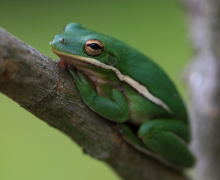
Haley found a wood frog in the area. In a few months this frog will be in freezing temperatures but survives because of a unique “antifreeze” in its blood.Crew6-Treehouse

This is where headquarters is located!

Northern-Michigan

Raw Nature on Animal Planet

http://blip.tv/play/hJsCgaHxTwA%2Em4v

he Ecogeek Giveaway

This fall we’re happy to hand out some excellent Animal Planet DVD’s about film makers making wildlife films. This style of adventure and filmmaking is very much like what we do and thus we thought it was a good fit for our first prize.

To get one of the five, all you have to do is help us test our beta site.  Log on to UntamedScience.com and sign in as an ecogeek through our facebook connect feature.  Then add information to your profile.  The 5 users with the best profile will be our winners.  We’ll contact you on October 5th, 2009 to send them out to you!

ABOUT RAW NATURE

Raw Nature follows filmmakers Matt Renner, Mitch Tanen, Gianny Truttman and Anneli Gericke as they travel across the world to document wildlife professionals working to help animals survive human encroachment.

Subjects include a man dedicated to rescuing poached sloth bears turned entertainers on the streets of India, and a Sumatra biologist who’s doing everything she can to help save the orangutan population from total extinction.

Viewers will also be provided with an up-close-and-personal view of animals — from Komodo Dragons’ whose spit will kill you to white rhinos who will charge at a moment’s notice.

In addition, the series will also emphasize conservation, preservation and an understanding that the world needs to ensure its own survival.

More information about Raw Nature

Learn how to create your own Nature Documentary

Untamed Science is dedicated to helping provide information on making your own science documentary. For more information on how to create your own nature documentary go to our How-to-Filmmaking Guide.

 US23

Iceland

http://blip.tv/play/hJsCgZO5CgA%2Em4v

Untamed Science crew member Jonas Stenstrom recently returned from Iceland as a part of this year’s production. The country is an island, slightly larger than the state of Oregon, that lies in the middle of the North Atlantic ocean with the tectonic boundary between the North American plate and the Eurasian plate, the Mid-Atlantic Ridge, running straight through the country. In fact, it is the only place you will able to go and see the Mid-Atlantic Ridge above sea level.

This location means that geologically, Iceland is extremely active with several volcanoes, countless hot springs and geysers. The English word GEYSER is actually derived from Geysir, or Great Geysir, and the oldest known geyser in the world is located in Haukadalur Valley on Iceland. The geothermal activity also provides most of the 300,000+ people living in Iceland with cheap electricity and hot water.

Iceland-map2

Iceland also has the largest glaciers in Europe. In total, about 11 percent of the country is covered by glaciers. More than 60 percent of the country is tundra and largely uninhabited.

I went there to document Iceland’s unique geological location and was met by a country beautiful in every way with amazing nature and incredibly friendly people.

The main purposes of my trip were to document climate and why different parts of the planet experience different climates, and to take a closer look at plate tectonics and Iceland’s geological activity.

Highlights of the trip:

US-silfra

Dive in Lake Silfra

Silfra is located in Thingvellir National Park about an hour drive from the capital Reykjavik. It’s incredibly interesting nature and history has given Thingvellir a place on the UNESCO World Heritage List.

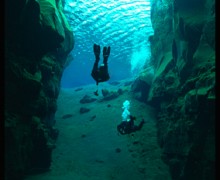
In the park lies Lake Silfra. The lake has become world famous amongst scuba divers for its incredibly crystal clear water. It also lies right on one of the fault zones that break Iceland apart, which is another reason I had to take a closer look (with great help from “Scuba Iceland” and Finni Finnbjornsson).

With us on the dive we also had underwater videographer Thorvaldur “Valdi” Hafberg with his great experience of shooting video in the waters around Iceland.

Glaciers

I also paid a visit to one of the many glaciers found on Iceland. Geared up with the right equipment we walked out on the compact ice that looks nothing like the snow and ice we are used to seeing in winter. Glacial ice is very different. And, the massive pack of ice creates its own weather systems. In our first hour we had rain twice, hail twice, snow, sunshine, storm and no wind–absolutely incredible weather fluctuations. It has to be experienced! But play it safe, glaciers can be treacherous. Right gear, training and a guide are crucial.

If you would like to experience Iceland the way we did, check out our professional contacts below:

Diving around Iceland

Finni Finnbjornsson
www.scubaiceland.net

Underwater videographer

Thorvaldur “Valdi” Hafberg
http://www.youtube.com/valdikafari

For any adventure experiences to see the true Iceland contact

Professional Iceland Tour guide
Villi Godi
www.theguide.is

More Underwater Video from Thorvaldur “Valdi” Hafberg of Iceland

Iceland-banner

Climbing Mount St. Helens

In an attempt to make a short earth science film about volcanos, we took a trip up Mount St Helens in Washington. For those planning to climb Mount St Helens, we thought we’d document our trip so that you can be as prepared as possible for the climb.

http://blip.tv/play/geMCgZa1CQA

General Information about the Area

Mount St Helens isn’t like most National Parks that I’ve been to. The main visitor center is almost an hour and a half from where you’d start hiking. In fact, the access to the mountain is from small roads – none of which go around the mountain. If you were at the Johnston Observatory, it might take you 3 hours to get to the other side of the mountain. Make sure you know where you want to go when preparing to climb the mountain. We recommend making your first destination the small town of Cougar, WA.
mt-st-helens-climbing-map

Hiking the Monitor Ridge Climbing Route

The hike to the top of the crater rim is a 4.5 mile one-way hike that takes you from 3,700 feet to about 8,300 feet at the summit. It took us 5 hours to get to the top while taking video along the way. The first 2 miles are through a beautiful old forest. The last 2.5 miles are steep and through rocky, unstable ground. The last section to the summit is ashy pumice – making it incredibly difficult to gain any forward ground. We would recommend getting to the top as early as possible as we heard that the ash starts blowing around on the summit more as the day progresses.

Rob-Nelson-on-Mt-St-Helens

Getting Permits for the Climb

To hike to the rim of Mount St Helens, you need a climbing permit. The park only allows about 100 people up the mountain a day and, since its a very popular climb, you should try and get the permit well in advance. It can be purchased online at active.com for around 15 dollars each climber. Once you register online, you can pick up your permit at the Lone Fir Motel in Cougar WA. They have a Climber Registration table set up just outside the motel’s main desk.

More Video of Mount St Helens

We found a few more video pieces of Mount St Helens that we thought you’d like.This one is from National Geographic

This one is from the BBC

https://www.youtube.com/watch?v=vBJ9xZws7ro

Biomimicry Institute

Untamed Science went to Missoula, Montana, to visit the Biomimicry Institute.

This institute works with a great approach to finding solutions for a sustainable future. Basically the message is, find ways to solve your needs by getting help from the most experienced teacher there is – Nature.

Does this sound weird? Well, let’s give a few examples.

If we live in a hot climate we need to figure out a way to cool our houses and likewise if we live somewhere cold, we would need to heat up our houses, right? Climate controlling air-conditions are really good for this, if it wasn’t for the amount of energy used to run them and other personal and environmental costs involved.
The question was asked, “There has to be some animals that have to deal with the problem of climate control in nature?”
The observation was termite mounds in hot African savannahs.

Scientists dug into how these small architects and construction workers dealt with the heat and found that the termites were building their mounds in a way that kept the inside temperature much less than the outside temperature just by regulating the air going through the mound (not many termites have access to regular air conditioners you know…)

The principle was used to buildings and showed to work both in hot environment (cooling the houses down) and in colder areas (keeping the houses much warmer than the outside). Who would have though termites were holding on such an incredible solution to a problem concerning so many people? All we had to do was ask… or at least open our eyes to new ways of thinking

Another example is the propeller rotor. For example the giant wind turbines that make use of the wind energy that is then converted to energy we can use. We try to build the propellers as efficient as possible to harvest as much energy as possible.

So, do you think this process could have anything to do with whales? Well, as a matter of fact yes.
Scientists observed Humpback whales and asked themselves if the humps on their fins could serve a purpose. Research discovered that the humps actually helped the whales to glide more efficiently through the water and a conclusion that maybe the same idea could be applied to propeller rotors to be more efficient. And, it worked.

And there are hundreds of examples like this already developed, where observations in nature have led to products that we use everyday. Insulation materials, adhesive compounds, ventilation systems, building material and construction strategies, surfaces that don’t absorb water etc.
Not to mention all the undiscovered examples.


Just another great reason to Never Stop Exploring Your World!

 BiomimicryInst


Cataract Canyon

The Colorado River is known for having some of the biggest and most fearsome rapids in the country.  While the Grand Canyon is usually known as being the largest and most difficult, I’ve found that many consider Cataract Canyon to have a just as tricky rapids.

On this rafting  trip down Cataract Canyon, the four of us (Peter, Rob, Hazen and Jaime) decided to take on the rapids.  I was along to film and be filmed, but have very little whitewater experience under my belt.  The waves were looking very gentle until we hit one small set of rapids just before The Big Drops.  That is where we flipped our raft.  Here is the short video we took. I hope it portrays a bit of how scary it actually was.

http://blip.tv/play/gYJ+gY3YfAA

For those of you who wonder what actually happened, we hit the button hole and rolled. After we got back on the raft Peter took the throw-line and dove overboard, hoping to tie the raft up before it floated into the big drops. It got pulled away from Peter, which sent us on our way, upside-down and alone.

Luckily for us, Hazen has a lot of experience in rapids.  We tried as hard as we could to eddie out on the edge of the river but had no luck for at least a mile.  Finally, we got to the side and after about an hour, were able to flip it back over.  This made us very worried however, to do the big drops.  We ended up walking Big Drop 2 and 2.5 and slept on a very rocky and wet shoreline that night.

The next day we flipped the raft again on Big drop 3, of which the camera was packed away tightly.

I would definitely raft Cataract Canyon again, but I’d make sure I did everything I could to keep the raft upright this time.

US19b


Mountain Biking in Moab

This week we are in Moab to film one of the most beautiful desert/desert scrub areas in the country.  While we are in the area we thought we’d film the piece using mountain bikes.

http://blip.tv/play/geMCgYuhQAA

This trail is known as the slickrock trail and it’s one of the most popular trails in Moab.  It’s considered to be the most difficult yet readily accessible trail here.  I’m not a mountain biker but I do have a lot of road biking experience and this was very challenging for me.  I fell a few times, and most of those times I slid all the way down the face of the rock.  Both Hazen and Jonas, who have more practice on the mountain bike would probably agree with me that it was extremely fun and exhausting at the same time.

moabmtn

Devil’s Den

An Introduction

Devil’s Den is a sinkhole in northern Florida that is fed by an underground spring.  It is set up as an ideal dive location and represents a unique look into the amazing underground cave networks of Northern Florida.
http://youtu.be/HaimftwZpkw

As seen by the crew

Untamed Science dove at Devil’s Den while doing a video on the unique process of sinkhole formation.  Since Devil’s Den represents an amazingly scenic sinkhole, we thought it would be great to start the video here.

devils-Den-Diving2

We found that we were extremely lucky to have visited the Den on a Thursday as we were the only divers there from early morning to about 3pm.  This allowed us to explore the 48 feet of depth to the floor without other divers kicking up silt.  It also gave us the chance to get some great images of the cave.

What we found was a type of upside down mushroom shape.  Before a small tunnel was built, the only entrance to the sinkhole was a small opening between two oak trees. As we enter the cave through the tunnel, we descend a couple flights of stairs before reaching the main dive platform.  From here we could dive outwards around a sunken dome.  Small grates block the inward and outward flow of water.

The wildlife of the cave is composed of small native fish including guppies, crappie and catfish.  Also of note is a giant catfish that must 50 pounds.

Other Interesting Stories about the Den

The Den is the site for many interesting fossil finds. Many of these bones are at display at the University of Florida in Gainesville. The animal remains date from the Pleistocene Age (2 million to 10,000 years ago).

Devils Den gets its name from the steam that would rise from the den on cool winter mornings.  The temperature of the Den remains around 72 degrees all year round, making for great steamy displays in the cooler months.

Contact Information

Visit the Devils Den Website to learn more about facilities and costs.

Devil’s Den
5390 NE 180th Ave
Williston, FL 32696
Phone: 352-528-3344


devilsden_diving


Roatan Caves

In March of 2009, the Untamed Science Crew ventured to Roatan, Honduras. Guided by caver Brian Chamberlain, the crew and deep sea explorer Karl Stanley discovered several unexplored caves, lowered themselves into heart-pounding adventure, and documented biodiversity in these unique environments. This is our brief story of two of those caves…

CAVE NEAR WEST BAY

caveroatan2

The cave pictured above was discovered near some Karst formations in West Bay. Hiking up the hill, we could hear bats and followed the sounds to the cave’s entrance. Once ropes were tied, we began the journey. The cave’s narrow and precarious opening descends to a muddy ledge from which we saw our first tarantula and an unfortunate frog. Bats continued to closely fly around us as we scaled down a rock wall to reach a landing and a sparkling, underwater lake.

We explored all the terrestrial parts of the cave, searching for alternate entrances and any life. We found no other entrances through the ceiling, so we waded in and each took a route that followed a different finger of the “underground river.” We are still unsure how far these channels go; perhaps there is an underwater entrance from the ocean. Navigating in these areas was tricky, to say the least. We had to lay on our backs and float face up, with about 3 inches of airspace above (less if you were wearing a headlamp). Inching back further into the cave through each passage was exhilarating (and good practice in prayer and techniques that center on mind over matter). The lack of airspace and tight-walled tunnels would be enough to send any slightly claustrophobic person into a panic attack, but the most disconcerting thing to me was that my ears were covered by water, so I couldn’t hear unless I stuck my face underwater. There were several places that you had to swim a little bit under some rock to get to the next bit with airspace, all the time wondering if the rain outside had any possibility of flash-flooding into this hole and making that couple of precious inches of air disappear. It was definitely not an adventure for the weak of heart.

batsRoatan

We intentionally entered the cave close to dusk so we would not disturb the bats when they should be resting. Failure to do this would eventually lead to the bats leaving or even dying. Even so, many bats remained and returned to the cave during our excursion. Hundreds of them flew through tight spaces and hung from the stalactite-covered ceiling. When there was was little light, we could still feel them whizzing by our faces and bodies.


CAVE NEAR WEST BAY #2

The next cave system we explored was also in West Bay.

On the way up, the crew paused for a gorgeous view of the island. Heading back down the hill, we happened upon a large crack, so we saddled up the rope and headed down.

caveroatan3

After descending 20 feet into the main cave, we held on to the walls and took turns shuttling across a muddy, 45 degree sloping ledge. Falling here would lead to an unknown fate down the blackness that hovered to our left.

cave_whipspider

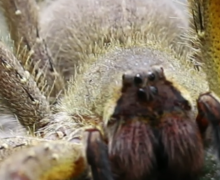
Once we descended a little further, we gained better footing and took a better look around. We filmed the elusive amblypygids that make these caves their home. Many people call them “tailless whip scorpions” or “whip spiders”, but they are neither spiders nor scorpions. They are a closely related arachnid, though. If you’re interested you can view another video we did on amblypygids.

The formations in this cave were even more spectacular than the last–soda straws, saw tooths, draperies (cave bacon), helictites and several more that made me wish I were a geologist.

Getting out of this one was easier than getting in, and we will definitely be back with more gear and more light. I can’t wait to find out where this cave goes and what waits in its dark, unexplored corners.

Still interested in Geology in Roatan?

Here is a brief article about some of the island’s karst formations.


roatancaves_0