How is gaming and science progressing in 2022?

The science of games is more profound than most people realize. Many people spend their time comparing mobile vs. desktop games and the differences in gaming experiences. Often, the deeper science is left behind, despite being the cornerstone of what keeps people engaged in the gaming world.  
Early Studies  

Yan and El-Nasr conducted one of the first studies on visual attention in a 3D gaming environment in 2006. They were able to assess how graphic search patterns differed by employing eye tracking to capture and measure the visible behavior of people playing either a shooting game or an adventure game.  

In a pilot study, the researchers discovered that participants were more inclined to keep their gaze fixed on the middle of the screen when playing the shooting game. In contrast, participants were more likely to explore the entire area when playing the adventure game. According to the authors, such data might “…be utilized to guide designers on arranging colors and item locations to excite attention and minimize these difficulties.”  

Immersion  

Immersion is a contentious notion in video game research, although it is mainly described as a sense of engrossment in the game. It is manifested by increased attention on the game and, conversely, a decrease in attention to external stimuli. The more engrossed a person feels, the more absorbed they are in the game.   

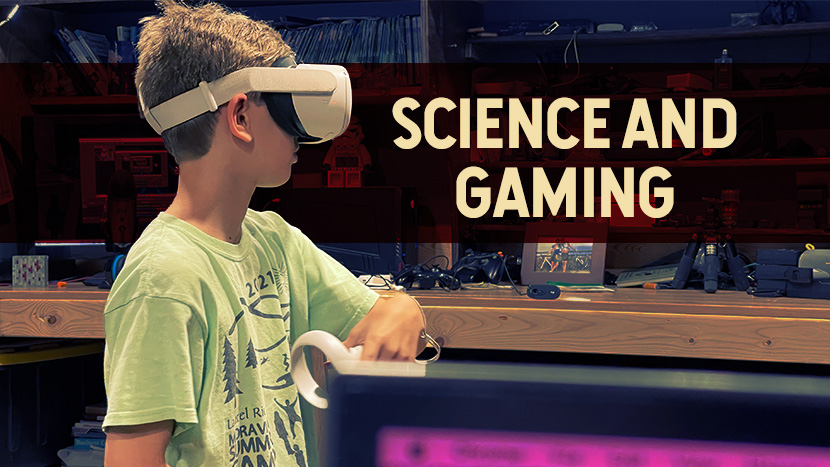
Immersion is essential for VR gameplay, one of the fastest-growing video game genres. As interest and investment in VR/AR devices develops, testing will become increasingly crucial to ensure that content is generated in the most engaging and immersive way possible.  

GSR (Galvanic Skin Response, referred to as electrodermal activity in the study) and ECG recordings of heart rate were utilized by researchers to evaluate correlations to mental states, including emotions of immersion. These metrics were used to examine participant responses to three prominent commercial games (notably, “Prey,” “Doom 3,” and “Bioshock”). The researchers discovered that heart rate was inversely connected with immersion (and flow), implying that a lower heart rate was associated with enhanced sensations of immersion while playing.  

Other studies have looked at how immersion in a VR environment affects heart rate variability (HRV) compared to watching a 3D movie. The VR environment appeared to boost emotions of immersion and was linked to a rise in HRV. This suggests that the participants were experiencing an increase in physiological arousal while they completed the cognitively challenging activity.  

Jennett et al. (2008) took a similar strategy, evaluating sensations of immersion using a questionnaire and eye-tracking. The researchers discovered that ocular activity could objectively measure immersion, with fewer fixations indicating more immersion. This implies that the more engrossed a person feels, the longer they stare at the game without moving their gaze.   

It is envisaged that by linking self-reported emotions to biosensor data, future research may be able to utilize such data as a surrogate for these sensations. If shown to be trustworthy, this data might give comprehensive feedback on how participants respond to the games.

https://unsplash.com/photos/ipDhOQ5gtEk  

Flow  

Flow is defined as “the ideal psychological experience that might result from engaging in an activity.” Various elements determine the flow state, but it mainly boils down to the combined sentiments of mastery and immersion when performing a job.   

They discovered that the flow game component induced a substantial difference in zygomaticus significant and orbicularis oculi activity compared to a boredom-inducing game component. This shows that flow states are perceived as largely positive, which is crucial for having a fun gaming experience.  

The researchers also employed GSR activity to assess degrees of physiological excitement, discovering a substantial rise in the flow level compared to the boredom level.   

Several researchers have also shown that a basic four-electrode EEG recording (and technical analysis of the data) may detect emotions of flow when playing video games. These studies imply that flow is a crucial component of a good gameplay experience that can be recognized and analyzed to enhance how video games are created.  
Presence  

While comparable to sensations of immersion, presence is described as the sensation of living (at least temporarily) within the game. This occurs on a spectrum, with total detachment at one end of the spectrum and intense emotions of physically being within the game at the other.  

A study showed that the more engaged a player is with the game, the more enjoyable their experience would be.   

The researchers also discovered a link between GSR activity and sensations of presence in the game, although no such association was found in the ECG data. Individuals who experienced higher levels of presence in the game had a lower decline in GSR activity following task completion (compared to participants who reported low levels of presence), indicating that their physiological condition remained more stable at the end of the game.  

Another research used eye-tracking and EMG to examine perceptions of presence in first and third-person perspectives of video games. 

These findings might be extended into markers of emotions of presence in the future, offering insight into how the experience varies over time inside a game. 

The more we understand the technical science of games, the more likely we are to be able to create games that will fully engross players in a world where they get into an immersed flow state. They will completely disregard extraneous stimuli in this state, becoming fully present and enjoying the game to the fullest.


How to Conduct Scientific Research

Are you interested in conducting scientific research? Whether you’re a student getting ready to start your undergraduate career, or a postdoc looking for new ways to expand your horizons, this guide will teach you everything you need to know about the process of doing scientific research.

In this post, we will outline the basic steps involved in conducting scientific research, from identifying the question to publishing your findings. We’ll also discuss some of the common mistakes researchers make and how to avoid them. So if you’re ready to start your own journey into the world of scientific discovery, keep reading!

Step 1: Identify the Question you want to answer

The first step in conducting scientific research is to identify the question you want to answer. This may seem like a simple task, but it’s actually one of the most important steps in the process.

After all, if you don’t know what question you’re trying to answer, it will be very difficult to design an experiment that will allow you to get the answer. There are a few things to keep in mind when choosing a research question:

It should be something that you’re interested in. If you’re not interested in the topic, it will be very difficult to stay motivated throughout the process.

The question should be something that has not been fully answered by previous research. You want to choose a question that you can add new insight to. The question should be something that is achievable within the timeframe and budget you have available.

Step 2: Gather Information from Previous Research

Once you have identified a question that you would like to answer, the next step is to gather information from previous research on the topic. This will help you to better understand the question and to choose the methods you will use to collect data.

It is also important to read about previous research so that you can avoid making the same mistakes that other researchers have made. There are a few different ways to find information on previous research.

One way is to search for it in academic journals. Another way is to attend conferences and presentations on the topic. You can also talk to other researchers who have worked on similar topics.

Step 3: Choose the Methods you Will Use to Collect Data

Once you have gathered information from previous research, the next step is to choose the methods you will use to collect data. This is a very important step, as it will determine how accurate your results are. There are many different types of data collection methods, and the one you choose will depend on the type of question you are trying to answer.

Some common data collection methods include surveys, interviews, focus groups, and observations. Once you have chosen a method, it is important to design your study in a way that will allow you to collect reliable and valid data.

Step 4: Collect Data and Analyze It

After you have designed your study and chosen a data collection method, the next step is to collect data and analyze it. This is usually done by conducting experiments or collecting data from existing sources. Once you have collected the data, it is important to analyze it carefully so that you can draw conclusions from it.

There are several ways to analyze data, and the method you choose will depend on the type of data you have collected. Some common methods of data analysis include statistical analysis, regression analysis, and factor analysis.

Step 5: Draw Conclusions Based on Your Findings

Once you have analyzed your data, the next step is to draw conclusions based on your findings. This is where you will answer the question you posed in Step 1. To do this, you will need to interpret your data and make sure that the evidence supports your conclusions.

It is also important to remember that scientific research is always ongoing. Even after you have published your findings, other researchers may try to replicate your study or build on your work. So be prepared for your work to be critiqued and for your findings to be challenged.

Step 6: Share Your Findings with Other Researchers

The final step in conducting scientific research is to share your findings with other researchers. This can be done by presenting your findings at conferences, publishing them in academic journals, or sharing them with other researchers in your field. Sharing your findings is important because it allows other researchers to build on your work and advance their understanding of the topic.

Mistakes to Avoid When Conducting Scientific Research

There are a few common mistakes that researchers make when conducting scientific research. These mistakes can lead to inaccurate results and it is important that you aim to avoid them if you wish to be successful in college.

One common mistake is to choose a method of data collection that is not well suited to the question being asked. For example, if you are trying to answer a question about human behavior, it would not be appropriate to use a data collection method that only allows you to collect data from animals.

Another common mistake that researchers often make is to fail to analyze their data carefully. This can lead to inaccurate conclusions being drawn from the data.

It is important to remember that data analysis is not a simple process, and it takes time to do it properly. If you really struggle to conduct scientific research and it is part of your assignment, consider seeking assignment help. There are many reliable services that can help you with your academic papers, and they will also do the research for you.

Closing Thoughts

Conducting scientific research doesn’t have to be difficult. By following the steps outlined above, you can avoid common mistakes and ensure that your research is conducted properly.

6 Brilliant LGBTQ+ Filmmakers

Thanks to strict censorship and varying degrees of prejudice, onscreen representation does not share a similar story to the LGBTQ in Fashion.

The New Queer Cinema flourished in the 90s, giving rise to an age of independent filmmakers from the LGBTQ community. About three decades later, movies from the queer community are winning Oscars. So who are the moving parts making such significant progress for the queer community?

Here is a list of brilliant filmmakers working to diversify the cinematic world.

The Wachowskis

Lana and Lily Wachowski, formerly known as Larry and Andy, are renowned film and television directors, producers, and writers. They are both Trans women.

Throughout the years, the sisters have worked together for the better part of their careers. Their directing debut was the film Bound, which premiered in 1996. Their second film, The Matrix, which premiered in 1999, was their ticket to fame. The movie was such a huge success, winning them the Saturn Award for Best Director.

In 2003, the sisters wrote and directed the sequels to The Matrix – The Matrix Revolutions and The Matrix Reloaded. Over the following years, they remained actively involved in the production of the Matrix franchise.

Later in 2005, the sisters adopted the David Lloyd and Alan Moore novel, V for Vendetta. Three years later, they released Speed Racer.

The first season of the series, Sense8, debuted in 2015 on Netflix. However, the second season was the first major project Lana did without Lilly. Since Sense8, the two have been working separately.

Raised by an atheist father and a Shamanist mother, two sisters describe their religious stand as non-denominational.

Lana was the first Hollywood director to identify as transgender. She also received the Human Rights Campaign Visibility Award in 2012. Later in 2014, she was awarded the Freedom Award at a gala in Chicago.

Lilly came out in March 2016., making her first public appearance at the 27th GLAAD Media Awards. She was honored with an award for Outstanding Drama Series for her Netflix hit, Sense8. The successes of these two can be a great conversation starter for those of you mingling on the Taimi app.

Andrew Ahn

Andrew is an American screenwriter and film director behind the feature films Driveways (2019) and Spa Night (2016). He is an English graduate of Brown University and has a Masters in Film Directing from the California Institute of the Arts.

In 2011, he wrote, edited, directed, and produced a short feature, Andy. At the San Diego Asian Film Festival, Andy won the Best Narrative Short Award. The film has been screened at numerous film festivals, including the Hong Kong Lesbian and Gay Film Festival and the Vancouver Asian Film Festival.

The next year saw the production of Dol(First Birthday), and it premiered at the Sundance Film Festival. This piece went ahead to win numerous awards, such as the Austin Gay and Lesbian International Film Festival and the Grand Jury Award for Outstanding Narrative Short Film. According to Andrew, this film was about coming out to his parents as gay.

Between 2013 and 2015, Andrew Ahn worked on numerous films and a documentary with Jeffery Schwarz.

Spa night, his feature film is about a Korean-American teen who is yet to come out. Following his desires, the teen gets more than he bargained for at a Korean Spa in Los Angeles. The screenplay was developed at Sundance Screenwriters Lab, and it got to participate in the Independent Screenwriting/Directing Lab.

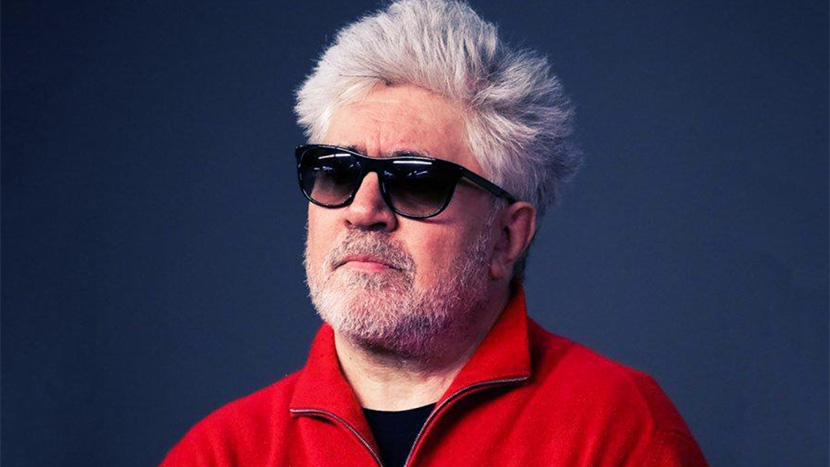
Pedro Almodovar

Pedro is a Spanish actor, screenwriter, film director, and producer. He is openly gay and has been with his partner, Fernando Iglesias, since 2002.

Most of Pedro’s work is marked by bold colors, melodrama, complex narratives, irreverent humor, and glossy decor. His most prevalent subjects tend to revolve around family, identity, passion, and desire. His rise to fame as a screenwriter and director was during the cultural renaissance, La Movida Madrilena.

Pedro started achieving international recognition in 1988. He was nominated for the Best Foreign Language Film for the comedy-drama Women on the Verge of a Nervous Breakdown. He went on to win Academy Awards for Best Original Screenplay and Best International Feature Film. Over the years, Almodovar has won over fifty awards.

Although his parents wished him to be a priest, Pedro believed that cinema had more to teach him than a priest would from the age of eight. Although he was pursuing film-making, Pedro still managed to write articles for major magazines and newspapers. He also managed to publish a novella and several short stories.

Andrew Fleming

Fleming is a film and television director, screenwriter, television and film producer, television writer, and actor. His 2018 film, Ideal Home, is based on his personal life as a gay parent.

He wanted to break down mainstream media’s depiction of gay couples.

Fleming is openly gay, and he co-parents his son with his partner of 23 years.

Andrew has directed close to ten films, with Nancy Drew and Hamlet 2 being his most popular projects. He has also directed over twenty television shows. As an actor, he has starred in four films.

In 2018, the film Ideal Home won the Best Comedy category at the FilmOut Audience Awards. His other works have been nominated for several prestigious awards, such as the Gold Derby Awards.

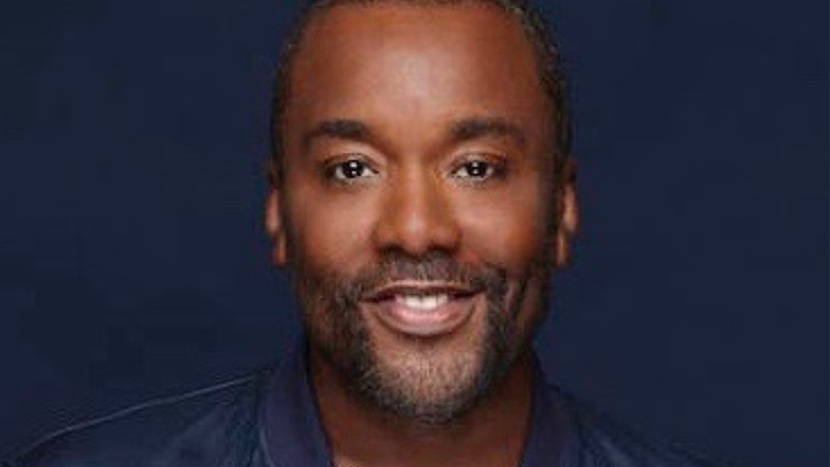
Lee Daniels

Lee Daniels is an African-American producer, film director, and screenwriter who was the first black person to produce an Oscar-winning film solely. Monster’s Ball was his first project as a producer, and Halle Berry won an Academy Award for Best Actress. His directorial debut was in 2005 with the film Shadowboxer. The 2009 film, Precious, got six nominations for Academy Awards, two nominations for Best Picture and Best Director Awards. In 2016, Daniels was honored with a star on the Hollywood Walk of Fame.

Lee and his partner Billy Hopkins adopted Clara and Liam, Daniel’s biological niece and nephew. Although Lee openly admits to being gay, he clarified that he was sexually fluid.

Lee Daniels is the writer, co-creator, director, and executive producer of Empire. The show has won a Grammy, Golden Globe, and Primetime Emmy, amongst many other awards.

Desiree Akhavan

Akhavan is a New York-based actor, producer, film director, and screenwriter. She identifies as a bisexual woman. Her most popular projects include the films Appropriate Behavior and The Miseducation of Cameron Post.

Desiree is a very active advocate for the LGBTQ culture in film. According to Desiree, her work got rejected across all networks because the American consumer was “terrified of female sexuality.” Queer culture is slowly inching into mainstream cinema thanks to her relentless activism.

She has won numerous Grand Jury awards, including the San Diego Asian Film Festival, Sundance, and the Valladolid International Film festival. In 2019, Queerty named her one of the trailblazing persons who are active to ensure society continues to work towards acceptance, equality, and dignity for queer persons.

Conclusion

There are so many other LGBTQ filmmakers making breakthrough changes in the film industry. Although the progress is nowhere near equal representation, there has been significant growth over the last fifty years. The community is inching closer and closer to the dream, and we have our filmmakers to thank.

Do you Need a Degree in Scientific Research?

If you are interested in doing scientific research, for sure you have quite a lot of questions in your mind. This job seems dreamy and interesting, especially because you have the chance to discover a new cure, a new solution, a new option. 

But managing to do this takes years of practice and research. It is not like you enter a scientific laboratory and you can start your research without any education in this area. Scientific research poses great importance to the evolution of humanity, so people who conduct it must be well-prepared. 

The fields where scientific research is done are diverse, from environment and chemistry to political sciences, medicine, and psychology. So, if this job seems interesting enough to catch your attention, you may want to find a few things before delving into it. Read on to discover the responsibilities of a scientific researcher. And, of course, the answer to the question of whether you need a degree for it or not. 

The Responsibilities of Scientific Researchers 

If you think about a scientific researcher, you are probably portraying them in a laboratory, with glasses, and doing experiments. This view is not far from reality. However, there are a lot of other things scientific researchers do, apart from staying in laboratories with their white robes. 

Before actually starting to research, they need to be involved in a preparation phase. It is the same as when writing an essay. You have a given topic, but you first need to research and plan your writing, as an expert essay writer says. You need to organize the information you have gathered, details you want to include, and facts and stats you want to mention in an outline. Like this, your essay will be compelling. 

Well, a scientific researcher is doing something similar. They need to plan the experiments and all the details to take into account. Keep in mind that there are a lot of factors that can intervene in the experiment and alter the findings, so it needs a high degree of attention and knowledge to plan the experiment accordingly. 

Depending on the experiment type, a scientific researcher might need to conduct fieldwork or collect samples. So, not all work is done in a laboratory. Apart from these responsibilities, there are a few more. A researcher needs to also write reports on the experiment conducted, but also monitor the progress or changes if the experiment is a longitudinal one. Also, they need to coordinate all the team members towards achieving the same goal, and also to mentor juniors who want to enlarge their knowledge. 

So, it seems that there are a lot of responsibilities a scientific researcher has. But do you need a degree to conduct scientific research? 

How to Become a Scientific Researcher 

Well, if all these responsibilities are simply describing your dream job, then you should pursue it. To be a scientific researcher you need at least a bachelor’s degree. As highlighted above, you need a high degree of knowledge and experience to conduct scientific experiments. 

There are a lot of factors that can mediate or moderate the relationship between the variables you are studying. And if you do not measure and manage them appropriately, your experiment might be ruined. During your college studies, you will learn how to identify these factors and how to handle them. So, you need to start your journey towards becoming a scientific researcher by getting your bachelor’s degree. 

Choose a subject or topic you are passionate about. A topic you want to involve in experiments and scientific research after you graduate. And, of course, the next step after graduating is getting your master’s degree. 

It acts as a specialization that can help enlarge your knowledge and delve deeper into the subject. During your study years, you will read a lot of studies and research published in well-known journals. Apart from keeping yourself updated with the latest findings, you also see how research is done at the present. Which can act as a source of inspiration and can narrow your research interests. 

The perfect journey for someone who wants to become a scientific researcher is to get their Ph.D. too. This is because you will need to conduct scientific research or experiment to graduate, so it might be the first hands-on activity you will be involved in. 

However, it is recommended to enroll in some courses or get certifications before getting your Ph.D. This will allow you to get the experience you might be looking for. Experience that will help you understand the mysteries of scientific research, how it’s done, which are the common mistakes, and so on. The knowledge that will help you hone your skills and become better in your pursuit. 

Skills to Develop 

Apart from the theoretical knowledge, you will gain by enrolling in college and pursuing your studies, you also need to work on developing your skills. There are a few sets of skills that you need to hone to be successful as a scientific researcher, say experts from a professional essay writing service

For example, you need to be able to communicate clearly and smoothly both written and spoken. You will need to apply for grants to support your research, so communication skills are crucial. Apart from these, you will need excellent critical thinking skills. They will help you decide on the best method of researching or solving an issue. Analytical skills, attention to detail, and patience are other skills that describe successful scientific researchers. 

Final Thoughts

If you are looking for a career in the scientific community, you need to prepare for it. However, if you have decided this is your dream job and all the responsibilities seem perfect, your journey will be a pleasant one. You need a degree to start scientific research as it will help you develop theoretical knowledge. 

However, you can also get certifications and enroll in courses to help you expand your knowledge and hone your skills. Even though it may seem that it will take you a long time until you become a scientist, you will learn a lot along the way. Things you need to become successful in your attempt.

Understanding Your Brain to Help You Learn Better

Without any doubt, the brain is the most powerful and sensitive organ in the human body. Just as a conductor coordinates every motion of the choir to produce the perfect melody, so must the brain control every activity that runs in the body. The entire body relies on it for coordination to maintain maximum functioning. The brain is the core of the human nervous system, which includes the brain and spinal cord, and over 85 billion nerve cells, showing how powerful and sophisticated the brain is. In fact, the brain is said to require more energy than any other body organ, judging by the loads of jobs it undertakes. Scientific evidence proves that every process in our body, whether conscious or unconscious, is controlled by the brain. 

When the brain does not function optimally, many things go wrong with the rest of the body, just like the music becomes messed up when the music conductor does a lousy job. No matter how complicated and complex the brain may be, it is not impossible to comprehend its functioning system effectively and take advantage of it to get the most out of learning.

What happens in the brain during learning?

Neurons are nerve cells that convey information to the brain and back to other body sections in the form of electrical signals. For example, if you touch a hot object, an impulse is sent to the brain through nerve cells, and the brain responds by sending a message to your skin cells that what you have touched is hot so you can take your hands away. The same thing goes for when you write, think, run, talk, breathe, or say you’re having fun by placing wagers on a Parimatch betting site. Everything you do depends on the signal transmissions between these neurons and the brain; because they’re connected to every part of the body. In fact, a single neuron is said to be linked with thousands of others, forming a web of connected neurons wired to every single part of your body.

When learning, impulses associated with whatever we are learning are transmitted through neurons to the brain, creating a connection path between nerve cells. These connections are susceptible to specific changes; they can be changed, improved, modified, weakened, or eliminated. This ability of the brain to effect these changes is referred to as neuroplasticity. Therefore, the more you learn and practice things, the more the connection becomes stronger. It’s almost as if the information being transmitted to your brain through learning is now travelling down a more familiar road, making transmission more effective. 

So, strengthened connections result from consistent impulse transmission due to regular practice or learning. The impulses now deliver quicker and more efficiently, making you gradually better at what you’re learning. This entire process may be likened to visiting a new location for the first time. Initially, it is tough to remember where you’re going; however, after continuously traveling through that route for a long time, you grow pretty comfortable with it, and it becomes easier to navigate. If you stop traveling for an extended period, it may be tough to retrace your steps; Similarly, quitting whatever you’re learning halfway only weakens the connection paths in the brain gradually until eventually lost.

How to learn better

The human brain is incredibly dynamic. As we grow, it undergoes a series of changes that begin when we are babies in our mother’s womb. These changes are continuous throughout a lifetime, so we tend to forget most of the things that happened so many years ago. Basically, the neural connections associated with those incidents are weakened and can’t be quickly recovered by the brain. Therefore, due to the dynamic nature of the brain, it is essential to consistently practice and learn for more effectiveness, as this helps improve the neural connections associated with whatever you are learning.

The benefit of rest

While constant and repeated practice is essential, rest is also necessary to enhance brain functioning in learning. Aside from the fact that rest allows us to recover energy and revitalize so that we can continue learning, rest has also been proved to affect our learning effectiveness in a significant way. This is associated with the receptors of impulses on the surfaces of neurons transmitting information to the brain. 

These receptors receive nerve impulses in the form of electrical signals from other neurons. However, repeated use of these nerve cells and receptors may lead them to wear down in a way that interferes with signal transmission. Therefore, for proper maintenance of these receptors, rest is essential. Periodic breaks will allow the neurons to function more effectively in their communication of nerve impulses, enhancing learning and reducing forgetfulness.

Conclusion

Because of how the human brain is structured, constant and regular practice is vital for optimal learning. However, occasional rest is also required so that the brain performs more efficiently. Visit Parimatch today for an exciting betting experience. 

Understanding the Science Behind Saving Money

If you are not a finance person, looking over your financial statements and bank account can feel overwhelming. But however unpleasant this task might seem; it is important to do so on a regular basis. The good news is that even if dealing with and saving money feel challenging, there are a lot of ways you can set aside more.

Deal with Debt

When you owe debt, especially if it is at a high interest rate, it becomes incredibly difficult to set aside as much money as you should. If your monthly expenses are too high, your income won’t stretch to include savings. If you have debt from school, consider refinancing it with an Earnest student loan refinance. That way, you can free up more funds to put into savings.

Think of Bonuses as Money as Well

If you get a bonus at work, a tax refund, or another unexpected amount of money, it can be tempted to want to spend the funds to reward yourself. However, this is money just like your paycheck, and if you were to have earned those funds over several months, you most likely would not have been as tempted to spend it right away. Perhaps you would have put it into savings instead of running out to spend it. Just because you get a one-time payment does not mean you need to run out to spend it. Instead, consider meaningful things to do with these funds.

Don’t Be Lured by Sales

Just because something is on sale does not mean it is a good deal. It is important to avoid buying something just because it is on sale since you might not actually want or need it. One of the best money saving tips is to think about sales in terms of what you are getting. Even if an item is on sale for $100, you are still spending $100 if you choose to purchase it. Of course, sales are helpful if you are already going to purchase the item and find the sale price is better than other prices you have been seeing recently. But if it’s a larger purchase, you should be comparing prices over a matter of weeks so you will know a good price when you see it. That way, you can avoid making an impulse purchase.

Consider the Value, Not the Price

You have many options when it comes to consumer goods like food and household products, but just because the price tag is different on two options does not mean the lower-priced one is the best deal. Organic product might be more costly than regular product, but the organic items may have more value to someone looking to live a more natural lifestyle. For many items, such as household goods, getting a name-brand product might mean it lasts longer than its store brand equivalent. Still, consider what the value is to you. In some cases, the less expensive item might be a better option, while in other cases, the more expensive item may offer a better deal.

7 Behavioral Science Tips for LGBT-Person to Improve Your Dating Odds

Are you a single gay male or female who has ever fretted about your chances of finding a love match? The golden piece of advice: don’t fret! Crowded bars or busy gay nightclubs are never an ideal environment for connecting with prospective partners. If you haven’t been successful until now, this will have nothing to do with anything you’ve done. You have the potential to improve your dating odds. We’re going to provide you with seven tips that are based in behavioral science research that will help guarantee your success.

1 – Be communicative – use online dating to improve your skills

More and more individuals are choosing to go down the digital route when it comes to matchmaking. Surveys consistently reveal the LGBT community are particularly enthusiastic online daters. So why should using a dating service to arrange a gay discreet hookup be any more efficient than the traditional offline methods? Simple. The secure communication channels offered by these outlets are always conducive to candid and amicable discussions. Gay guys who might be reserved in social situations will find an inner resolve when presented with kindred spirits in these virtual settings. You can find all about someone’s background before reaching out to them. You’ll also have some time to think about composing messages, and the more confident you become at exchanging these, the greater the chemistry will be.

2 – Use the 70/30 rule in your online profile

There’s a definite knack to construct an effective profile on an LGBT dating resource, whether it’s a desktop website or a downloadable app. The key is to devote 70% of the text to describing who you are in some detail – without becoming too wordy. Try to focus on summarizing your best points and most interesting attributes and achievements. The remaining 30% should be about describing exactly what you’re looking for in an LGBT partner. Be as upfront as possible to avoid disappointment further down the line. If you like a particular body shape, hairstyle, or are even looking for somebody well-tattooed, mention all these points at this stage.

3 – Know what you want and when you want it – be ready for the first date

It’s always good to have some idea of what you are looking for in a gay partnership. Online dating outlets will present you with a treasure trove of possibilities, so there is no need to stick with the first person who catches your eye.

4 – Honesty during communication

These outlets are particularly good for individuals who have always found themselves to be a little hesitant when reaching out to prospective partners. The best way to overcome shyness is to be honest when you are getting to know another gay single. Don’t be tempted to invent stories about yourself. Instead, make sure that others receive a completely accurate picture of you.

6 – Always be reliable

You might get round to discussing the ideal gay bar where you might like to eventually convene for your first liaison. It’s up to you to know exactly where this is and to plan your travel accordingly so that you arrive on time. There is nothing worse than someone who can’t be relied upon to commit to arrangements. This could well be an indication of a half-hearted attitude towards taking your relationship further.

6 – Keep certain truths ‘in the vault’

Many of us are harboring deeper ‘secrets.’ Perhaps you have spent some time in rehab or have experienced a particularly volatile relationship in the past you would rather not dwell on. Don’t broach these subjects during initial conversations. There will be a time and a place for admitting anything to a new partner, but that’s further down the line after you’ve established trust.

7 – Prepare for a face-to-face rendezvous

The final tip is to ensure you are both in agreement about the type of date you would like to work on. Discussed the possibilities first and in some detail. Establish your new partner’s favorite hobbies, whether they prefer going to the movies, sports events, or the latest gigs. These will all help to form a more rounded picture of your new LGBT love interest.

We have provided our ‘magnificent seven’ tips that will provide you with the skills you require to engineer a fulfilling LGBT relationship. This list is far from exhaustive. Perhaps these will give you the inspiration to add some of your very own. You can always augment these tips by doing online research into good conversation pointers. Or finding out more about human biology – what makes us tick physically can sometimes be a good indicator of how our relationships are likely to work out. But don’t get too hung up on these suggestions. None of them is really ‘cast in stone.’ It’s mostly down to common sense!


How to Be Successful in College

Attending college is one thing but being successful is another. People often have different goals they want to achieve and values they uphold, so success has a different meaning for everyone. And while you need to work hard to be a successful college graduate, you also need to learn how to pace yourself as well. Here are a few tips to help guide you towards college success.

Apply for a Scholarship

Whether you’re just starting out or going back for a broader education, you need to see what you can do about financing it. The cost of your education can get in the way of your success. The price of a degree varies on what field it’s for and its type. And while some degrees are less expensive than others, the costs can still get in the way. This is especially true for people who are on a tight budget.

Student loans may be easy to acquire, but they have to be paid back over time. This isn’t always the easiest to do because of the interest rates attached to them. However, there’s a way to focus on college without having to pay a dime. You can apply for a scholarship to cover the costs. Having scholarships for college students available is a non-taxable amount of money that’s given to help pay for a student’s education. You may have heard that scholarships are only awarded to those with only high grades but you never know without simply applying.

Identify Your Learning Style

If anything can keep you from success, it’s not knowing the best way to learn. You need to spruce up your hectic college life to support the best possible learning environment. Granted, everyone is different, and as such, learns in different ways. Some people are auditory learners, which means they process and respond to subjects that they can hear. Auditory learners thrive in lectures and reading aloud. Other people are more visual learners, which means they learn better if they can observe it. Whiteboards and chalkboards are necessary for these types of people. Knowing your best learning method is important because it can make the process less stressful. It can also keep you from procrastinating and help you focus on the material presented to you.

Balance Things Out

Success means more than dishing out as much work as you can. It’s also about knowing your limits as well. It may be tempting to breeze through everything and get it out of the way. But this isn’t always the best course of action, especially if you have other responsibilities such as a job or raising children. You can balance out your coursework with your personal life by creating a schedule. You can focus on your studies every other day while keeping the others free. This can reduce the pressure and give you more time to yourself. It’s also a great way to sharpen your time management skills overall. Burnout is real, and the more you stretch yourself thin now can lead to issues down the road.

Playing Safe in Poker: A Boring Game or A Strong Tactic?

There are a lot of theories out there about what makes a good poker player, but not so much on what makes an entertaining poker player. Are the two one in the same? That depends on your outlook.

It’s possible that that question comes down more to marketing. You could be the worst poker player ever, but the personality you exude while you’re at the table might be enough for you to be considered entertaining.

But what about the poker playing itself? Does safe poker playing equate to boring entertainment? This is a problem that professional poker players might have to grapple with, as they enter tournaments and stream their professional playing for the sake of an audience. Is there going to be an audience if their style of winning has no thrills? We explore in this guide.

What is the safe approach?

Depending on your definition of “safe”, when it comes to styles of playing the safe approach is probably some combination of tight and passive playing or tight aggressive playing. To be tight means you are careful with your bets, but a passive player will need to feel secure before playing their hands, will limp preflop and check and call a lot after the flop.

An aggressive player on the other hand will play aggressively when they have a hand they like. This is considered the superior of the style combinations for both player and producer. A tight aggressive player is more likely to succeed in their game, which in itself makes for good entertainment, but it also lacks the drawbacks of playing tight passive: which is the possibility that you might not play at all.

So, you can see where two different ideas of “safe” emerge. There is a better way to play, which is proven to see more winnings, but there is also more risk to the style.

But, as the old adage goes, “Nothing ventured, nothing gained”. Sometimes you need to take a risk to progress, and poker is definitely an instance where this is the case.

Is it what’s best for a good poker show?

Of course, if you are someone like Mr. Daniel Negreanu, or any other member of the GGTeam on GGPoker (https://ggpoker.co.uk), winning the game and therefore the money is going to be simply the main priority at the poker table. Streamers are also looking to put on a good show, and so will welcome any loose playing, any high stakes bluffs, and any other risky moves that will make for the tension in the room reaching boiling point.

And the same goes for the producers and crew behind the World Series of Poker. It isn’t hard to find the tension rising as the games go on, because, as the biggest poker tournament in the world, the WSOP is a melting pot of different poker styles and formidable foes, but if you were to find yourself at the tables amongst the best of the best, a good strategy would be to play it safe. Let the producers worry about what makes a good game, and there will be plenty of other players to pick up the entertainment slack.

Besides, is there anything more entertaining than winning a massive pot?

If you are a streamer, and you can make your playing style entertaining without outside influences, by offering glittering commentary, strategy breakdowns, advice and humour, your audiences might not even notice that you have been keeping your playing style safe.

It ultimately comes down to what is making you win. If the safe approach isn’t helping you win, it also isn’t entertaining, well, that’s a lose-lose situation, and you’ll need to shake things up to make a positive change. 

Gambling enthusiasts – Why they Do it

Online casinos allow people indulge in their hobbies right from their homes, from different devices, at any time of day or night. Gambling enthusiasts that continue learning the rules of various games, such as baccarat, poker, blackjack to name a few, can do so by playing free or small-stakes games at https://top10casinosguide.com. With time, they can improve their skills significantly. Simply put, online casinos are a good option for gambling enthusiasts, as they let them win real money from anywhere at any time.

Who is gambling more, men or women?

Men gamble far more than women and with more money. Thus, they are at greater risks of developing gambling problems. Generally, men opt for skill-based gambling and sports betting. You can read more at https://www.cnn.com/2021/09/29/success/online-sports-betting-gambling-problem-feseries/index.html. Women prefer games of chance and often play bingo, slot machines, and scratch tickets. However, while gambling addiction is lower for women, their gambling problems are mostly related to playing the pokies. We can also see that older women play slots machines more than younger women.

Pros and cons of loving to gamble

Many people play casino games at 初回入金特典のおすすめ just for fun or in order to win some money. They don’t think much about the advantages and disadvantages of gambling. At the same time, some of them experience difficulties with staking behavior. They spend more time and money staking than they should. What we have now are disadvantages, such as lack of mental balance, financial problems and drug abuse. But there should be pros of gambling, too. They are the following:

  •         Inspiring local economy
  •         Relief from the daily stress
  •         Government budget reform

Gambling as an outlet for negative energy

Whether by playing casino games or betting on favorite sports events, gambling activities are part of our life. Although many people consider gambling as a negative activity, surprisingly it has some health benefits. Most of them do not show physically, because it is quite different from visiting a gym. However, gambling impacts our mental health positively. It stimulates the brain to function better. In spite of the main goal of making money, undeniable health benefits of gambling are:

  •         Happiness
  •         Stress reduction
  •         Increased social networking
  •         Sharpening the mind
  •         Relaxation and comfort

Conclusion

Gambling may lead to addiction, which can cause mental and financial imbalance. But still, a lot of people see it as a form of entertainment. Relaxation comes the moment you start having fun. So, feel free to calm the brain and wipe away every form of worries from your mind from time to time!