The Environmental Impact of Forest Fires

How Does a Wildfire Start?

Three elements are crucial for the creation of a wildfire: fuel, oxygen, and heat. Firefighters often refer to this combination of elements as the fire triangle. On a hot day, drought conditions peak and something as small as a spark has the potential to create a large wildfire with devastating consequences. Although fire can occur naturally from the sun or a lightning strike, most wildfires are started by human carelessness. Unextinguished campfires, lit cigarette butts, improperly burned debris, and arson are responsible for 84% of wildfires started. Man-made wildfires have tripled the fire season from 46 days to 154 days with a staggering cost of $2 billion. Once considered a natural phenomenon sparked by lighting, wildfires are now being recognized as the result of human error.

Harmful Effects of Wildfires

Wildfires can have  immediate and long term effects on the quality of rivers, lakes, and streams. The most noticeable impact of wildfires is stormwater runoff. After the loss of vegetation, the ground’s soil becomes hydrophobic and prevents the absorption of water. This inability to absorb water promotes the transportation of debris and sediment into larger  bodies of water, further polluting valuable and essential resources. Post-fire flash floods become a threat and allow the introduction of heavy metals from ash and soil to infiltrate waterways. Filtering these water sources can be costly as well as time consuming.

Depending on the temperature and time of year a wildfire occurs, vegetation can be significantly impacted. Plants on the forest floor or smaller trees are often destroyed by wildfires, while larger trees are able to survive as long as the fire does not spread into the tree canopy. The flames from these fires destroy the food source and homes of many animals, threatening their survival. For plants and trees that can survive the flames, they are susceptible to disease, fungus, and insects due to their decreased resistance following burn injuries.

Wildfires have both immediate and long-term impacts on air quality. As a forest burns, large amounts of smoke are released into the atmosphere. These smoke particles are typically small and made up of gases and water vapor. Air pollution from fires have the potential to travel great distances and oftentimes may pose a threat to human health. These small particles can become lodged deep within our lungs, making it difficult to breath as well as placing additional stress on our hearts. Additionally, wildfires produce an increased amount of carbon monoxide, which too can lead to  a variety of health implications

Buildings and homes that lie within the path of a wildfire are destroyed, exposing hazardous materials that pose a threat on human health for first responders and during the clean up process. Older homes built before the 1970’s often contain a mineral called asbestos. Once asbestos is disturbed, the fibers become airborne and when inhaled can lead to the development of pleural mesothelioma in the lining of the lungs. During the cleanup process, many materials are often improperly disposed of and create a threat for destruction in the future. It’s important that these clean up processes are handled safely and completed with the proper equipment and done by a professional

The Ecological Benefits of Wildfires

Although wildfires leave an immense  amount of destruction in their path, they do leave behind some beneficial qualities too. Many plants require regular burns in order to spread seeds and survive. Fires can also kill diseases and insects that may be affecting the livelihood of plants, remove excessive debris from the forest floor, and allow more access to the nutrients provided by exposed sunlight. Low intensity fires clear underbrush and prevent the damage of future fires from spreading.

After a wildfire, new grasslands are created and allow grazing animals to benefit from the change. This increase in the natural order of species allows a change in ecology that promotes growth and the continual cycle of life. Vegetation like the fireweed, requires the disturbance of fire to bloom and permit the regrowth of plants that have perished due to the fire. As plants and vegetation die away, new life begins to heal and spring forth.

What Can You Do

We’ve all heard the expression, “Only you can prevent forest fires.” Through taking preventative measures, we can assist in successfully eliminating, or decreasing the risk and number of wildfire outbreaks.

The first step in preventing a wildfire is never leaving a fire unattended. Completely extinguish a fire before sleeping or leaving the surrounding area. Be mindful of where you discard cigarettes, flammable liquids, and smoking materials and make sure they are never tossed on the ground. If you are hosting a fire, keep a shovel, water, and fire retardent nearby to prevent any possible chance of an untamed fire or outbreak.

If you do see an unattended or out-of-control fire, contact your local fire department and authorities as soon as possible. At the risk of a wildfire in your area, know your evacuation route ahead of time and keep a kit of emergency supplies ready. Before leaving your house, close all windows, vents,  and doors to prevent a draft, remove all combustibles from your yard, and turn off any fuel oil supplies. Be sure to wear heat protective clothes to protect from sparks and ashes as well as a mask to shield your lungs from breathing in harmful fumes. For more information and preventative advice, visit the International Association of Wildland Fire here.

Unlike many natural disasters, most wildfires can be prevented. The environmental and economical costs of wildfires have an impact that lasts for many years. Through using caution, taking preventative measures, and monitoring fires responsibly, we can lower the threats associated with these devastating tragedies.

Learn More About Wildfires


The Benefits and Power of Composting

Composting Basics

Simply put, composting is the process of breaking down or decomposing of organic solid wastes in the presence of air. It requires three basic ingredients:

  • Browns: Materials such as dead leaves, twigs, and branches
  • Greens: Materials like vegetable waste, grass clippings, coffee grounds, and fruit scraps
  • Water: The right amount of water is as important as the above two ingredients for obtaining quality compost

Composting is an easy and extremely rewarding phenomenon, the end result of which is useful in growing the next generation of crops, while also improving the quality of soils and water. Though there is a science of compost, you don’t need to understand the nitty gritty details it in order to make great soil and reduce your food waste.

Composting Benefits

Some of the benefits of compost are described below and might encourage you to put food waste to good use. Let’s take a look:

  1. It is rich in nutrients which help improve the soil’s texture, structure, fertility, and nutrient-retention capacity. It makes soil healthy, which eventually enhances the quality and encourages higher yields of agricultural crops
  2. It reduces the need for chemical fertilizers. The fruits and vegetables produced in soil treated with compost are more likely to be healthy and free from hazardous, chemical-laden fertilizers
  3. It helps increase the water-retention capacity of plants. It can act as a natural evaporation barrier for the soil in which it is added, thus reducing the frequency of watering. So, with the right amount of compost in the soil, the need to water the plants is reduced (which eventually helps you save on the water bill).
  4. It is known for its ability to capture and destroy around 99.6% of industrial volatile organic chemicals, or VOCs, in the contaminated air. VOCs are extremely hazardous materials which can cause throat, nose, and eye irritation, and may even damage the kidneys and liver over time.
  5. It can help aid wetlands restoration and reforestation.
  6. It provides carbon sequestration. Soil carbon sequestration is a process in which CO2 is removed from the atmosphere and stored in the soil carbon pool. Thus, soils can help reduce the atmospheric concentration of CO2 if managed well. Good quality compost helps soil better absorb CO2.

A Brilliant Solution to the Food Waste Problem

Now let’s consider why composting is a powerful solution for addressing the problem of food waste:

  • Tons of food waste ends up in landfills where it decomposes in absence of oxygen and produces methane, a potent greenhouse gas that contributes to global warming. Composting puts food discarded as waste to good use by turning it into compost — a highly beneficial product
  • Thousands of dollars are spent on handling, transporting, and disposing of food waste. If this food waste is composted instead, it can save citizens and authorities money.
  • If the food waste is dumped in trash bins, it attracts harmful pests such as insects and rodents. It also generates bad odors. However, if the food waste is composted in sealed, durable, reusable, and leak-proof containers, these sanitation problems can be reduced or eliminated.


If serious efforts are put into reducing the production of food waste and composting it on both residential and commercial levels, the problem of food waste can be reduced to a great extent. This can prove beneficial on economic as well as environmental levels.


Author Bio: Erich Lawson is passionate about saving the environment through effective recycling techniques and modern innovations. He works with Compactor Management Company and writes on a variety of topics related to recycling, including tips and advice on how balers, compactors, and shredders can be used to reduce industrial waste. He loves helping businesses understand how to lower their monthly garbage bills and increase revenue from recycling. Erich can be reached at norcal43@gmail.com or visit www.norcalcompactors.net.

The Top Science Apps You Can Download

Science is complicated, so many definitions, theorems, anatomies, and chemical equations to grasp and to top it all the content in books is unclear and repetitive. Most students and teachers are enthusiastically taking advantage of this digital world by downloading applications that explain the concepts with visuals that are easy to comprehend. You may also be trying out new apps like Betway, to be on your favorite matches on https://www.betway.co.ke/betway-app. However, Betway isn’t the only app that has engaged users the world over.

Want to know how these two fields come together and aid people worldwide? Here’s how.

Technology and Science

These two very different fields come together with applications that stimulate better understanding. Science generally is a systematic representation of facts and concepts however, when mixed with technology this representation takes a more dynamic and visually appealing form and helps the viewer comprehend better. It can be said that apps connect users with information better than traditional modes of knowledge can.

At present, Android and iOS devices act as powerful tool and developers are taking complete advantage of this latest trend and coming up with more and more applications to educate their viewers.

Make Learning Fun

Using applications teachers and students can explore various branches of science like biology, chemistry, physics, and astronomy. These applications are interactive and let you observe planets, dissect frogs, and mix chemicals (without explosions) to learn in a safer and more adaptable environment.

Here is a list of the best applications currently trending science applications available for both, Android and iOS devices.

Top 4 Science Applications

The Human Body

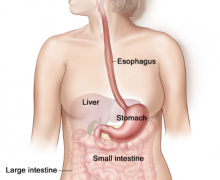
This great application (by Tinybop) is available in 5 different applications, and easily explains the working of the human body in a detailed and graphical way. Using this app, users can experience what happens inside the human body after it is fed and with detailed sounds and visuals of the intestine and the stomach.

Audio Sky Tours – Astronomy

An ideal way to observe the night sky and learn about what the viewer might see along with a well-read and clearly written audio attached to every tour. With this application, the learner does not have to wait for different seasons and time of the year to understand about the night sky.

NOVA Elements

The widespread periodic table scares away most of the students with so many different elements and concepts. For those who wonder how the table acquired its structure, how every set of elements is characterized, and more knowledge about the basics of the period elements, the NOVA Elements application is highly recommended.

Circuit Calculator

Electrical circuits are confusing, and students and teachers can’t get access to the kits and equipment at home to learn and implement their notions. For this, the Circuit Calculator application lets users design and implement electrical circuits at the same time be safe. The app is helpful as it lets the users create dynamic circuits and with a tap, the users can see required enhancements if the circuit is not functioning as it should.

It is true that learning is easier with a practical approach, but a practical approach is not always safe which is why Science Applications allow users with the safest and best alternative for learning in a controlled and fun way. So go ahead and make science and learning fun by using the best science applications.


How to Start a Compost Pile

First, let me start by repeating it here – composting is way easier than you think!

If you’ve ever tried to learn how to compost you may have found it overwhelming! I know I did – until I fully wrapped my head around what was going on. Here’s why. Everyone seems to have a different theory as to what you need to make good compost. Heck – even for our article on the science of compost, we tried to make a big table showing all the things you need for a good compost pile – from moisture, to temperature, to the proper Carbon to Nitrogen ratio. I worry that giving all this information might be counter productive, so here is where I think it’s important to stop and think about the basics.

Why are you composting?

Most of the time the answer is either that you want to be responsible and make sure our food waste doesn’t fill a landfill. Alternatively you may want to make sure you’re able to turn all your organic material back into rich soil for your garden.

Ok, so let’s start with those two answers. Both just mean you want to turn your organic material back into soil. The good news is that all organic material will turn back into soil through decomposition if you leave it outside. Pile up a bunch of leaves or a pile of bananas and it’ll eventually decompose. The point is, it’s super simple and you can start there. Just put it in a pile and you’re golden. You’ve hit stage one.

Now, I feel like getting some extra knowledge will help you troubleshoot – because likely you’re going to want to speed up the process.

Speeding up your composting

To speed up your compost you’ll want to make sure you have a pile that has a good ration of carbon heavy stuff (browns) like leaves, cardboard, paper, and sticks with nitrogen heavy stuff (greens) like food scraps. Why the mix?

If you just have browns – like a stack of cardboard, it may just stay like a big stack of cardboard. The organisms that are going to break everything down – from fungi to bacteria, they need some nitrogen to speed up the process.

If you just have greens – like food scraps, it might end up a big stinky mess. It may start to attract a lot of rodents, flies or other unwanted guests. Plus, it may start breaking down so quickly that all the oxygen is used up and goes into anaerobic fermentation. The byproduct of all that is stinky.

That’s why you want to aim for a mix and why people have all sorts of “recipes.” In theory you want more carbon (browns) than nitrogen rich items (greens). But, if I started to explain that the ideal ration is 30:1 or started into the ratio present in every item you would add to your compost I may defeat the purpose of this article. In fact, we already explained that here if you want to look into the science. The last ingredient is turning your pile.

Why Turn Your Compost Pile?

Again – remember that your pile will break down eventually. Turning the pile does a couple things.

  1. Turning the pile makes sure the middle of the pile has oxygen. The organisms that are breaking things down there need that.
  2. Mixing it up also takes the material on the edges and starts mixing it into the middle, where the break-down happens.

If you don’t turn the pile, it’ll go slower. You also run the risk of the process turning anaerobic – which is a slower breakdown process.

Here is a video we did with the zoo about how they do composting. I hope you can see how all of what I just wrote about relates to the processes that they use there as well.


More about Compost

The Science of Compost: Basic to Advanced

Can you really beat roulette with science?

Can you really beat roulette with science?

What wouldn’t you do for a large sum of money?

It is not the first time we’ve come across articles claiming that scientists or physicists have found a “way to beat roulette”. We’ve also probably heard of several attempts done throughout history by certain individuals who, by using physics, managed to come up with methods or even machines, to try and beat the casino. Now that it’s 2018, and almost 2019, in an age of great technological advancement, one would think this task wouldn’t be so hard to undertake.

Before we can get into the how’s and what if’s of the game, we need to have a basic understanding of how the game is actually played as well as understand how physics can be the key to beating the long-time popular game of roulette.

Rules of Roulette & Isaac Newton’s Laws of Motion

You don’t need to be an advanced gambler to know how to play roulette. But, taking time to understand the game and learn a roulette strategy can certainly be helpful. The only thing you need to know is how to place your bets. Basically, in a game of roulette, the croupier spins a wheel in one direction and a ball in the other direction.

Players then have to place bets on where the ball will land by choosing either a single number, a range of numbers, the colors red or black or odd or even numbers. Now it’s good to note that we’re talking about the land-based game here – although the same rules apply when it comes to online roulette, beating the online version would be an entirely different ball game since the numbers are generated by a software.

When it comes to the land-based game, however, some simple physics is all there is to it. How? Thanks to Newton’s laws of motion we have a pretty solid understanding of the movement of the ball and the wheel – in that, as the ball slows, gravity takes hold, eventually leading the ball to fall into one of the numbered compartments. Because of this, we can pretty much predict when the ball will leave the rim, but, the route it takes to a numbered slot is less so since the ball bounces around quite a bit as it strikes various obstacles. The most accurate outcome can be predicted if one had to take note of the precise location of the ball before it is released, as well as calculate the relative speeds of the ball and wheel when the croupier sets it in motion.

Although we would not be able to predict the exact number the ball will land in, we can, however, be able to predict the area of the wheel the ball will land, which can easily help you gain a massive advantage over the casinos, in some cases more than 40%.

Albert “Al” Hibbs & Roy Walford (1940s)

According to an article by Forbes, in the late 1940s, two friends at the University of Chicago, mathematics graduate student Albert “Al” Hibbs and medical student Roy Walford, decided to take on a bit of a different challenge when they hit the casinos in Nevada – the only state where gambling was legal at the time. They visited a few casinos to study the properties of roulette wheels to try and find weaknesses to exploit.

Back in those times, the wheels weren’t as well made as to today’s and they often had defects. Such defects, the students knew, offered the key to successful prediction. The students quickly developed predictive models and managed to win thousands of dollars. Much of their winnings were used to buy a boat and sail around the world. Years later, they revealed all to the world, and as you would guess, it wasn’t long after that the casinos started upgrading their equipment.

Edward Thorp (1950s)

Having learned about Hibbs and Walford’s successful endeavors, Thorp decided to follow in their footsteps but this time he had a harder task as the roulette wheels at the casinos no longer had discernible defects – he had to adopt a new strategy. Thorp successfully created the world’s first “wearable” computer that could be worn inconspicuously under a shirt and that was powerful enough to record things like the speed at which the wheel is spun, and the precise time the ball is launched, and make the appropriate calculations that would predict where the ball would land. This computer would then transmit this information by radio to another person wearing another computer, and who was a participant in the game. It’s no wonder why Thorp’s often known as the “man who beat the casino”.

Doyne Farmer & Colleagues (1970s)

Farmer and his colleagues tried to take things to a whole other level with the technology offered to them at the time. Basically, two people wore computers that had different functions. The “brain” behind the whole operation was the computer that was built into one of the person’s shoes as it performed two very important functions: firstly, to calculate the speed of both the wheel and the ball, determining where the ball would finally land, and secondly to transmit these predictions via signals to the person wearing the other computer.

Shoe Computer. Source: Wikipedia

Sounds like a great plan, right? – but in truth, there were a lot of problems, and things didn’t go exactly as planned. From weak or lost radio connections to wires becoming loose and getting electrocuted thanks to short circuits caused by sweating, things were far from being accurate. But this didn’t stop the team, which continued to grow to 20 people, from working on a better system and trying it out again a few years later. This time, both computers were placed in custom-built shoes.

This not only protected the operator from being electrocuted but would also make it harder for the casino to detect. In order to avoid problems due to sweating or loose wires, the team also built the computers in resin blocks, with only the toe-operated switches and the solenoids that drummed against the feet, being visible. They tested the new system Binion’s casino in Las Vegas and succeeded. Once the parameters had been set, the first prediction was to bet in the third octant which included the numbers 1, 13, 24 and 36. The ball landed in 13 and the team got paid off at 35-1.

Needless to say, this gave the team hope that all those years of work would finally start to pay off, however, eventually the solenoids started to act randomly, failing to transmit the predictions from one computer to another. The team suspected it was due to the electronic noise present in casinos, and after a while, they felt they had no choice but to abandon the idea.

Today

Pulling something like this today is highly questionable. On the one hand, we know that technology has come a very long way and in fact, we’re pretty confident that a computer the size of a fingernail could be created to perform the same function of the old systems described above, and the probability of them failing would be so much less.

Yet, on the other hand, the technology and security at the casinos have also improved throughout the years. It’s much easier for someone to get detected at casinos than 20 years ago. There are so many checks in place.

But technically speaking, putting the casinos’ ability to detect fraudsters aside, it is very likely that scientists would be able to create a foolproof system to outsmart casinos and beat the classic game of online roulette.

Sea Turtle Rehab Facility

Every year as temperatures decrease in the Atlantic, sea turtles start migrating south into warm waters. Most of the time, this works fine – that is until they hit cape cod. Cape cod is a giant scoop-shapped spit of sand that extends upwards almost 30 miles. For any turtle trying to navigate into warmer waters, I can only imagine the frustration. How would they know they need to swim north that far before turning back south.

During the first cold snaps in November and December, turtles start washing up on beaches. Volunteers there find them and instantly transfer them to a facility in Quincey Mass – run in part by the New England Aquarium staff. Here, they warm them up to be sent south again. This was my experience visiting the facility.

I wanted to make this short video after teaching a workshop on science filmmaking. If you’re interested in more behind the scenes, check out this video:

I created both of these videos in my spare time as a way to introduce you to the amazing work done by these researchers. If you like seeing videos like this, I encourage you to help support the science outreach we’re doing here on patreon.

Rainforests

Rainforests represent Planet Earth at its natural finest, with unspoiled plant and animal life cohabiting in idyllic harmony. At least that’s the case in those rainforest regions which haven’t succumbed to deforestation from egregious corporations throwing money at logging contractors to provide them with timber for their corporate goals.

More than half of the planet’s animal and plant life resides within rainforests and thankfully many of these species continue to survive the doom of deforestation. The world’s largest rainforest is the one that envelops the Amazon River in South America. Transcending almost the entire width of the continent, it is a truly spellbinding part of the world where jaguars and cougars are among the creatures visible first-hand amid exotic trees such as Euterpe precatoria.

Almost every continent (with the notable exception of Europe) contains stunning rainforest regions that are worth exploring. Where else would you receive such unimpeded exposure to lifeforms that make a welcome change from the monotony of city centre skyscraper buildings?

Check out the infographic below from Jarrimber for a snapshot of the world’s most beautiful rainforests.

Stopping the Emerald Ash Borer

There was nothing unusual about the shipment that arrived in Michigan back in 2002. Like most products moving across America and around the globe, it arrived on wooden pallets. The materials were checked in, distributed, and the pallets cast aside, some of the two billion estimated in use around the country. Only there was something different about this shipment. Especially the packaging. Because at some point in shipping that material, tiny D-shaped holes began to appear in the supporting pallets.

From those holes emerged emerald green beetles, shimmering in the warmth of the Detroit summer sunlight. Once the new adults got their bearings, they flew off to do what insects do: mate, lay eggs, and die. The best place for this to happen was in ash trees. And that was the beginning of an invasion that would span 33 US states and several territories in Canada, killing hundreds of millions of ash trees.

“It’s coming… well, let’s do something about it.” Dr. Jiri Hulcr is an associate professor of forest entomology at the University of Florida and is helping to come up with a game plan to combat the spread of this insect. “The emerald ash borer (EAB) is the poster child for the homogenization of the world.” Hundreds of thousands of shipments shuttle around the globe every day, and the numbers are growing. And with each shipment comes the risk that North America will receive just a bit more than it bargained for.

Where did emerald ash borers come from?

“EABs are native to Asia,” he said. The ash species in China have genetic defenses against the beetles and can withstand their life cycle. “When you bring these to North America, these ash trees have no idea what to do with them. The beetles lay their eggs; the larvae bore holes into the tree, and the tree dies. The tree is losing its capacity to transport nutrients from the leaves to the roots. This is how an epidemic has started.

“No one noticed it much at first. Today, it has spread south to southern Georgia and northwards to Canada. Ash trees are dying in the wake of this epidemic.” The Annual Review of Entomology says that, in some Michigan forests, 99% of ash trees have died because of the tiny insect.

The dramatic color of the EAB is only the final of its four stages of life. It begins as an egg, nestled between layers of the bark of an ash. About a week afterwards, it emerges in its larval stage, and the feeding begins. As the EAB feeds, it leaves behind a telltale series of “S” marks, known as galleries. In the fall, the larvae will carve out a space in the ash to spend the winter. From winter to spring, they will go through a pupal stage and emerge in early summer.

By the time the adults emerge, leaving a “D” shaped hole, damage to the ash is already done. Within two to four years, the infested tree will die. The adults will mate, lay eggs, and die in the fall.

How can you help?

Although the invasion is well underway, Hulcr says there is still hope. “What do we do? We can learn from what’s happened and be ready when it hits places like Florida. There’s lots we can do.”

Here’s what he recommends:

  1. Learn ash identification. There are myriad sites with pictures of ash trees. One is from the Emerald Ash Borer Information Network, which contains extensive information on the issue.
  2. What if my tree dies? “It’s a part of monitoring. We must be more vigilant. Do you see a tree that starts dying? This little thing with the reddish leaves suddenly pooping out? We should pay attention to these things because that’s when we can put in our next wave of weapons.” Even well-tended trees can be killed by EABs, so it’s important to keep a close watch on those on your own property as well as your neighbor’s.
  3. If a tree shows signs of infestation, treat the trees around it. “This way, when the females around the tree want to find another and lay eggs, the babies won’t make it.” One key factor is whether the tree is already showing signs of infestation. If the larvae are active within a tree, they may have already destroyed the vascular system. Since insecticide application must be pulled through the roots of the tree up through the trunk and branches (“systemic application”), a damaged vascular system means that the insecticide won’t work. See this video on treatment methods.
  4. Diversify greenery plantings in cities. In cities where ash trees are the species of choice, money will have to be spent in clearing infected trees. “When thousands start dying, it becomes economically noticeable. Somebody has to clean it up. Turns out, it costs billions of dollars. We have plenty of other things to spend money on, but we have to spend it on cleaning up dead trees.” Diversifying species choices can reduce that impact.
  5. Find insect-resistant trees. “Every species is composed of many different individuals, just like people. Some are better at fighting infestation than others. Even if 99% percent of trees die, there are always one here and another there that survive. Those few individuals are going to be the restart of this species for the next century. Find those individuals that have that magical concoction of genes that allow that individual to survive and propagate them.”
  6. Don’t move firewood. “It looks so convenient: here’s a dead tree, let’s chop it up and bring it to the campsite to make a barbecue. Don’t do that. That’s a pretty sure way to spread tree diseases and pests around. It’s a major way to make a difference.”

Without doubt, the invasion of the emerald ash borer is a major concern in North America. Yet Dr. Hulcr remains optimistic: “It’s not all doom and gloom. We can absolutely make a difference. Tell your neighbor, tell your family. It’s coming; well, let’s do something about it.”

Learn more about the emerald ash borer and what to do about it here:

Spotlight on Environmental Ethics

This Earth Day video on the Amazon offers a great opportunity to introduce you to *drumroll* environmental ethics. Let me take you to the other side…

Environmental Ethics

Environmental ethics is a discipline in philosophy. Philosophy now doesn’t that sound posh! In 1962, Rachel Carson published her epic book Silent Spring on the negative effects of pesticides on the environment. This book was part of a growing environmental awareness movement which led to the birth of the environmental movement in the 1970s. The discipline studies the relationship between humans and the environment and the moral questions that arise with it.

As you might have noticed, there are different ways for people to view and value nature. Culture, religion, education, upbringing, knowledge, and the environment we live in all help form our frames of reference. In some cases defining experiences can add to the mix. Let your mind wander to those family trips in the great outdoors… or that severe case of poison ivy you got afterwards. It can influence you either way.

There are many different views and nuances. For now, I will stick to two common ones: anthropocentrism and ecocentrism.

Anthropocentrism

How’s that for a Scrabble word! Anthropos means human in ancient Greek: this view is human-centered. Anthropocentrism believes that humans are separate from nature. Basically, we rule the world and decide what has value.

Classic anthropocentrism regards nature’s value as a resource-provider for humans. Like a huge supermarket, nature caters to our basic needs, like food, water, medicine, and clean air. The term ecosystem services refers to the benefits we obtain from the natural environment. Since the human population is growing rapidly, we will need a lot more of these resources and services in the future. Therefore, it kind of makes sense to take care of the environment for our own survival.

Other, less strong, forms of anthropocentrism believe that other organisms can have value in their own right, if we grant it to them. One of these views always gives priority to humans. For instance, helping people in poverty gain livelihoods would be a valid reason for deforestation.

Ecocentrism

Ecocentrism, on the other hand, is a nature-centered view. Humans are seen as a part of nature, equal to plants and other animals. In this picture, we are not that special. Oh, and old trees get picked over Disneyworld. Nature has value in its own right. A prime example of this viewpoint in practice is Ecuador adopting rights of nature in its constitution. The aim is to conserve the beauty and integrity of nature. Because, well, it is just great as it is.

The Amazon

So at last, a few words on the Amazon to illustrate these concepts. The Amazon is a vast and unique region that spans eight countries, covering about 40% of South America. It contains the world’s largest remaining tropical rainforest and the largest river basin on the planet.

Putting our anthropocentric goggles on, we can spot a plethora of ecosystem services:

  • The Amazon Rainforest is often called the lungs of the planet. It regulates the world’s atmosphere, making sure we have oxygen to breathe. Somehow, that sounds pretty important.
  • It is an inexhaustible pill cabinet. The majority of medicines we use today originate from nature. There probably are a lot more left to be discovered.
  • It is the ancestral home of more than 350 indigenous and ethnic groups. They rely on the forest for shelter, food, and fresh water.
  • Produce from the Amazon reaches consumers all over the world. Items like fruit, nuts, and leather are exported in large numbers.

From an ecocentric point of view there are some other arguments to champion the Amazon:

  • One in ten known species on Earth lives in the Amazon. It is a hotspot for biodiversity like no other on the planet. It contains literally millions of species, including the people that inhabit the forest and plains. It is estimated that most of them are not even described yet.
  • People from all over the world travel to the Amazon to enjoy its wild beauty.

Bear in mind that environmental ethics are not as polarized as this brief introduction might suggest. Arguments are often interconnected and complex; it is not necessary to adopt just one ethic for all cases and the entire planet. In addition, conflicts with human ethics are very plausible. The Yasuni ITT project is an interesting case to illustrate this. Its failing points out the importance of acting on ethics. It is indeed very important to keep discussing environmental ethics because of the impact they have on our environment and ultimately ourselves.

How about you?

I hope this article gets you thinking on your own perspective on nature.

  • What influenced your frame of reference?
  • What nature experience would make you go bonkers?
  • What do you think is the value of the Amazon?
  • How do you act on your ethics?

Have a nice chew on that!

Using Space Data to Make Critical Infrastructures Safe and Secure

Critical Infrastructures are systems crucial for running a country. If anything happens to one of these systems, there would be a hugely negative knock-on effect on the entire country.

This is, obviously, not good…

Of course, it’s a complete possibility, but instead of being prepared for the outcome, there are ways for us to monitor these systems and prevent any potential issues.

We can do this by using space data and satellite technology to remotely monitor the systems and build us a picture of what’s happening with them in real-time.

This guide will look at how we can start using space data to make critical infrastructures safe and secure:

Uses of Space Data

Through the use of remote satellite technology, there are a lot of different areas of the country we can monitor and add preventative measures towards. The space data will help us address issues before they get out of hand, and enhance already existing areas to make them better.

Renewable Energy Forecasting

Space data will aid us in efficient and sustainable renewable energy use. That felt like a lot of big words all at once.

What we mean by this is that we can measure how much energy will be generated when using renewable resources, allowing us to reduce fossil fuel usage as much as possible.

The way to do this is by understanding the weather conditions. Using satellites allows us to gain far more accurate weather readings, which in turn leads to far more accurate energy output predictions.

Understand now? Great!

Search and Rescue Emergency Services

As time goes on, our current emergency services system is improving, but there’s still only so much it can do.

When someone goes missing, especially in remote areas, drones can be deployed to help look for them.

Satellite data will be used for communication and to help the drones manoeuvre through more difficult terrain, utilising GNSS (Global Navigation Satellite Systems) to help map out these areas.

Rail and Road Conditions

Ever been driving through a fairly remote area, turn the corner and you’re suddenly faced with a fallen tree in the middle of the road?

It’s happened to the many of us.

Satellites will be able to monitor road conditions and notify local authorities regarding any issues, so it can be resolved swiftly before causing further issues.

Rail conditions can also be monitored. This is particularly important, as any issues to the rail network can cause a knock-on effect, meaning major disruptions to transport links across the country.

Satellite data will help in a similar way to monitoring road conditions, and can help prevent disruption and protect passengers from natural issues, such as landslides.

The space data will be useful to us for both road and rail conditions, and allow us to act before any issues become too serious.

Remote Care

Another very cool way of securing a critical infrastructure is through remote care.

Remote health checks and diagnosis can be done remotely through the use of satellites. Healthcare in general can save a lot of time and money as a result.

The aging population won’t need to step out of their homes to visit their doctors, and can instead be checked and monitored at home.

Not only is this less disruptive to the patients, but it also opens up bed spaces at the hospital, wherein more focus can be given to the patients’ wellbeing.

How it’s Currently Being Used

We’ve been talking for a while about how these new innovations will work in theory, but there are some businesses who are currently implementing similar satellite-based technology.

We’ve given some examples below:

Gridwatch

As the name implies, Gridwatch aims to monitor and maintain power infrastructures. They have a two-pronged approach to their business.

  • Offering insights to the people in charge of maintenance
  • Offering insights to the people in charge of network operations and energy dispatching

Satellites will continuously monitor pylons and warn the company of any anomalies. The use of satellite data has two big advantages in this area. First, the data received is highly accurate, and secondly, it avoids the need for on-site inspections.

The satellites will also pick up data on line transmission capacities, which is highly useful to the network operations and energy dispatching teams. Using this data, the team can reduce the risk of energy overload as well as the possibility of power line outages.

SaMoLoSa

This project monitors hazardous goods while in transport. The technology will monitor the parameters required by the key stakeholders and ensure everything is running smoothly.

The process will make sure that these goods are kept safe and aren’t lost in the process. The information it’ll provide to businesses will help optimize their logistics, as well as identify key areas for improvement.

TeleRetail

Imagine a world where you order something and a robot comes to deliver it to you.

That’s the world TeleRetail is looking to build. The company is developing an automated delivery service, where self-driving courier robots can fulfill the demand for urban and sub-urban logistics services.

Satellites will track assets, while GNSS satellite navigation and nanosatellite imagery technology will aid in the autonomous driving and on-board sensors.

Are You Looking to Do Your Part?

If you’re looking to do your part in aiding the safety and security of critical infrastructures, then ESA can help you with support and funding programs.

They can help you by offering zero-equity fully funded activities, technical and commercial guidance, and access to their vast network, as well as their brand power.

If you feel like your business is looking to push this sector in the right direction, you can apply to the ESA’s funding opportunities here.