Here’s how Tech and Science has Changed the World of Business as we Know It

Tech has changed the world of business as we know it. It has changed the way that we operate, market, sell, communicate, profit and even hire employees. Cloud computing, 3D printing and even intelligence tools are all advancements that have been made thanks to tech. So what other changes have happened as the result of business? Take a look below to find out more.

Communication Technologies

Traveling for a meeting both inside and outside of the city is time-consuming. It can also have a huge impact on your productivity overall as well. Tech has made it easier than ever to eliminate all of these issues. Now you can use video conferencing software to communicate with stakeholders; you can also participate in webinars too. Talking with trained employees is no longer difficult or time-consuming thanks to Google Hangouts either, and this alone has changed the way that we do business in general.

Simple and Faster Ways of Getting Paid

Cash flow management is the single most important element of running a successful business. If you are slow to communicate then this will almost certainly impact your business growth overall. It’s vital for your small or midsize business to get paid as soon as possible as well and this is why online banking, secure payment gateways or even mobile apps are powerful business tools. It gives you the chance to pay for products or services faster, and it also means that you can get paid much faster too. Take online casino games for example, you can now deposit money online and play without having to go to a land-based alternative. This is just one example of fast payment, but it just goes to show how much things have changed over the years and how tech advancements really do have a huge impact.

Creating Business Documents

It was never easy to create and keep documents safe before Microsoft Office came along. Now you can easily edit business documents, spreadsheets and even presentations too. A lot of businesses across the world are able to create service invoices and they can also credit memos too. Business letters, expense report planning and even project presentations are now easier than ever to manage, which goes to show how much of an impact tech has had overall on business management.

Real-Time Support

Customers are a real asset for businesses and for this reason, you have to make sure that you are providing them with the support they need. If you want to do this then real-time support is always an option. Real-time support can be given to customers through various live-chat channels and IT has made all of this possible. It’s vital that businesses change the way that they deal with customers at the end of the day because if they don’t then they will never be able to have the long-term relationship they need, and they won’t be able to capitalize as much on loyalty either.

The World’s First Living Robots Are Here

Scientists have developed the first living robots in the world using stem cells from frogs. Though they come from frogs, the robots do not have any resemblance to any known amphibians. These robots are called Xenobots, which are the first of a kind. They were named after the African clawed frog (Xenopus laevis). 

The robots are very tiny

They are not more than a millimeter wide making them small enough to travel inside human bodies. Xenobots are made up of living tissues that were assembled by scientists into bodies designed by computer models. They can move independently; they can swim, survive for weeks without food, and work together in groups.

Stem Cells

Stem cells are cells which are not categorized that have the capability to develop into different cell types. The researchers scraped living stem cells from frog embryos and left them to gestate. The cells were then cut and reshaped into specific “body forms” that were designed by a supercomputer. 

Skin cells bonded to form structure, while the pulsing heart muscle cells allowed the robot to move on its own. These xenobots have the power to heal by themselves. When the scientists sliced into one robot, it healed by itself and kept moving.

Xenobots

Xenobots don’t look like traditional robots. They do not have shiny gears or robotic arms. They look more like a tiny blob of moving pink flesh. Researchers say this “biological machine” can achieve things that cannot be performed by steel and plastic robots.

In a research published in the Proceedings of the National Academy of Sciences, researchers say that traditional robots degrade and produce harmful ecological and health side effects. They say xenobots are friendly to the environment, and they are also safe for human health.

Xenobots are also very useful compared to traditional robots. 

They can be used to collect microplastics in the oceans. They could be used to clean up radioactive waste, carry medicine inside the human bodies, or scrape plaque from the arteries. They are suitable for internal drug delivery because they can survive for days in aqueous environments. Apart from these tasks, they could also help researchers to learn more about cell biology. This will help in future advancement in human health. It would even be possible to reprogram tumors into healthy tissue and also repair congenital disabilities.

These organisms come pre-loaded with their own source of food of proteins and lipids. This allows them to live for more than a week, although they cannot evolve nor reproduce. If exposed to environments that are rich in nutrients, their lifespan can increase to several weeks.

Although the supercomputer, which is a powerful piece of Artificial Intelligence, plays a significant role in creating these robots, it is unlikely that Artificial Intelligence could have any bad intentions. However, it incites fears of having new forms that may one day be a threat to humanity. 

The process may be uncontrollable if it lands into the hands of less scrupulous individuals and groups. Michael Levin, who is the director of the Center for Regenerative and Developmental Biology at Tufts, says that “when we start to mess around with complex systems that we don’t understand, we are going to get unintended consequences.”


Why I started StoneAgeMan

Over the summer of 2019 I started to feel like I needed an outlet for my media skills that was just my voice. For over ten years I had been building the content of UntamedScience in a collaborative way. I’d raise funds and then hire people to make content and fulfill our educational needs. But, I never had one thing that was made in my voice entirely.

So, I decided that I wanted to make a channel, that resonated with how I was seeing the world at the moment. That was the concept. But first, I needed to figure out what was troubling me.

I felt emotional distress at my current situation – living in a digital age that was causing huge amounts of stress. But why was I stressed? Was it called for? Through my understanding of history and advancements in medicine, I knew we were living in the best time in history. It didn’t feel that way though.

It seemed to me that I could use my understanding of biology, learn more things about human psychology, and start trying to figure out more of our human past to figure out why it seemed like I was more stressed than I should have been. I came to the conclusion that since we evolved as a species in what we commonly refer to as the Stone Age, I was essentially a Stone Age Man! If I could learn more about the circumstances that I evolved in, maybe, just maybe, things would get better.

I learned these main things:

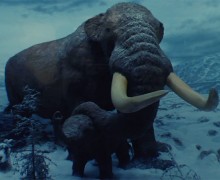
  1. Our stress is an adaptation to help us survive. But, it only works when the threat is immediate, and needed to get us out of the situation. Like fighting a saber tooth cat or wooly mammoth.
  2. We evolved in small groups of maybe as many as 300, but not much more.
  3. Seeing stressful things on social media, which is pulling from nearly 8 billion people, is telling our body that we need to fight, yet the threat isn’t immediately around us. And, it’s all the time.
  4. Most people have lost a connection to nature, something that has grounded us our entire evolutionary history.

So, I decided I wanted to tackle a couple of these problems. Mainly, I’d teach people more about the wild places, so that they could slowly learn to disconnect. I’d also start running trips with small groups – mini-trips as a way for people to reconnect with their StoneAge selfs, but it a modern, safe way. I hope this brings the best of both worlds.

Here is a short trailer about it:

Here are some of the things I’ve been doing on StoneAgeMan’s Youtube Channel

AND, I have many more, if you just go visit the learning pages at StoneAgeMan.com!

May learning and education make us healthier and happier!

-Rob Nelson

The Context of Choices in Gambling

The psychology behind gambling has been discussed over and over again. What makes people gamble? What pushes them to bet more money? How do they decide their next move? Which thoughts lead to errors in judgement and memory?

Understanding Gambling Psychology

These are all legit questions that are embedded in psychology of the human mind. They decide on their future actions based on superstitions, odds, or simply – their gut. All this falls under and can be described with the psychology of gambling. 

Understanding how your brain functions can help you place a link between gambling and rational choice. For that purpose, we’ll refer to the work of a bestselling author and a Nobel Prize winning economic expert, Daniel Kahneman. 

His book Thinking Fast and Slow will change how you view betting, help you develop critical thinking in gambling, and assist you in changing your bad behaviors.

Explaining Thinking Fast and Slow

This book shows readers two systems in a brain i.e. a dual-process model that explains the control over actions or behaviors. Essentially, his book teaches you many ways in which the fight of these two systems leads to errors in judgement, mistaken decisions, and errors in memory. Of course, it also gives unique, helpful tips on fixing this. So, before you start gambling or rush to get your bonuses by the link, you should definitely explore his great insight and ideas. 

Let’s have a closer look. 
According to Kahneman, all bad decisions people make in life and in gambling can be explained with the dual process model. These two different thought modes are referred to as ‘’system 1’’ and ‘’ system 2’’. 
System 1

The first system is fast thinking. It’s associative, intuitive, automatic, metaphorical, and impressionistic. It’s also one that you can never switch off. Operations guided by it don’t involve any intentional control. When you play gambling games and make an automated choice based on your gut or simply the mood you’re in, you’re thinking fast. This means that you’re using the system 1. 

According to the author, when you make gambling casino games decisions based on this system, you’re basically using a: ‘’secret author of many of the choices and judgments you make’’. 

System 2

The second system of our thinking is deliberate, slow. Decisions made with it require attention and careful thinking. When things get harder to handle with intuition or speed, system 2 takes over in the human brain. 

This happens, for example, when you need to make a math calculation while gambling. If you have to calculate the RTP of a game, you need to use a formula and do some math. This is where the conscious part of your brain takes action, rather unwillingly, with a goal to resolve an issue.

Because it is more complex, system 2 tires easily (something that the author calls ego depletion. When it is tired, it simply accepts decisions made by System 1. 

Yes, System 1 is intuitive and often right, but when the second system is too tired, we are no longer focusing too hard on making right decisions. When it comes to statistical thinking, System 1 is hopelessly bad at this. It jumps wildly to irrational conclusion and is subject to different biases and interference effects like the Florida effect or Halo effect. 

What You Can Take from the Book

Once you understand the difference between these systems, you’ll understand how susceptible we are to being puppeted and influenced by the features found in our surroundings. Casinos have invested a great deal of strategies that will make you act intuitively and fast. In fact, many of the games require fast thinking and don’t really leave much room for you to turn on the System 2 in your brain. 

If you want to make the best possible decisions based on more than just your gut, you need to take a step back and analyze. Sure, System 1’s work is exceptionally important because the role of chance in our lives is enormous. 

However, if you want to win big, you need to use the best of your abilities when gambling. Also, you need to understand that including both fast and slow thinking is crucial for making right decisions. As Daniel Kahneman says:

‘’Nothing in life is as important as you think it is, while you are thinking about it.’’

With this in mind, there are two things you should know about your gambling choices:

  • The brain works mostly on System 1, which is a lazy part. This keeps you from using the power of your intelligence in full. 
  • When you’re gambling and making money decisions, you cannot have your emotions clouding you. Leave them at home and activate System 2.

Many times, you’ll pick System 1 thinking that it can handle a task. At times, you’ll be right but when you’re in the thrill of gambling, you might end up making a mistake.


Gambling is basically a test of luck, which is where System 1 comes really handy. People survive based on their instincts. They jump away from vehicles when they honk and respond to fear because of this system. Choosing one dollar deposit casino, players consciously avoid big loses but during a game a point shifts and can end up with even higher stakes.However, you cannot base important money decisions solely on fast thinking. You need a combo of intuition and conscious thinking, which involves two systems of your brain.

Be aware of the systems. Know that your emotions may try and confuse you when it comes to making money decisions Try and consider probability, odds, and statistics. Once you determine your odds, act accordingly. Emotions cannot and should not have a role in your gambling endeavors. 

Casinos plan grand re-opening but under scientists’ watchful eyes

As Las Vegas, Macau and Monte Carlo look set to allow their biggest casinos to open their doors after the extended period of lockdown, all eyes are on the government and scientific guidelines to ensure that everything is done in the safest and most educated fashion. Whilst veteran online casinos and leading mobile casinos apps have enjoyed an almost unrivaled period of gains thanks to people being unable to go out of their houses, the allure of the brick and mortars will indubitably drive gamblers and travel-fanatics back to these powerhouses of industry. With that in mind however, just what advice are the government and leading scientific researchers giving to the casinos (and most businesses) to ensure that they can open their doors for good, without having to re-enter a stage of lockdown again.

PPE/Masks:

Whilst this may seem obvious to most and even become the new ‘normal’ in terms of social interaction, many leading researchers around the world are advocating that people wear masks. For the casinos, this will be especially important for their croupiers, staff and employees to keep them safe and also because the likelihood of crowds trying to flock to the tables and celebrate in the wins of those doing well means that people will be hard-pressed to follow the recommended 2m distancing rule.

Sanitize Everything:

When someone leaves a machine, a new deck of cards are opened, dice are handled by a guest or someone finishes their plate of food – sanitizer will be needed. The advice from the government and scientists is to be overcautious as germs can live on surfaces for hours – meaning that without proper adherence to a strict cleaning regime – the risk of someone catching something is heightened dramatically. The only bottleneck here will be the accessibility for some of the smaller businesses to acquire the amount they would need to do this.

Separate People:

While the image of throngs of people gathered round a table or celebrating a Jackpot win on a slot machine are commonplace when you think of the likes of Sin City and major gambling destinations, scientists have long been pushing that separation and careful mixing are a must to keep the R-number down. Many of the casinos have been advised on crowd control and placing direction flows on the floor to ensure people don’t get too close, but the casinos themselves have also taken an initiative here. Plexiglass screens, much like those being installed at local supermarkets, are going to be used to separate the dealers from the customers and also between machines to help people separate effectively.

Temperate Checks:

While this hasn’t yet been confirmed, as scientists strive to find a cure or marker to end the current crisis, one of the major flags has been a spike in body temperature for almost all common illnesses. Just like airports have installed body scanners, these could also be used in casinos to stop unwell visitors coming in and also to minimize the risk that when people fail to obey social distancing or the floor markings from catching something. 

While scientists and governments continue to discuss preventative and combative measures to ensure the safe opening of many large enterprises and buildings, the casino industry is doing its’ best to confer with the decision makers and abide by all suggested practices to prevent a second spike that would cause a devastating blow to their revenues and even their futures.

The Psychology Behind Colors in Video Game Design

Color has a potent role in various artistic endeavors and commercial pursuits, with its impact on human psychology being exploited by everyone from master painters to marketing maestros.

In the context of video games, color is an especially important tool that can be used in a variety of ways, so here is a deeper dive into its deployment by designers over the years.

Conveying emotion

First and foremost, color is harnessed in the same way as audio effects and music to set the emotional tone for both the game as a whole, as well as individual aspects of the story.

Games which aim to explore narratives that are gritty, realistic and intense will opt for color palettes that reflect this. The grays, greens, browns and reds of almost any entry in the long-running Call of Duty franchise attest to that. Meanwhile a more upbeat game, like Super Mario Odyssey or almost any modern slot found on casino sites, will opt for brighter, more cheery primary colors to convey their mood and overall ethos.

In this way, video games use color to control their audiences’ response in much the same way as movies do. This all ties into very primitive evolutionary instincts that humans have; bright, light scenes mean that threats have nowhere to hide, while dingy and dark areas are more inherently scary. Thus light and color have a symbiotic psychological relationship in interactive entertainment, as in other forms of artistic expression.

Creating a brand identity

While video games are undeniably works of art, they are also products which need to be sold to consumers, and an effective way to help new releases stand out from the crowd is to make sure that they look distinctive.

While not every game achieves this successfully, there are some examples of releases that have made effective use of color to create a brand identity that is appreciable and instantly recognizable at a distance.

Mirror’s Edge and its sequel, subtitled Catalyst, managed to achieve this with flare, using a combination of clean white and bright red to give the world of the game a unique look. Color can make for eye-catching screenshots and impressive trailer videos, both of which are crucial in making sure that audiences are aware of an upcoming release and thus more likely to cough up some cash. Capitalizing on consumer psychology through color is a trick seen in plenty of other games, even if it is also often a side-effect of a title having a strong overarching artistic vision that creates a brand almost by accident.

Focusing attention

One of the main challenges of video game design is conveying to the player their aims and abilities, without having to constantly bombard them with tutorial pop-ups or rely on overlaid way-markers in the HUD to point them in the right direction.

Color is the ideal option for achieving this, as it can be used to draw the eye of the player and give them an easy indication of what aspect of the game world is worth paying attention to and what is merely background ornamentation.

Of course there are myriad approaches to focusing the attention of players using color, ranging from the extremely over to the suitably subtle. Often it is a case of using the shade of a particular surface to single it out from similar surfaces surrounding it, rather than making it entirely different in hue.

Ultimately the psychological application of color in video games is more practical than in almost any other art form, and yet still manages to be immensely satisfying to those who want to just sit back and enjoy the ride.

Life and Death of a Flower Timelapse

Over the course of two months, I photographed a hyacinth bulb growing, flowering, and dying. All of this started before the coronavirus pandemic started, so I added a little tease at the beginning to what it was like pre and post virus.

A bit about the logistics: It was roughly 15,000 images taken as jpegs with my dslr camera. I took a photo every 5 minutes, although I think that timespan is too fast now. I’d have dialed that down to 10 minutes to decrease the amount of footage I had to deal with afterwards.

I also spent about 3 months post-processing the images and cutting each of the flowers out. Many of the comments on youtube indicated how much work that is. It’s true, but there is a bit of a shortcut. After Effects has a roto brush tool that uses AI to figure out what the next frame should be. So, I probably did 40 full cutouts and then another 200 or so adjustments to those as the roto-brush tool did it’s thing. It was still a ton of work though as the computer took a long time to process each image.

Is Natural History Really Dying?

Recently, I was doing research for a project at an entomology lab in Ecuador. I was researching behaviors of different groups of insects so that I could place them into certain “functional groups” (a grouping of organisms into some niche such as herbivore or predator). While doing so, I started to come across the same problem: there are so many things we do not know about so many of these invertebrates, especially regarding their behavior. Additionally, it seemed that most of the research I was citing was quite old now, and at first glance, there did not seem to be a lot of new natural history work being done. 

During my training as an ecologist, I have briefly heard about a debate surrounding the decline of natural history—that natural history may be “dying”—and the idea that some do not consider it to be a true scientific practice. This, together with my inability to accurately complete my models from lack of behavioral information, got me thinking about natural history’s current place in science and ecology. To explore this issue, we must first understand what natural history is and how it is connected to everyday science and everyday life. 

Observing nature

There is something special about observing nature up close. As children, many of us spent hours watching various creatures in their natural habitat: bees buzzing in the flowers, ants carrying a seemingly impossible load across difficult terrain, a bird working tirelessly to feed a nest full of chicks. Many biologists share that these experiences are what made them pursue this career. Even for those who aren’t biologists, nature inspires something inside of us. Today, when it seems our connection to nature is threatened by growing cities and depletion of natural habitats, interest in nature continues to be important, whether through camping, visiting wildlife refuges, ecotourism, bird watching or watching varied and popular wildlife documentaries.  

When we take the observation of nature one step further and begin to watch for patterns, describe interactions, identify what makes one species different from another,  and record the world around us it’s called natural history. 

A White-Whiskered Hermit (Phaethornis yaruqui) hovers near a flower of a Cepillo tree (Callistemon viminalis) in Quito, Ecuador Photo: Kirstynn Joseph

What is natural history? 

Natural history is basically the study of flora and fauna in their environment, yet depending where you look, can be defined slightly differently:

A quick Google search will tell you that it is “the scientific study of animals or plants, especially as concerned with observation rather than experiment, and presented in popular rather than academic form.” The Merriam-Webster dictionary definition is: “the study of natural objects especially in the field from an amateur or popular point of view”. 

Essentially, it is the close observation of the behaviors and interactions of organisms to help describe the patterns in nature. However, consider the words “popular” or even “amateur” in these definitions. 

Natural history is considered the root of many disciplines of biology, especially ecology, and the basis of many important theories and discoveries, historically and recently. Despite this, there is sometimes a stigma that “natural history” is not a valid, modern science because scientists say it lacks careful experimentation and control of variables. A post from The Lyman Entomological Museum briefly discusses this debate and shows how important natural history is to modern science. However, what other evidence is there? 

Is natural history science? 

The difficulty with defining natural history as a science likely comes from the fact that you can have people who observe nature quite “amateurly” without using much of the scientific method; they may come up with conclusions based on observations alone, and that becomes complicated. Observations can also be biased, but with proper control and repetition they become very useful.

These observations, from scientists and amateurs alike, can develop theories or aid in conservation and management, as shown in this blog article and more research papers below. Many projects around the world are beginning to rely more on citizen science and observations, by using platforms such as eBird or iNaturalist or simply by communicating with people directly about their experiences, whether it is hunters and fishers from an area or local indigenous groups. 

An ant (Ectatomma sp.) from Yasuni National Park, Ecuador. Photo: Santiago Palacios 

In fact some wild interactions can only be deduced by making careful, repeated observations in nature; many organisms are difficult, if not impossible, to raise in a lab and some scenarios impossible to simulate. Even some small organisms like insects (many species of ants) are almost impossible to rear in a laboratory setting and must be observed directly in their habitat. 

As an example, a recently published paper on the interactions between rhinos and oxpeckers showed that the birds’ warning calls help rhinos detect humans sooner. This was discovered through multiple field tests where rhinos were approached, with or without oxpeckers around, and their behavior was noted during each trial. This information is crucial to help with rhino conservation in regard to poachers; if we can help make sure oxpecker populations are doing well in rhino habitats, they may have a better chance at avoiding poachers. 

This paper, Natural History’s Place in Science and Society, from 2014, noting the decrease in natural history over time, gives multiple examples of natural history being an important scientific practice in everything from ecology to human health and understanding disease. There are multiple published papers that also speak to natural history and citizen science as important tools for conservation and other research (some examples below). 

These examples support natural history as a valuable and important science that can contribute to modern science. In saying so, is the practice, general interest in, and respectability of natural history in decline? Are we not spending enough time in the field observing our study systems? Is there a decline in natural history education? In short, is natural history dying?  

What does the data say?  

A quick look at Google Trends does show a decrease in searches of “Natural History” from the early 2000s through the present. While the Google Ngram Viewer shows that we are clearly past the peak of books published about natural history, titles have decreased since the 1930s, remaining somewhat steady after that. 

On the other hand, the Web of Science citation analysis tool shows a clear increase in publications and citations with the topic “natural history” over time. Now, of course we must take into account that there likely has been a great increase in publications overall in this time, but surely this shows that natural history is not entirely dead? 

These results suggest that natural history is not entirely in decline in terms of publications and books, but there are more opinions and lines of evidence to be explored. Let’s take a look at both sides of this debate. 

Yes, natural history is dying! 

In the late 1980s it was already known that natural history was underrated by the public and scientists alike but extremely important for conservation management and science in general (one example here). But where do we stand now? 

Let’s start with schooling. As technology and science become more advanced, and statistics and modeling become more complex and important, it is widely argued that natural history classes are being pushed aside in order to train new biologists in theory rather than direct interaction with nature. This elimination from curriculums may be due to the stigma mentioned earlier.

As a new ecologist, I personally studied in a very different way than those from 20, 30 even 5 years ago. My university had a very strong statistical and theoretical curriculum (which I am very thankful for in many ways) but may have forfeited natural history study. I cannot say we never went to the field or learned interesting natural history facts, but I certainly spent much more time behind a screen than in the field.  

As for graduate-level work, the immense pressure to finish your thesis, publish, and continue to be a competitive publisher, can edge out time for in-the-field study. Terry McGlynn argues this point quite well. In academia, this pressure doesn’t exactly lift after grad school, making it difficult to spend a lot of time on projects that require more time spent studying things more closely in situ. The stigma surrounding natural history as amateur science may also be a barrier to publishing in many journals.

Then there is funding. Funding tends to come more easily for projects focused on scientific trends, such as genetics, and as Google search showed, “natural history” isn’t exactly a burning topic. 

Lastly, is there room in the workforce for natural history? There seems to be a drastic decrease in true jobs for naturalists and a worldwide decrease, removal, or consolidation of museums in different institutions. So, as much as you may love natural history, perhaps it is no longer seen as an employable field of study and the time spent outside observing interactions could be better spent at the computer learning the latest in coding for biological statistics.

No, natural history is not dying!

Like any argument there are two sides, and here we find a convincing argument that natural history is not threatened. 

In many universities, there is surely a drop in courses that are strictly natural history, but perhaps we only have so much we can teach our students in an academic setting? As science progresses, may it not be more pressing to use classroom time to train these complicated math and modelling skills? Perhaps it is important to focus on learning how to navigate this new and important technology while trying to keep interest in natural history alive as the base of these projects, encouraging students to find other opportunities to get out and observe these systems when they can. Of course the ideal would be to offer and encourage natural history courses, or at the very least teach natural history skills, like identification, or facts about animal behavior throughout courses with heavy mathematical content, to remind students what we are studying and why. 

Though there is a clear decline in these studies in some universities, many still offer animal behavior courses (e.g.zoology). There are also great university-sponsored  programs that help students stay connected to natural history roots, learn how to conduct quality field work, and study nature, such as The Bamfield Marine Sciences Center in BC, Canada.

The issues of funding, publishing, and finding jobs are not exclusive to natural history but affect all scientists. So maybe the greater concern is to make science in general a priority in our society. 

See also the large number of natural history museums worldwide, and that universities and institutions are investing in applications/webpages based on biodiversity and natural history. This certainly supports natural history’s relevance and popularity. 

Furthermore, it is arguable that natural history can never be dead, because it is the foundation for ecology; to understand complex models properly you do need to understand the pieces of your study system and the behaviors and interactions within that system (see Fox and McGlynn). The complex models and statistics that are the landscape of modern science still rely on understanding nature and how it works, just through different approaches. 

As seen in the graphs above, there are still publications and citations for natural history, and the numbers are even increasing. Each day there are fascinating papers and books released on the natural history of organisms, such as The Encyclopedia of Insects. Furthermore, though new technology is used in conservation work carried out across the world, it usually relies on a lot of direct observation and understanding the system first-hand or through communication with other groups as mentioned earlier.

While technology sometimes can be seen as the enemy, it also makes it easier to stay connected and share ideas, sightings, observations, and knowledge. Platforms like ebird, initiatives like The City Nature Challenge, and more are enabling and encouraging us to get out and see, enjoy, describe, and understand nature together. Additionally, wildlife filmmaking is becoming more widespread and popular and is an amazing way to share natural history between scientists and the public alike. All this information can be used to aid in public interest in nature and biology and in real scientific research. Perhaps, natural history is not only proving its relevance, but becoming a more well-rounded and useful tool than ever before.

Why should we care? Why is natural history important? 

An iconic Galapagos Tortoise, one of the animals that helped Darwin with some of his first theories of evolution Photo: Kirstynn Joseph 

Whether or not you think natural history is dead, dying, or as alive as ever, there is no denying that it is an important science that deserves recognition and our time. We are far from even describing how many species there are on Earth, let alone understanding their life histories and behavior, so we can hope that there is much more to come. 

From getting students interested in nature, or reminding adults about its magic, to making important scientific discoveries, being a good ecologist, improving conservation practices, understanding ecosystem interactions, and advancing medicine and human health, natural history holds an important place in the scientific community. From the first observations of Darwin, that gave birth to the ecology we know today, or modern novel observations that lead to incredible discoveries about our natural world, to the light in children’s eyes as they learn for the first time how long a whale can hold its breath, or a biologist having that eureka moment while walking in the forest… natural history will always be a part of life. And it is so important that we do not forget that. 

All the incredible science that is done every day helps advance the understanding of our big, complex, beautiful world, but we must not forget how important and helpful it can be to take the time to sit back, watch, and listen.

Sources / Further Reading

Some databases and websites for Natural History 

The Untamed Science’s Tree of Life Project has a lot of great blogs and videos on The Natural History of a wide range of organisms, check us out! 

You can go to The Naturalist Histories Project to see a range of discussions on the revitalization of Natural History. In addition, here are some great resources:

If I am missing some great websites, papers, articles, etc. please contact me on twitter and I will add them here!

Note from the author 

5 Free Online Courses for Future Biologists

Online learning has become the next big thing with all the major changes in businesses digitalizing their approach. Educational institutions have followed this cue and they now offer online courses to students. 

At first, this practice was done for simpler courses that do not have extra complications, but slowly more technical and specialized skills are being taught online. Those skills include biological studies that are also available from online education institutions. Here are the best free online courses intended for aspirant biologists.

Lactation Biology

Coursera, one of the world’s leading online course providers, is offering a course titled Lactation Biology. The course is much needed for individuals who see their future working in the business of producing milk. 

You can access this course for free online to understand the basic physiological principles involved in the process of lactation. The material provided can help you understand this field better and when paired with the best online resources for students, your understanding will be far more broadened. 

Synapses, Neurons and Brains

Synapses, Neurons, and Brains course from Coursera but this one shifts its focus to the study of the brain and the function of neurons. If you would like your biology future to be based on studying neurology and how the human brain works, this course is for you. 

The brain is one of the most complicated creations of all time, the networking capabilities of millions and millions of neurons is just more than what we can fathom. 

You can try to understand the little bits and pieces to grasp the principles of how the brain functions. The course will give you a great introduction to that field of study.

And if you still face difficulty, dig up useful information from Samplius while looking for science essay examples. The examples there are of great quality and trusted by students and even teachers across the globe for their academic requirements.

Animal Feed Production: Feed Safety

The Queen’s University, in collaboration with the European Institute of Innovation and Technology, runs the Animal feed production free online course. Although the name of the parties involved may suggest that this course teaches European principles, the truth is the skills can be used anywhere in the world. 

The main focus of the online course is teaching potential biologists the importance of keeping their animal feed manufacturing plant healthy and profitable. 

A buzzword that keeps on popping up during this course is food safety, which is a term you may be familiar with in human food preparation. The course highlights how important it is to optimize food safety for animals, too, just like it is essential for humans.

Introduction to sustainability and development

Deakin University is offering the Introduction to Sustainability and Development course for free of charge online. The course only requires an investment of 3 hours per week, which is not demanding and should not derail you from your other studies. The main focus of the course is helping students identify the activity of human life on planet Earth.

With that information, the students will learn how to implement certain measures to create a sustainable future for everyone. Students can get basic information on how resources should be used and everything pertaining to creating sustainable development for future generations.

Image Analysis Methods for Biologists

FutureLearn provides this free Image Analysis Methods for Biologists course to aspirant biologists that want to get a basic understanding of analyzing images. The course covers the fundamentals of how you can acquire images and how they are analyzed afterward. If you are looking into pursuing a biology career that needs these skills, it recommended taking this free course. 

It will be better to learn more about Image Analysis after you have received the basic training provided by this course. That will make your study time much more fruitful when studying it at a university or college class. The course also covers the basics of the latest developments in using automatic image analysis.

The bottom line

You can get going on your biology goals by starting to learn the basics using these free online courses. During these free online courses, you can identify if the biology sector is really the one for your goals and if it what you expected. Sign up today to start getting a better understanding of the biology sector you will potentially work in.

Author’s Bio:

Emma Rundle is an online tutor and a virtual academic coach for school and college-level students. She’s also an exceptional academic writer and works part-time covering thesis, essays and dissertations. When she’s not at work, she attends Zumba classes, watches the latest web series and cooks South Asian food for her family.

Studying Medicine in 2020

In the light of recent events, especially the Covid-19 pandemic, the profession of a medical worker is valued more than ever before. Doctors and nurses are in high demand in every place in the world. The profession is already being promoted, and students will be encouraged to pursue a career in medicine even more now, and there are lots of viable reasons to do so. Working in medicine might be one of the best career choices available in 2020.

Why Should You Study Medicine? 

There are lots of reasons why you should consider studying medicine in 2020. They do not only involve great career prospects, but also the massive contribution you can make into the well-being of humankind. Here are some of the top reasons. 

Discovering New Drugs and Cures

The world desperately needs talented researchers and scientists in the domain of medicine who can discover new drugs. There are lots of diseases that have been plaguing the planet for ages, and no remedy has been found to eliminate them yet. As a medical worker, you can become one of the discoverers who change the course of history and invent a new future, free of certain illnesses and diseases. 

Always Being in Demand 

Considering the current state of global affairs, there is no way being a doctor can become unnecessary. This profession will not be secondary for many decades to come. It means that you can always expect to have a steady job and a great number of job opportunities. You can travel the world and work in any country you want, as this profession is so unique that it does not really get you attached to a certain location.   

Having a Variety of Career Options

Medicine is a world of its own. There are lots of professions you can pursue as a medical worker. You can study dentistry, pharmacy, nursery, physiotherapy, and many other fields of medicine. You can even choose to become a surgeon and decide on a narrow type of surgery to specialize in. For example, you could go into cardiovascular surgery and become as successful as Denton Cooley, one of the best surgeons in the history of the USA. In his own time, he studied various reasons for people getting cardiovascular diseases, and he was actually the very first surgeon to perform an artificial heart transplant in a human being. 

Easing People’s Suffering and Pain

There are also high moral standards behind studying medicine. As a medical worker, you will hold the great power of helping people get rid of their pain and have a happy and healthy life. You will be able to help your patients manage stress and insecurities, give them hope and new chances to live, and simply bringing joy to everyone you interact with. 

Top 5 Healthcare Majors to Choose in 2020

The landscape of medicine is very dynamic, it is constantly changing, and you need to choose the right healthcare major to secure better career prospects and more learning opportunities. Here are the majors that will meet the highest demand in the upcoming years:

Registered Nursing

People with this major will have abundant learning opportunities around the world in the years to come. Registered nurses get to work directly with patients, diagnose, and help manage their conditions. You can also choose a specific group of people to work with, like only children or only elderly people. The studying itself can get quite challenging, so if you feel like you are overwhelmed with all of your assignments, consider reaching out to a medical essay writing service to easily manage your studies. 

Healthcare Administration and Management

Working in medicine does not automatically mean that you have to become a nurse or a doctor. You can also work in medicine and take a managerial position where you get to organize and synchronize the work of medical staff. Healthcare administration and management professionals are facing a rising demand from employers. Running operations within healthcare facilities and making sure everything is in good order is essential for the successful performance of medical institutions. As someone working in the field, you will get to learn financial and business management along with healthcare-specific instructions.

Adult Health Nursing

One of the reasons why adult health nursing would be an excellent choice in 2020 lies in the fact that there are more and more prospects for graduates. This is due to the fact that the adult population is considerably higher than the US underage population. It means that at a point, there will be many elderly people needing the services and assistance of nurses and carers. What’s more, compared to other majors like surgery, this one is considerably more affordable to pursue. There are lots of aspects of healthcare that are focused on adult patients, so you will have many narrow-field options to choose from.

Dietetics Nutrition Services

With each coming day, the world is getting more and more into a healthy lifestyle and sports. A healthy lifestyle is promoted on social media every day, with all the fit influencers around. Many young people have already embraced the power and potential of regular exercise, and they do their best to watch their diet. In addition, they seek help and professional consultations from the medical workers who are knowledgeable in the field of nutrition. Choosing such a major will give you a chance to work not only at a hospital but also to offer consultation services, which pays very well. 

Maternal and Child Health

The world is becoming more conscious of the importance of healthy motherhood experience. People are discovering the bonds between a healthy pregnancy and the whole life of a child after being born. Pregnancy and reproduction are some of the top fields of medicine to study as they have to do with the future of the world. As a professional in the area, you will get to study the health of families, children, and women.

Article by Joy Mayo

Joy Mayo is a professional writer with more than 15 years of experience now in the essay industry. She writes on different subjects, including history, English, linguistics, business, economics, and politics. Her passion is journaling, but she also helps with essay support and is one of the best essay writers in the field.